Key points
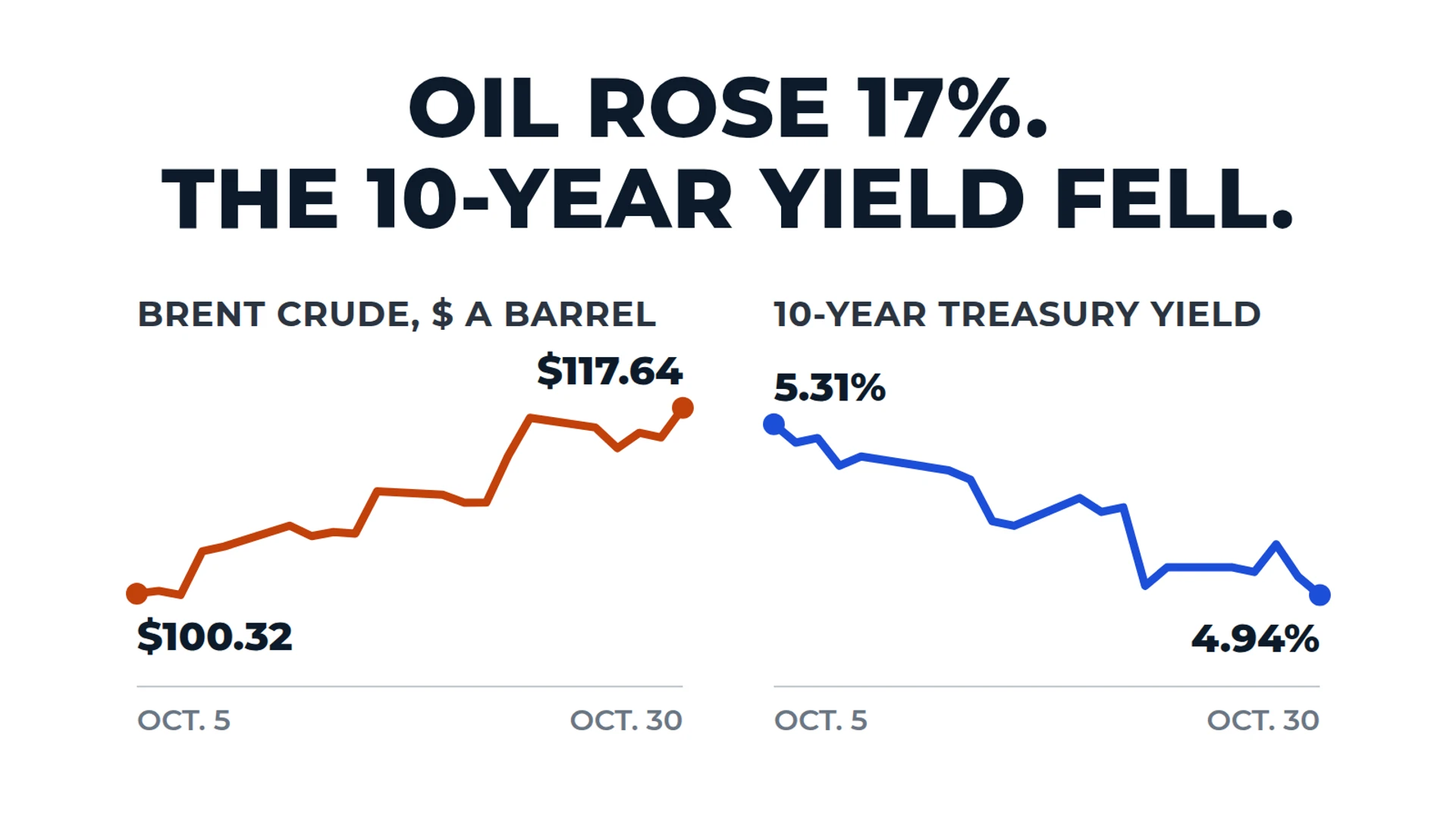
- Brent rose 17% in October while the 10-year fell to 4.94%
- The 10-year inflation breakeven barely moved
- Oil fell 7% on November 2; the 10-year yield fell about 4 basis points
Last Monday, October 26, I wrote that HSBC’s upgrade of government bonds could run into an inflation problem. Oil was climbing, producer prices were rising, and I thought persistent energy inflation would make the bond call harder to get right.
By Friday, bonds had rallied anyway. The 10-year Treasury yield fell to 4.94% on October 30 from 5.31% on October 5, according to Treasury Department data. Over the same stretch, December Brent crude futures rose 17%, from $100.32 to $117.64 a barrel, by our check of Yahoo Finance data. The contract expired on October 30.
I expected rising oil prices to put more pressure on bonds. They didn’t. That’s either humbling or a warning, and I think it’s both.
The 10-year breakeven barely moved
The Treasury sells regular bonds and inflation-protected bonds, called TIPS. The gap between their yields is known as the breakeven rate. It’s a rough measure of the inflation investors expect over the life of the bond, though it also reflects inflation risk and differences in how easily the bonds trade.
The 10-year breakeven was 2.36% on October 5 and 2.34% on October 30, according to St. Louis Fed data. Almost all of the 37-basis-point drop in the regular 10-year yield came from the inflation-adjusted side: the 10-year TIPS yield fell to 2.60% from 2.95%, according to Treasury’s real yield data.
That can happen when investors expect weaker growth or look for somewhere safer to put their money. The numbers don’t tell us exactly which concern drove the move.
The biggest single drop in the 10-year yield came on October 22, when the Nasdaq fell 2.6% as Meta Platforms (META) dragged on AI stocks. The yield dropped 17 basis points that day, while the 10-year breakeven slipped to 2.32% from 2.37%. The timing is consistent with a move toward safety.
The Fed sounds more worried about inflation than the bond market does
The Federal Reserve held its target range at 3.75% to 4% on October 28. The vote was 10-2, and the two dissenters, Lisa Cook and Beth Hammack, wanted to raise rates by a quarter point at that meeting. “Inflation remains elevated,” the Fed’s statement said. It also said “economic activity is expanding at a strong pace.”
So the Fed sees strong growth and sticky inflation, and two of its voters wanted another hike. The 2-year Treasury yield, which tracks where traders think the Fed is headed, still fell to 4.56% on October 30 from 4.84% on October 5. The Fed is talking tough, and the bond market isn’t fully buying it.
Oil swung both ways, and the 10-year didn’t follow
The Nasdaq fell 2.86% on Friday, October 30, to 25,437, about 8% below its October 6 close, by our calculations. Intel (INTC) fell 28.6% after a weak fourth-quarter forecast, and Amazon’s (AMZN) spending outran its operating cash by $33.5 billion in the third quarter. Oil rose that day too. West Texas Intermediate futures settled at $104.12, up 2.1%.
The 10-year yield still fell 4 basis points, to 4.94%. The iShares 20+ Year Treasury Bond ETF (TLT) closed at $81.84, its highest close of the month.
That was the pattern on some of the biggest selloff days. When AI stocks dropped, Treasuries rallied, and oil didn’t seem to matter much. I wouldn’t go as far as saying the bond market is calling an AI crash. A bond rally can’t tell you exactly what investors fear. But the timing lines up with the AI selloffs far better than with the oil spikes.
On Monday, November 2, oil went the other way. West Texas Intermediate futures settled at $96.46 a barrel, down 7.3%, on hopes for U.S.-Iran peace talks, CNBC reported. January Brent, now the front month, was at $105 as of 2:48 p.m. ET, down 7.4%.
If oil were driving the 10-year yield, this was the day to see it. The 10-year yield was down about 4 basis points from Friday’s close as of 2:42 p.m. ET, by our check of Yahoo Finance data. That’s about the same move as Friday, when oil rose and AI stocks fell. The 2-year yield was roughly flat, according to CNBC.
Where last week’s column still holds up
The inflation risk hasn’t disappeared. It just sits closer in. The 5-year breakeven rose to 2.46% from 2.36% over the same stretch, according to St. Louis Fed data, a sign that investors see more inflation over the next few years. The steadier 10-year breakeven suggests the market isn’t pricing the same increase in inflation pressure over the longer term. That fits the one-year inflation swaps Jamie McGeever of Reuters pointed to in his column, which had hit their highest level since June.
The bond rally also has a weak spot. If Brent stays above $100 long enough to show up in the monthly inflation reports, the Fed’s two hawks could pick up votes at the December 9 meeting. That could push short-term yields up even if AI investors stay nervous.
Our AI Bubble Index fell to 56 as of Monday afternoon, November 2, from 59 on the morning of October 26, and it’s still in the “Heated” band. Put all of that together, and the market looks more concerned about the AI selloff than about oil, which it seems to treat as a problem for later. I gave inflation too much weight on October 26, and the November 2 oil drop didn’t change the pattern. The test now is Tuesday’s midterms on November 3 and the next inflation report, which will show whether this month’s oil prices are reaching consumers.