Key points
- Bessent's handwritten note to Warren
- Why Warren says the buybacks are failing
- Bessent's defense of the program
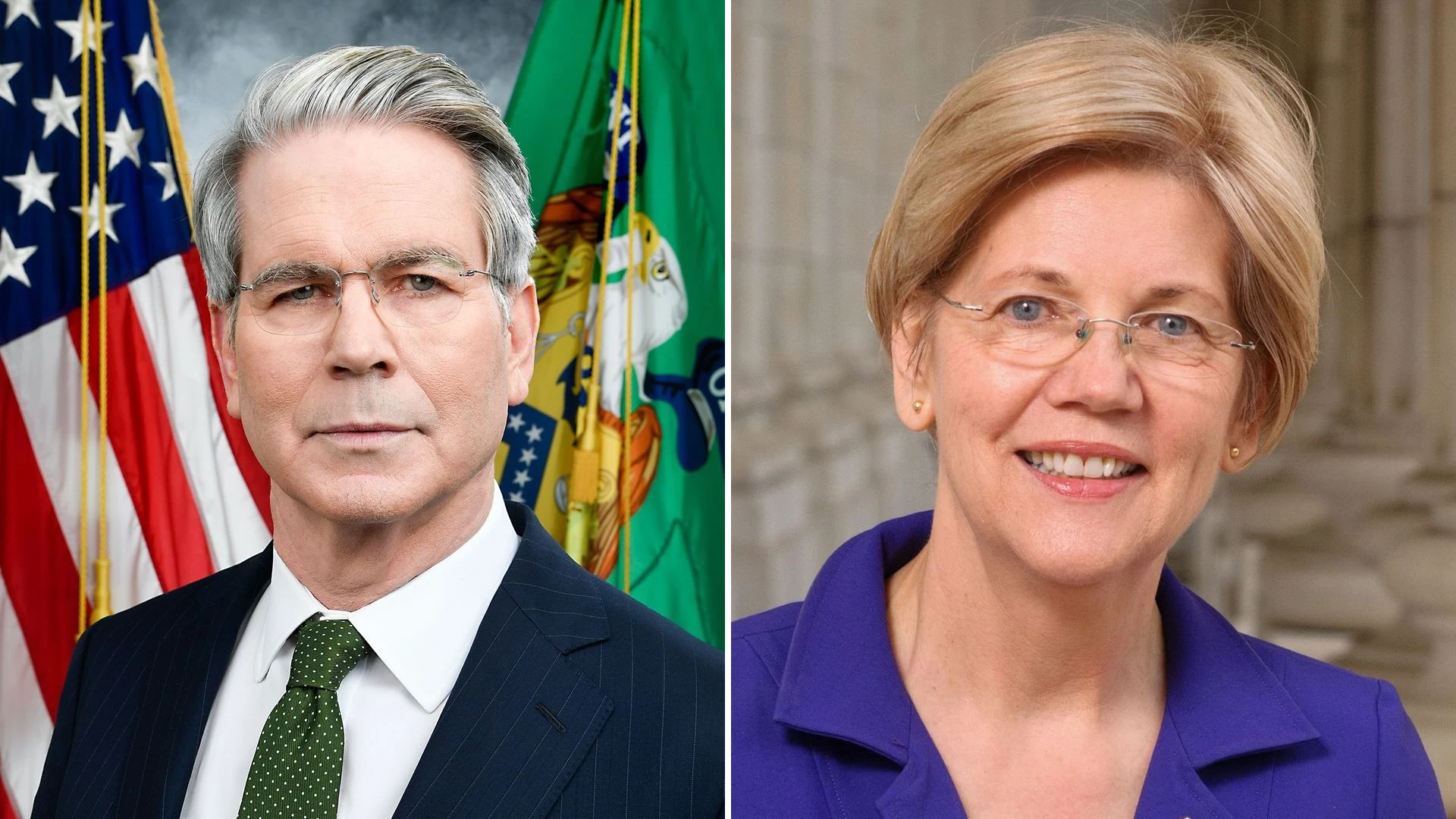
Treasury Secretary Scott Bessent answered Sen. Elizabeth Warren's attack on Treasury's bond buybacks with a two-page letter that mocked her grasp of markets and ended with a handwritten note wishing her a happy Indigenous Peoples' Day. Bessent posted the letter, dated October 9, on X on October 10.
Warren, the top Democrat on the Senate Banking Committee, wrote to Bessent on October 7 that Treasury had launched "unprecedented and chaotic interventions" in the bond market and that the effort was failing. Bessent opened his reply by saying her letter added to "the mounting body of evidence of your complete paucity of knowledge about financial markets."
Scott Bessent on X
Bessent closes with a green-ink note
The letter ends with an offer Bessent first made in August. "Finally, my offer of a Foreign Exchange for Dummies tutorial still stands and if you receive a passing grade on the Yale metric, not the Harvard curve, I would be happy to also include a Fixed Income for Dummies," he wrote. Bessent is a Yale graduate, and Warren taught at Harvard Law School.
Below his signature, Bessent added in green ink: "Happy Indigenous Peoples' Day in advance to you and your family." The holiday falls on October 12. Warren apologized in 2019 for her past claims of Native American heritage.
The "Dummies" line dates to August 28, when Bessent offered Warren a "Foreign Exchange for Dummies" tutorial, the New York Post reported, after she questioned Treasury's purchase of Japanese yen.
Warren says the buybacks are failing
Treasury said on August 19 that it would increase the size of its buybacks of older, longer-dated bonds. According to Warren's letter, Treasury has since bought back $5.2 billion on September 10, $4.1 billion on September 24, and $6 billion on October 1.
Yields rose on the days of the first two buybacks, Warren wrote, and climbed again the day after the third. The 10-year Treasury yield closed at 5.29% on September 30, its highest since 2002. The 10-year yield was 5.24% on October 9, according to Treasury data.
That yield is one of the inputs to AIStockWire's AI Bubble Index, because higher yields raise borrowing costs for companies building AI data centers and make future profits worth less today.
Warren asked Bessent to answer five questions by October 21, including whether Treasury plans to draw down its cash account at the Federal Reserve to expand the buybacks.
Bessent says the program started in 2024
Bessent wrote that the "interventions" Warren called unprecedented "have been underway since May 2024." His reply emphasized the program's origins; Warren's criticism focused on the expanded buybacks announced in August. He said the buybacks bolster liquidity, reduce market volatility, and ensure "the best value for the taxpayer."
He also took on Warren's comments in an October 7 Punchbowl News article, in which she said Bessent's "failure in the role that he should have played as a sober guy will force our economy to pay a very high price." Bessent wrote that the Domestic Finance team Warren referred to "is fully staffed relative to historical levels" and challenged her to support future Treasury nominees.