Key points
- Why Character.AI says it couldn't support itself
- Which lawsuits are on its list of creditors
- What Disney's $20 million bid covers
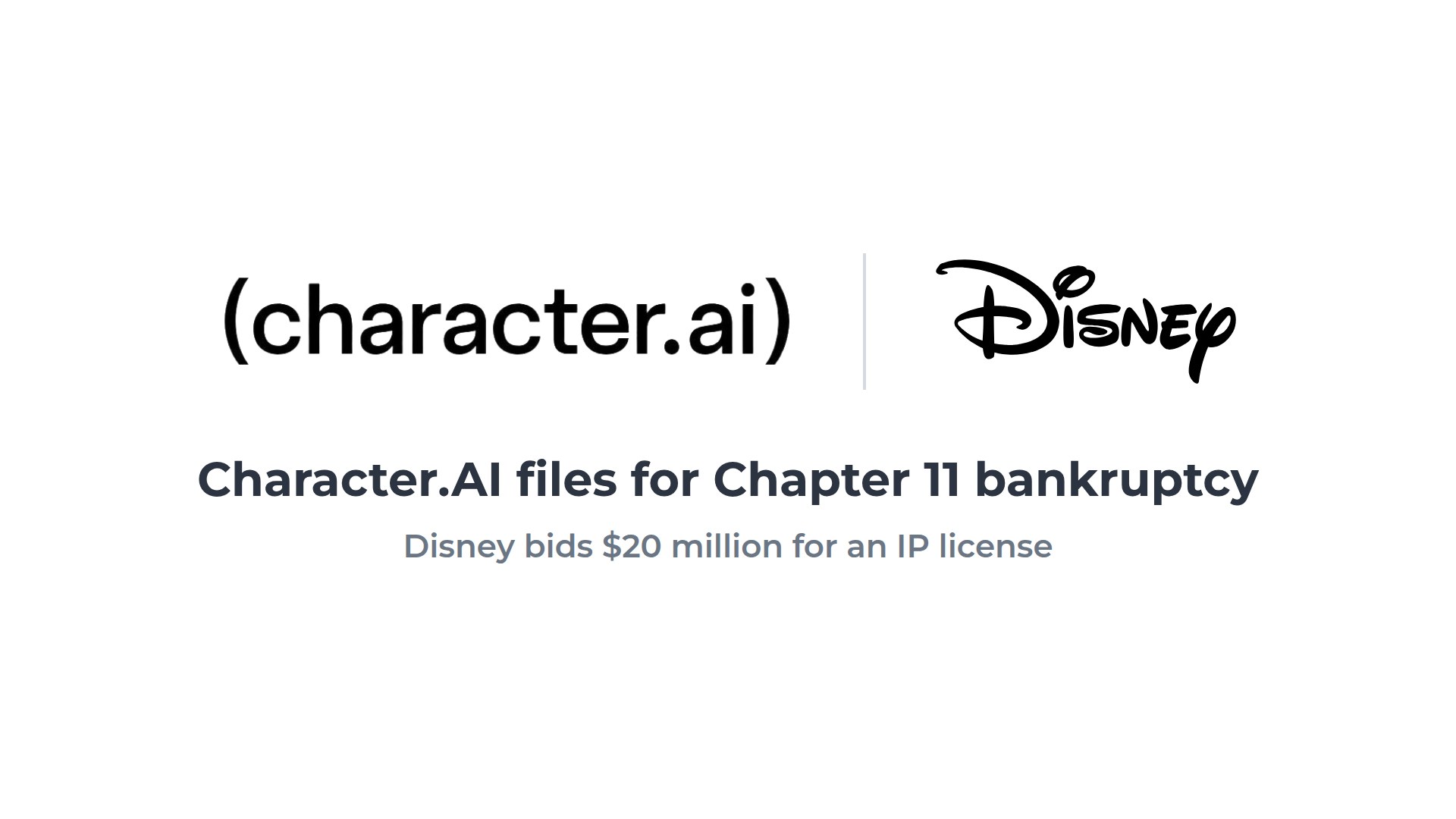
Character.AI filed for Chapter 11 bankruptcy in Delaware on Monday and plans to sell some of its assets through a court-supervised auction, saying high costs, potential litigation liabilities, and regulatory engagement left it unable to generate enough cash. Chief executive Colin Adams said the company faced "significant legal, regulatory, and operational headwinds."
Disney (DIS) is the opening bidder for a specific package, not the whole company. It is committing $20 million for "a non-exclusive perpetual license of certain Company intellectual property and certain Company claims," The Hollywood Reporter reported. As the opening bid, it sets a floor that other buyers can top. The auction is expected to finish in late November or early December.
The company blamed costs, lawsuits, and regulators
AI entertainment "has proven to be costly to develop and grow," the company said in its court filings. "These high costs, coupled with potential litigation related liabilities and regulatory engagement have contributed to the Debtor's inability to generate sufficient cash flows to support its business in the present form."
Character Technologies, the company behind Character.AI, estimated its assets and its liabilities each at $50 million to $100 million. It says its platform hosts "tens of millions of users across the globe."
Three listed creditors hold litigation claims
The petition lists the Commonwealth of Kentucky, the Commonwealth of Pennsylvania, and a minor plaintiff whose name is redacted among its 20 largest unsecured creditors. Each is a litigation claim, with the amount listed as unknown. Kentucky alleges that Character.AI's chatbots encouraged users to starve and harm themselves.
The State of Colorado asked the court on Tuesday to receive notice of all filings in the case.
Google has the largest disclosed unsecured claim
Google, part of Alphabet (GOOGL), has the largest disclosed unsecured claim, $4.1 million in trade payables. Law firm Hogan Lovells is owed $2.1 million, and cloud provider DigitalOcean is owed nearly $2 million. Character.AI has asked the court for permission to pay up to $2.5 million to vendors it considers critical.
Disney hired Character.AI's former CEO, Karandeep Anand, as its first chief technology officer in September.