Advertisement

Korean nuclear stocks surge on reported $130 billion US reactor proposal

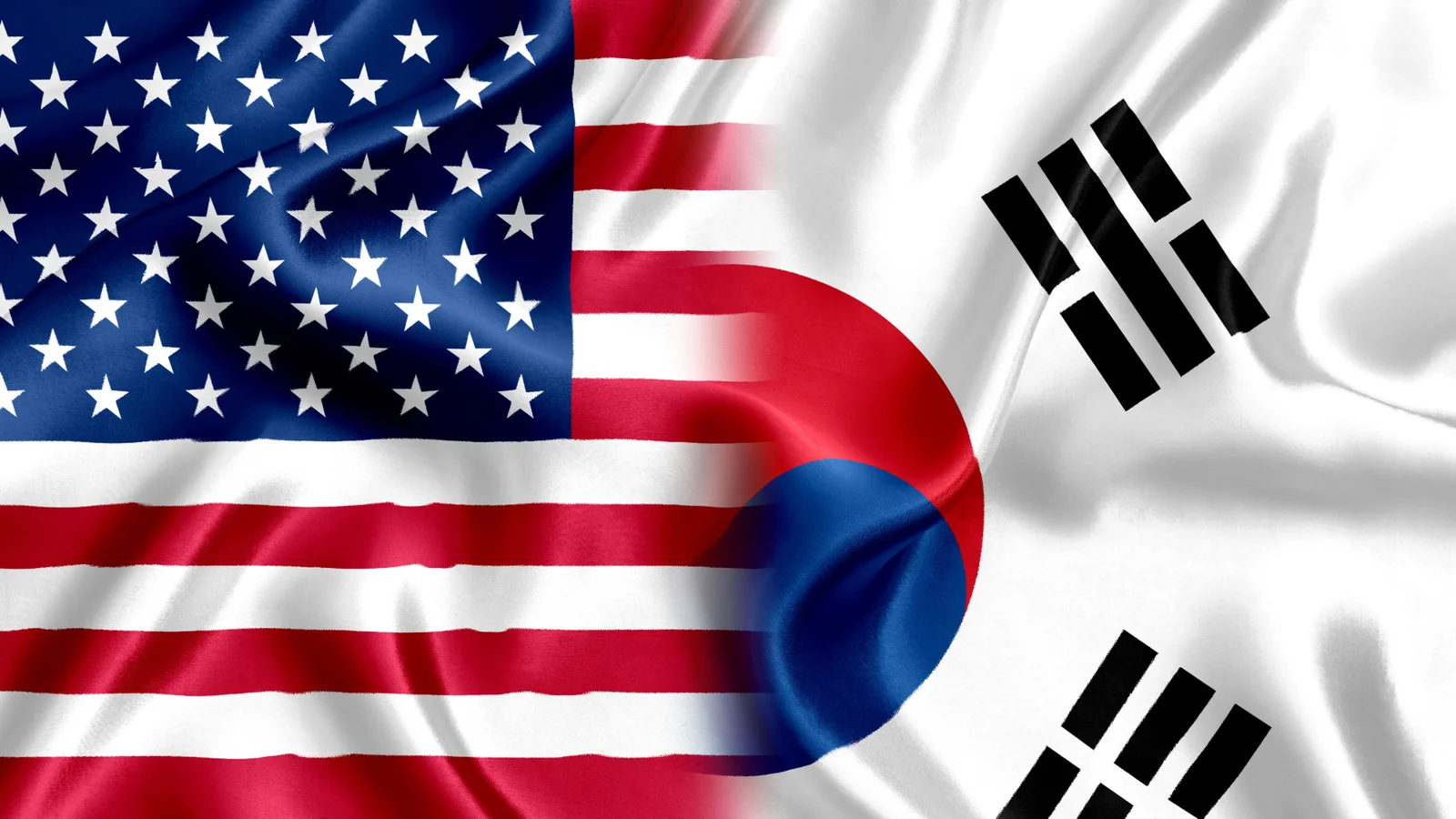
The United States and South Korean flags blended together.

Key points

  • Report puts eight US reactors in Korea's investment package
  • KEPCO E&C (052690) rose 32.5% in two days
  • Two Kosdaq suppliers closed at their daily limit
  • The reactor design is still being negotiated

Korean companies that design and build nuclear plants rose for a second day on Tuesday. What's behind the move is a reported proposal for Korea to help build eight large reactors in the United States. KEPCO Engineering & Construction (한국전력기술), which designs Korea's reactors, closed 16.60 percent higher at 142,600 won. That's a rise of about 33 percent in two sessions.

The proposal became public on September 7, when Money Today (머니투데이) reported that Korea's follow-up investment in the United States includes eight reactors at a cost of about $130 billion. Six would use Westinghouse's AP1000 design and two would use the APR1400, the Korean reactor. A ruling party official told the paper that "we reached an agreement on building eight reactors, and the formal announcement of the US investment is planned for around the 18th." The Ministry of Trade, Industry and Energy said the two countries are in talks to find reactor projects but that nothing specific has been decided, Etoday (이투데이) reported.

The buying went furthest down the list of smaller suppliers. Orbitech (오르비텍), a Kosdaq company that handles radiation management and reactor inspections, closed at its daily limit, up 29.83 percent at 6,050 won. Seojeon Electric (서전기전), which makes electrical equipment for nuclear plants, also closed at the limit, up 29.80 percent. Korean stocks can move 30 percent in a day, so a limit-up close is the most a stock is allowed to rise. Doosan Enerbility (두산에너빌리티), which forges the heavy reactor components, added 1.8 percent on Tuesday after rising 11 percent on Monday.

The reason Korean companies are in an American reactor plan at all is that almost nobody in the United States has built one recently, while electricity demand from AI data centers keeps rising. Yang Seung-yoon, an analyst at Eugene Investment & Securities (유진투자증권), pointed to the Korean design's existing NRC certification. "From the American point of view, the APR1400 is the best option available, since it has obtained NRC design certification and is backed by the construction experience of Korean builders," he said. "It's a way to meet America's power security and its national interest at the same time." The APR1400 has NRC design certification, allowing developers to reference an approved standard design in a license application. Individual projects still require regulatory approval.
Advertisement

The reactor model has not been settled

How much of the money reaches Korean companies depends on a question the two governments haven't answered yet. Financial News (파이낸셜뉴스) reported on Tuesday that the American side has proposed using the AP1000 for all eight units, while the Korean government is asking for the APR1400 on at least two of them.

The difference is large. Securities analysts quoted by Financial News put Doosan Enerbility's orders at 2.5 trillion to 3 trillion won ($1.9B to $2.2B) for each APR1400, against 400 billion to 500 billion won or more for each AP1000. KEPCO E&C's range runs from 600 billion to 800 billion won ($447M to $596M) on an APR1400 down to no order at all, or up to 500 billion won, on an AP1000.

Jo Jae-won, an analyst at Kiwoom Securities (키움증권), kept an overweight view on the sector on Tuesday and named Doosan Enerbility his preferred stock, because the company can supply parts for both designs. "As cooperation between Korea and the United States on nuclear power gradually takes shape, we expect investor sentiment toward domestic nuclear companies to improve," he wrote. "For Doosan Enerbility, there's also upside to look for depending on whether the scope of AP1000 orders widens."

NH Investment & Securities' August target for KEPCO E&C of 188,000 won remains about 32 percent above Tuesday's close. Lee Min-jae kept a buy rating in that August 10 note and cut the target from 212,000 won, to reflect a higher cost of equity as interest rates rose.

No reactor construction contracts have been publicly announced. The report puts a possible announcement around September 18, and the reactor design is part of what the two sides are still negotiating. Financial News reported that the first project in the package is a gas-fired power plant in Encinal, Texas, with a total cost of $22.3 billion. Korean suppliers are also chasing the same American power buildout in equipment, which is what Hyosung Heavy Industries said on Monday about its transformer business.

Quotes from Korean-language sources are translated from Korean. Won figures are converted at 1,342 won to the dollar, the Naver Finance rate on September 8, 2026.

Advertisement

Frequently asked questions

Why did Korean nuclear stocks rise on September 8, 2026?

Korean media reported that Korea's follow-up investment in the United States includes building eight large nuclear reactors, at a cost of about $130 billion. KEPCO Engineering & Construction closed 16.60 percent higher at 142,600 won ($106) on Tuesday, its second straight rise, and the Kosdaq suppliers Orbitech and Seojeon Electric both closed at their 30 percent daily limit.

Has the eight-reactor plan been confirmed?

No. The Ministry of Trade, Industry and Energy said Korea and the United States are in talks to find reactor projects but that nothing specific has been decided. The report puts a possible formal announcement of the investment package around September 18, 2026. This is general information, not investment advice.

What is the APR1400?

The APR1400 is the Korean-designed 1,400 megawatt pressurized water reactor built by Korea Hydro & Nuclear Power. It has NRC design certification, allowing developers to reference an approved standard design in a license application. Individual projects still require regulatory approval. The other design in the plan is Westinghouse's AP1000.

Why does the choice between the AP1000 and the APR1400 matter to Korean companies?

It decides how much work they get. Securities analysts quoted by Financial News put Doosan Enerbility's orders at 400 billion to 500 billion won ($298M to $373M) or more for each AP1000 unit, against 2.5 trillion to 3 trillion won ($1.9B to $2.2B) for each APR1400. For KEPCO E&C they see no order, or up to 500 billion won, from an AP1000, and 600 billion to 800 billion won ($447M to $596M) from an APR1400. The United States has proposed the AP1000 for all eight units and Korea is asking for the APR1400 on at least two.

More coverage

Mia Park
Mia Park

Mia Park was born and raised in Korea and covers its markets and business news for AIStockWire, from the Kospi and Kosdaq to Samsung, SK Hynix, and the companies shaping the country's technology sector. She got her start writing for a Korean entertainment blog, a long way from stock filings, but has always enjoyed knowing what is happening back home before everyone else does.

Korean nuclear stocks rise on reported US reactor proposal