Key points
- ChatGPT will test image ads while users generate images
- New tools will help advertisers track sales and other results
- Advertisers say available ad space remains limited
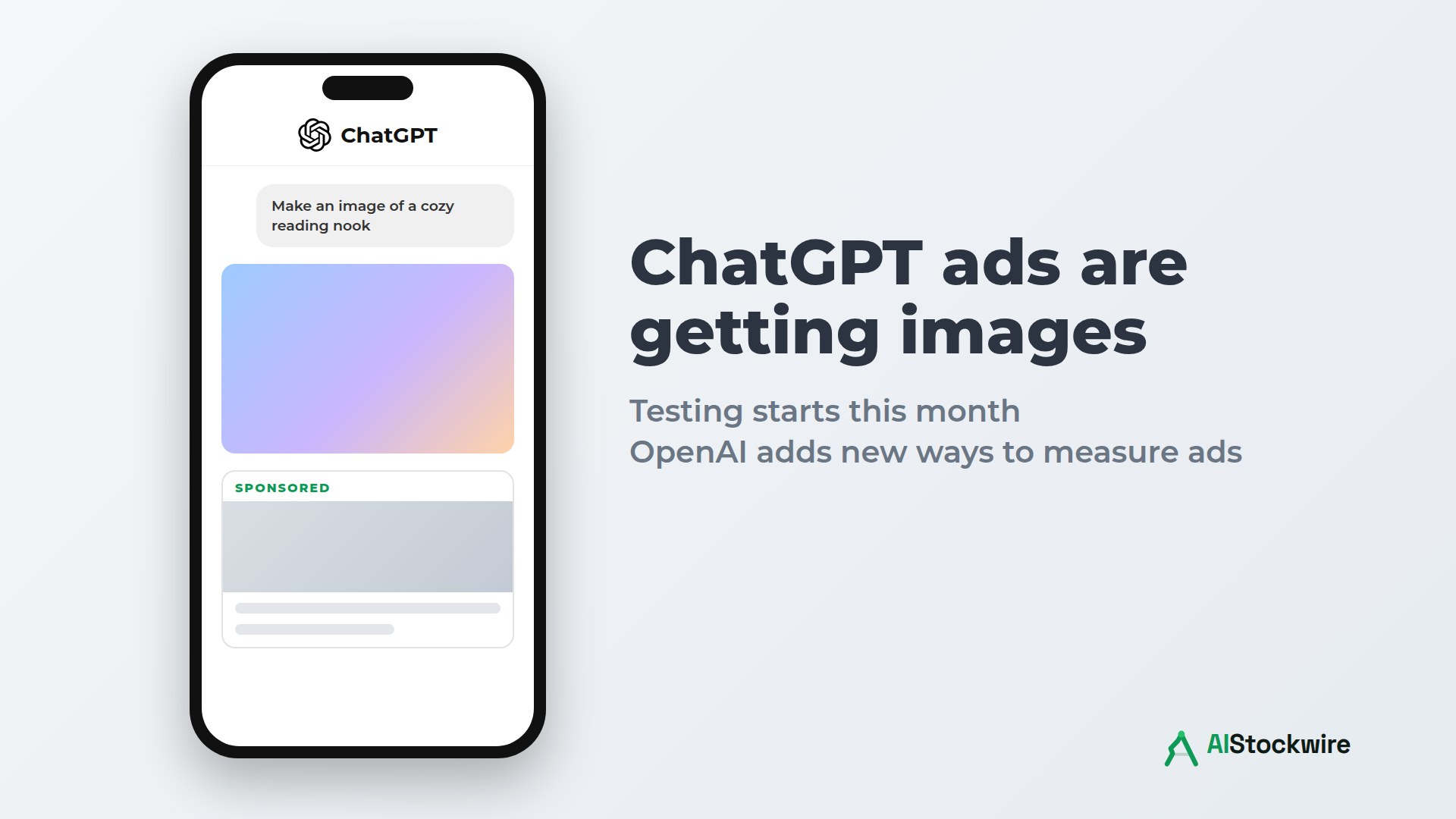
OpenAI will begin testing a new image-ad format in ChatGPT in the US later this month, the company said on Oct. 5. The ads will appear while users generate images, clearly labeled and separate from the image being created.
The test will involve an initial group of advertisers. OpenAI is also adding measurement tools as advertisers seek better evidence that ChatGPT ads lead to sales.
"As with our other ad formats, advertising does not influence the answers ChatGPT provides," OpenAI said.
Advertisers want to know what their spending delivers
Since ChatGPT ads launched in February, advertisers have raised three complaints: limited measurement, too few formats, and too little ad space to spend their budgets, Digiday reported.
The new integrations let advertisers send conversion data from systems such as Hightouch, Tealium, and LiveRamp (RAMP) into ChatGPT Ads. Attribution partners, including AppsFlyer, Adjust, Branch, and Kochava, help connect ad interactions to actions such as purchases. OpenAI is also working with Haus, Measured, and WorkMagic to test whether the ads produce sales that would not otherwise have happened.
OpenAI cited early results from measurement partners. DV Rockerbox reported that WeightWatchers' attributed cost per acquisition on ChatGPT Ads was 15.3% lower than its blended paid-search benchmark. Triple Whale reported that 93% of Portland Leather's visitors from ChatGPT Ads were new.
Outside firms will test brand safety without seeing chats
OpenAI is running brand suitability pilots with DoubleVerify (DV) and Integral Ad Science. The firms will assess how OpenAI's safeguards work in a controlled testing environment, without access to private user conversations, the company said. OpenAI said its guardrails are designed to keep ads out of emotionally vulnerable or sensitive conversations, and qualifying advertisers can now block their ads from appearing next to certain phrases.
A large audience doesn't guarantee enough ad space
ChatGPT reaches 1.2 billion people a week, according to OpenAI. But ad space is the harder problem. "There are about 2.5 billion prompts globally happening each day on ChatGPT, whereas there's about 15 billion searches on Google so the volume is inherently smaller," Shamsul Chowdhury, an executive at Zeno Group, told Digiday. He added that ChatGPT has only one ad placement while Google has several.
The business is already growing fast. ChatGPT ads reached a $1 billion annualized revenue pace within about 200 days of launch, as we reported in August. That's still small next to Alphabet (GOOGL) and Meta (META), and OpenAI is announcing the changes at the start of Advertising Week New York, where its executives plan to ask marketers for feedback.