Key points
- Oracle caps new capital-market fundraising at $20 billion
- Oracle's 2030 revenue target is close to Wall Street's forecast
- Vendor financing and customer prepayments sit outside Oracle's cap
Oracle (ORCL) says it will limit new capital-market fundraising for its current investment cycle to $20 billion through fiscal 2030. The company announced the ceiling at its Investor Day in Las Vegas on Wednesday, October 28. Its shares closed up 10.7% at $144.54.
Oracle currently expects to raise $10 billion of the total by selling stock and $10 billion through new debt, according to the release it filed with the SEC. The cap comes on top of the $20 billion of stock Oracle finished selling in the quarter that ended August 31.
Oracle also set a goal of at least $225 billion in revenue for fiscal 2030, which ends in May 2030. It said that would represent annual growth of more than 35% from fiscal 2026.
The funding announcement came a day after Oracle said it would add chips from Google, Cerebras, and OpenAI to its cloud. Those releases didn't say how the company would pay for the chips.
What the $20 billion cap covers and leaves out
The cap applies to money Oracle raises in capital markets for its fiscal 2027 through 2030 investment cycle. It excludes refinancing of existing debt.
Oracle expects vendor financing, customer-provided hardware, and customer prepayments to reduce the cash it needs up front until its free cash flow turns positive.
The company also expects net debt to fall below 3.5 times adjusted EBITDA in fiscal 2029. Its definition of net debt includes borrowings, vendor financing, and operating and finance lease liabilities, minus cash and marketable securities.
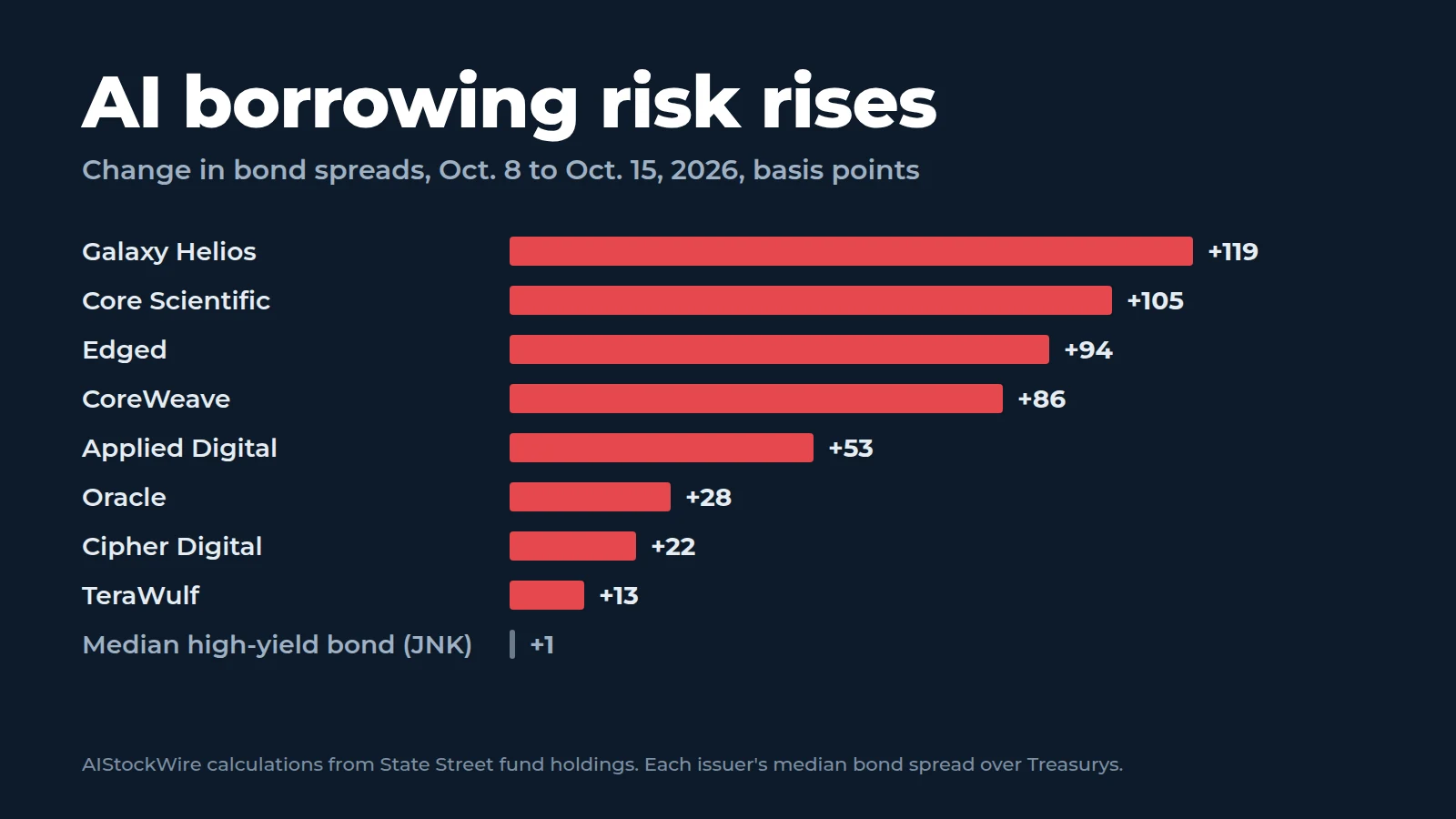
Oracle's borrowings and lease liabilities totaled $169.1 billion on August 31, by our arithmetic from its latest quarterly filing. Oracle's five-year credit default swaps, which offer protection against specified credit events, traded at 277 basis points on Wednesday, down from about 320 earlier this month. The spread is still up almost 100% this year. Our AI debt tracker follows Oracle's bonds alongside the rest of the AI buildout's borrowing.
Oracle expects free cash flow to turn positive in fiscal 2028
Oracle expects capital spending to peak in fiscal 2027 and 2028 and to step down in fiscal 2029. It plans for free cash flow to turn positive in the second half of fiscal 2028 and to reach at least $30 billion in fiscal 2029. From fiscal 2029, the company says, its growth will be self-funded.
Analysts expect negative free cash flow of about $35 billion this fiscal year and a similar figure next year, according to FactSet data. Analysts polled by LSEG project fiscal 2030 revenue of $224.2 billion, close to Oracle's own target.
Oracle also set a fiscal 2030 goal of a non-GAAP operating margin of at least 40% and non-GAAP earnings of at least $21 a share. It reaffirmed its fiscal 2027 outlook for revenue of at least $90 billion and non-GAAP earnings of $8.10 a share.
The stock is still down this year
Wednesday's close left Oracle down 25.8% for 2026, by our arithmetic from its 2025 closing price of $194.91. Before the jump, the stock was down 33.0% for the year.
Oracle said its capital allocation priorities remain keeping its investment-grade credit ratings, paying a dividend, and funding growth.