Key points
- Tesla returns to positive free cash flow
- Tesla's capital spending falls short of forecasts
- Tesla's full-year spending outlook drops to about $20 billion
Tesla (TSLA) generated $1.53 billion in third-quarter free cash flow, surprising analysts who expected a $4.92 billion outflow, according to Reuters. The company spent less on factories, equipment, and other long-term investments than Wall Street expected and lowered its annual capital spending forecast from more than $25 billion to about $20 billion.
The cash improvement also reflected increases in unpaid bills and other liabilities, along with payments received from customers. Those changes supported operating cash flow, the cash generated by Tesla's day-to-day business.
Tesla's October 21 quarterly update shows $6.26 billion in operating cash flow and $4.73 billion in capital spending. Subtracting the latter gives its $1.53 billion in free cash flow. That compares with a $1.09 billion outflow in the second quarter, its first negative quarter since early 2024.
Spending rose from last year but missed forecasts
Tesla's $4.73 billion in capital spending was more than double the year-earlier amount, but below both the $5.79 billion spent in the second quarter and the $7.5 billion analysts expected, according to LSEG data.
The company didn't identify which projects account for the lower annual forecast. It spent $13.01 billion through September, leaving about $7 billion in fourth-quarter spending to reach its new full-year estimate, by our calculations.
Its plans still include substantial AI investment, which Tesla now calls SI, short for Super Intelligence. The company aims to reach 400 megawatts of computing capacity for training its self-driving and robot software by year-end. Its Texas clusters, Cortex 1 and Cortex 2, are listed at more than 105 megawatts and 120 megawatts, respectively.
At its planned Austin chip factory, Tesla expects to begin commissioning equipment in 2027, meaning installing, testing, and preparing the machines for operation.
Where did the extra cash come from?
Net income went the other way. It fell 43% from a year earlier to $787 million on flat revenue of $28.05 billion. Adjusted earnings came to 48 cents a share. Thomas Monteiro, a senior analyst at Investing.com, said the cash "did not come from stronger profits, but from spending billions less than planned."
Two lines in the cash flow statement grew a lot. Bills and other amounts Tesla owed but hadn't paid yet added $3.99 billion of cash in the quarter, about twice the $1.94 billion they added in the second quarter. Money customers paid before Tesla delivered what they'd bought added $1.26 billion, compared with $228 million a quarter earlier. The update gives no breakdown of either line, which leaves open how much of that cash will stick around.
Cash and short-term investments ended September at $45.45 billion, up $1.9 billion in three months. Tesla says the increase came mostly from the positive free cash flow.
Why does the timing matter?
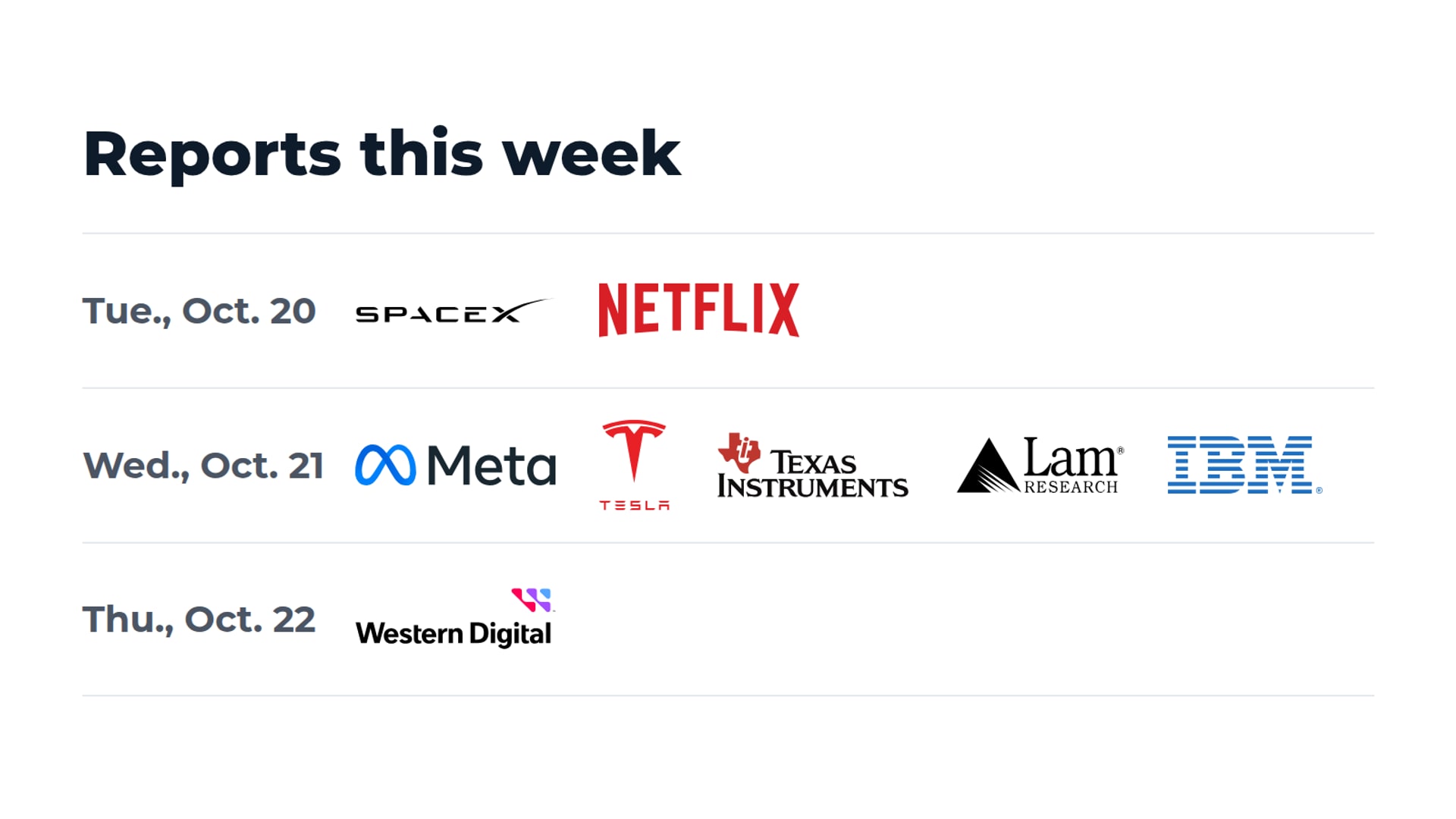
The results landed a day after Elon Musk said Tesla and SpaceX had formed special committees to explore a merger. SpaceX spends far more on its own buildout. Monteiro noted that SpaceX is preparing to invest up to $40 billion in a single quarter. On the October 21 call with analysts, Musk declined to say more about the merger.
Ryan Lee of Direxion, which runs funds tied to Tesla's stock, was less impressed by the lower spending. He said it "suggests less of an 'all-in' approach to the AI arms race than one would expect from Elon."
Tesla closed at $386.47 on October 21. In trading after the market closed, it was at $373.63 at 8 p.m. Eastern, down 3.3%. Our earnings preview for the week has the numbers Tesla was measured against. Its full quarterly filing may provide more detail on those cash flow lines.