Key points
- Army awards AeroVironment (AVAV) $464.8 million for Locust X3
- First production contract for a laser weapon, per AV
- Dozens of 30-kilowatt systems, JLTV-mounted, over several years
- Fiscal Q1 results due September 9
AeroVironment (AVAV) said Wednesday the U.S. Army has awarded it a $464.8 million contract to build its Locust laser weapon in production quantities. The award comes from the Army's Portfolio Acquisition Executive for Fires office under a program called Enduring-High Energy Laser, or E-HEL. AV describes it as the first-ever production contract for a directed-energy system in U.S. history. Every laser weapon the Pentagon has bought before this was a prototype or a demonstrator.
The number is bigger than the one the market had been working with. On August 7, Bloomberg reported the Army planned to buy at least $400 million of the systems, and AVAV jumped 9% that day to $186.73. Wednesday's release puts the figure about $65 million above that floor. It's also a separate announcement from the $500 million counter-drone award the Pentagon listed on July 2, which ran through Army Contracting Command at Detroit Arsenal and covered commercial counter-drone technology broadly. AV's release doesn't say whether the two overlap, and the company hasn't answered that question publicly.
What the Army is buying
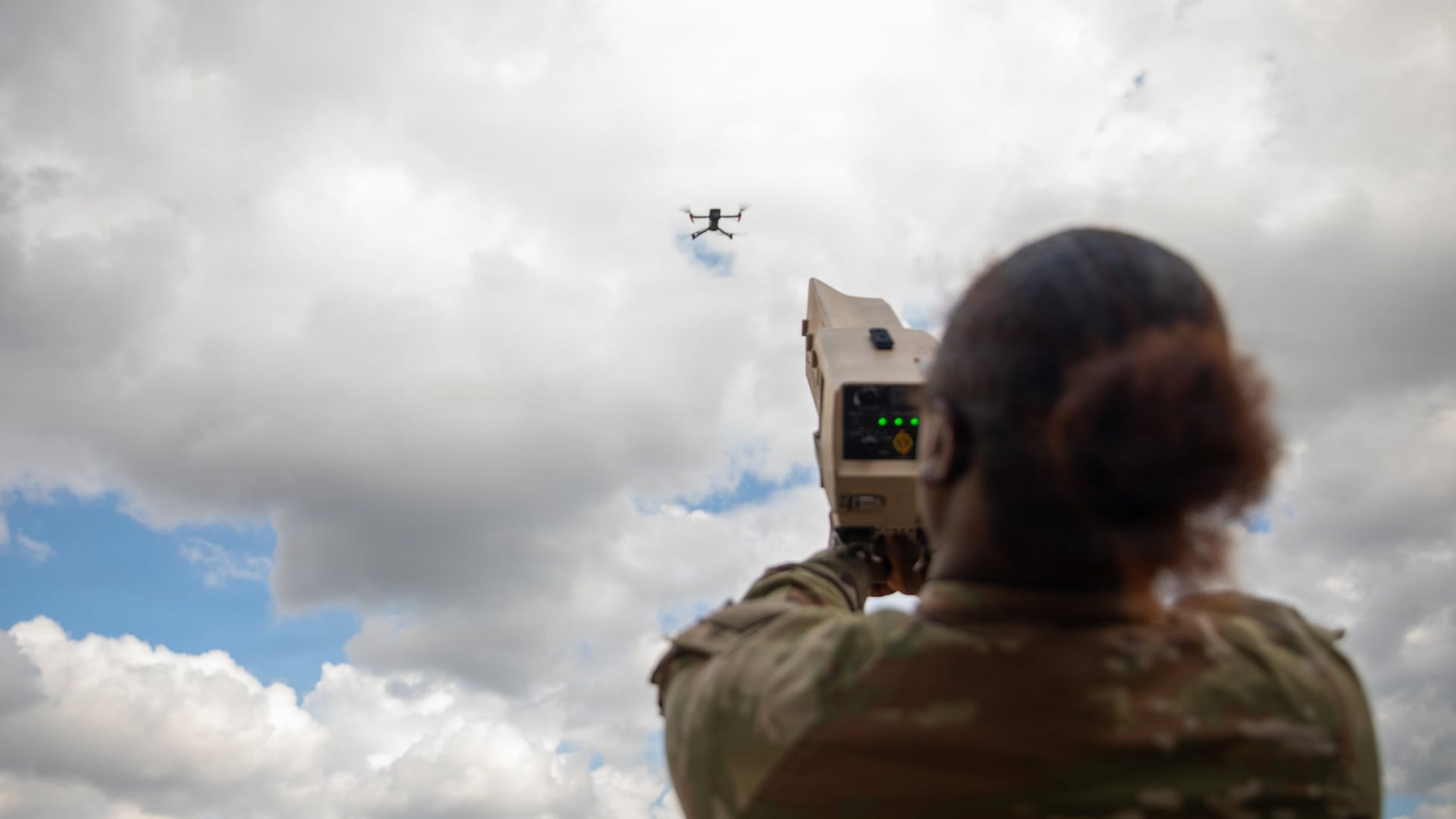
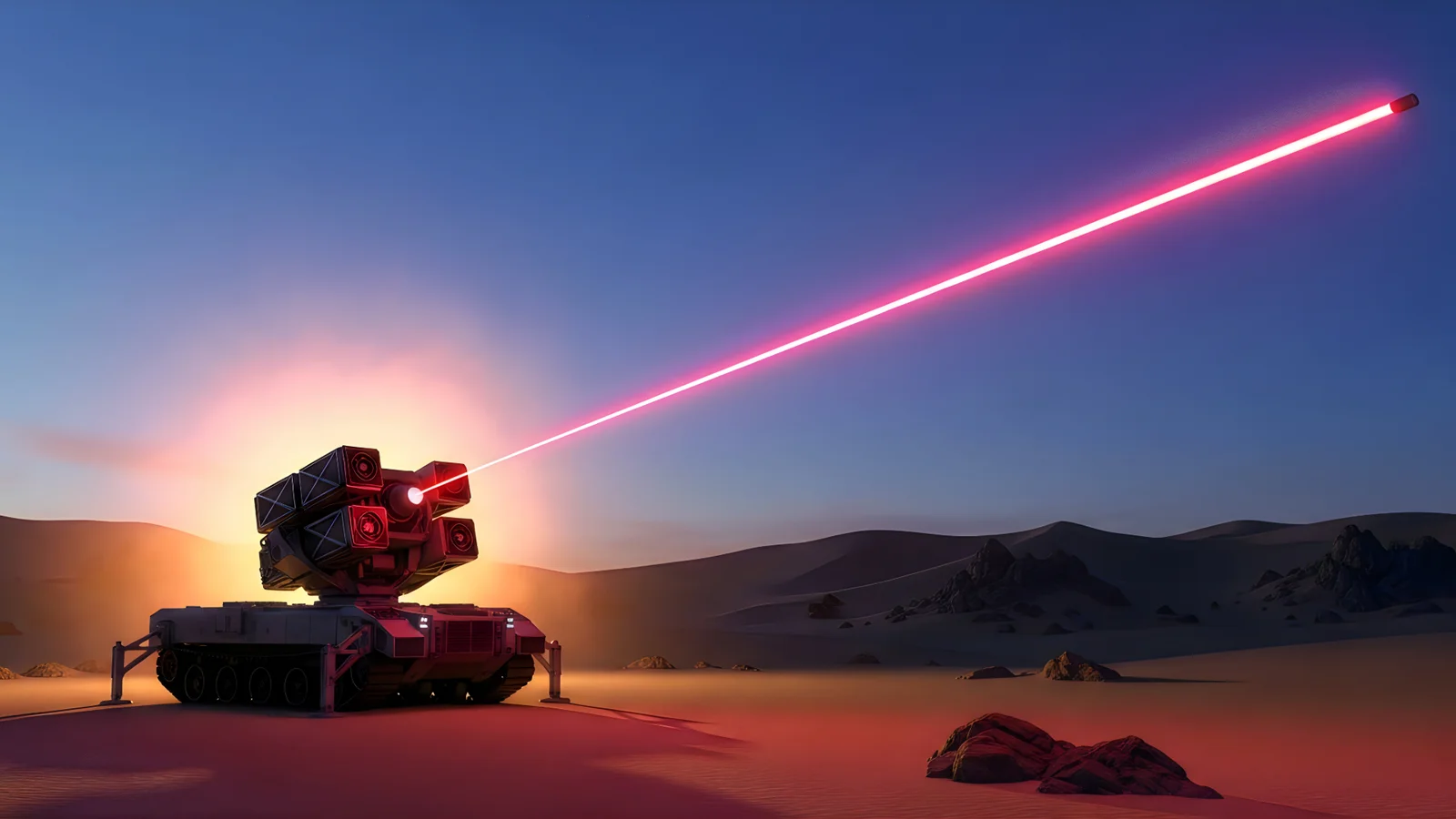
The contract is an Other Transaction Agreement, a faster-moving contract type the Pentagon uses to skip some of the usual procurement rules. Under it, AV will deliver "dozens of LOCUST® X3 laser weapon systems over the next few years," plus support and training. The X3 is a 30-kilowatt laser that AV says can sit on the Army's Joint Light Tactical Vehicle, ride on a pallet, or eventually mount on the smaller Infantry Squad Vehicle. AV delivered the first JLTV-mounted units to the Army last December. The job is to burn down what the military calls Group 1 through 3 drones, the small and medium-sized aircraft that have done most of the damage in Ukraine and the Middle East.
The pitch for lasers has always been cost per shot. A missile that knocks down a $2,000 drone can cost hundreds of thousands of dollars. AV chief executive Wahid Nawabi has said the Locust's cost per shot can be as low as $3, according to DefenseScoop. That math is why the Army kept funding prototypes through years of testing. Hitting a drone was never the hard part. Doing it reliably, in weather, from a moving truck, without a team of engineers standing next to it, was.
Nawabi said in the release: "This award marks a defining moment not only for AV, but for the future of modern defense. The transition of directed energy from experimentation to an enduring, fielded capability reflects years of collaboration, innovation, and operational success alongside the U.S. Army."
How it got here
AV didn't build the Locust. It came with BlueHalo, the defense contractor AV bought in 2025, and the program grew out of the Army Multi-Purpose High Energy Laser prototypes that soldiers are already using. The E-HEL production decision followed testing at White Sands Missile Range in New Mexico, run by the Pentagon's counter-drone task force, JIATF-401. That testing came after a Locust was involved in an airspace closure over Texas in February, DefenseScoop reported. AV says the White Sands work led directly to a safety agreement between the Defense Department and the FAA that clears the system for use inside U.S. airspace. That matters, because a lot of the near-term demand is domestic: protecting bases and border areas, not just deployed units.
John Garrity, who runs directed energy at AV, said: "E-HEL is not a future capability, it is a production-ready system, built on proven technology, and designed to meet the demands of today's fight while scaling for tomorrow's threats."
Production will run through AV's plant in Albuquerque, where the company announced a $30 million expansion in March. Dozens of units over several years isn't a huge manufacturing lift for a company that builds Switchblade drones at volume, but lasers are a different kind of hardware, and this is the first time anyone has had to build them at a steady rate for a paying customer.
What the stock did
Not much. AVAV traded at $145.34 around 3:20 p.m. Eastern on Wednesday, up 0.8% from Tuesday's close of $144.17. The Bloomberg report had already priced in the contract a month ago, and the stock has given all of that rally back since. It closed at $186.73 on August 7, ran to $196 the following week, and has since fallen 26% from there as drone stocks sold off through late August. Shares are still up about 4% from where they sat before the June 29 earnings report, when a strong fourth quarter set off the summer's run.
The next real read comes September 9, when AV reports fiscal first-quarter results after the close. Analysts expect $0.30 a share. The number that will matter more is backlog, and whether any of the $464.8 million shows up in it yet. An OTA award lets the Army fund the work order by order, so the full amount won't land in funded backlog on day one. Watch for management to say how much has been obligated, and how many systems ship in fiscal 2027. The drone-defense names have spent the year trading on announcements. This one comes with a dollar figure, a program office, and a delivery schedule, which is more than most of them. On Sept. 29, the Pentagon named 10 other companies to Army counter-drone contracts with ceilings of up to $500 million each.