Key points
- Samsung Electro-Mechanics signs a year-long substrate deal
- Lam Research and Polar Semiconductor report parts and helium constraints
- Counterpoint sees DRAM prices falling in 2028, and Korean experts see a 2029 glut
Memory chip stocks have fallen sharply amid concerns about future supply, including CXMT's planned server memory launch. CXMT, China's biggest memory chipmaker, said on October 10 that it plans to launch server memory using a denser cell design around the end of the year. Micron Technology (MU) closed at $877.55 on October 23, down 14.7% from its October 9 close, by our calculations.
The oversupply forecasts investors have weighed point to 2028 and 2029. Over the past week, suppliers to the chip industry described shortages happening now. A Korean company signed a full-year contract for memory chip substrates, a deal one Korean broker called unusual. Nvidia (NVDA) and Lam Research (LRCX) both said capacity or parts are limiting what the industry can deliver. A Minnesota chipmaker said it would have to shut down without helium.
Those shortages don't settle whether memory supply will exceed demand in 2028 or 2029. They show that parts, materials, and production capacity remain tight today.
| Stock | Close before CXMT's announcement | October 23 close | Change |
|---|---|---|---|
| Micron (MU) | $1,029.00 | $877.55 | -14.7% |
| SanDisk (SNDK) | $1,581.82 | $1,238.03 | -21.7% |
| SK Hynix (SKHY) | $169.03 | $137.02 | -18.9% |
| Samsung Electronics (005930) | 262,000 won | 215,500 won | -17.7% |
| Samsung Electro-Mechanics (009150) | 1,546,000 won | 1,122,000 won | -27.4% |
| Daeduck Electronics (353200) | 157,700 won | 124,200 won | -21.2% |
| Simmtech (222800) | 172,800 won | 113,500 won | -34.3% |
Changes run from the October 9 close for US-listed stocks and from the October 8 close for Seoul-listed stocks, because Seoul's market was closed on October 9 for Hangeul Day. Changes are by our calculations.
Substrate makers are locking in contracts
On October 19, Samsung Electro-Mechanics (009150) disclosed a 360.5 billion won ($267.3 million) contract to supply package substrates to an unnamed customer for all of 2027. A package substrate is the small board that connects a chip to the larger circuit board in a device. Edaily reported that the customer is understood to be a North American memory company, and that most of the order is for BT substrates, the type memory chips mostly use. Meritz Securities said the deal shows the memory substrate market turning in suppliers' favor.
"The key point of Samsung Electro-Mechanics' filing is that the supply shortage is spreading from FC-BGA, or ABF substrates, to BGA, or BT substrates," Kwon Min-gyu, an analyst at Kiwoom Securities, wrote in a report on October 20. In the same report, he put global BT substrate makers' factory use in the mid-80% range of capacity. By 2028, he expects global ABF capacity to more than double, while BT capacity grows by only about 15%. He sees the BT shortage lasting beyond 2028.
On October 21, Nvidia said it plans to raise substrate capacity for its products 2.5 times over the next three years. Those are the high-end substrates used under Nvidia's chips. Nvidia is giving Japan's Ibiden a multibillion-dollar advance to triple capacity at its Ono plant, and it named Samsung Electro-Mechanics as a new supplier. "Demand is extraordinary. Capacity is the constraint," said Nvidia CEO Jensen Huang.
Lam Research says some parts are short
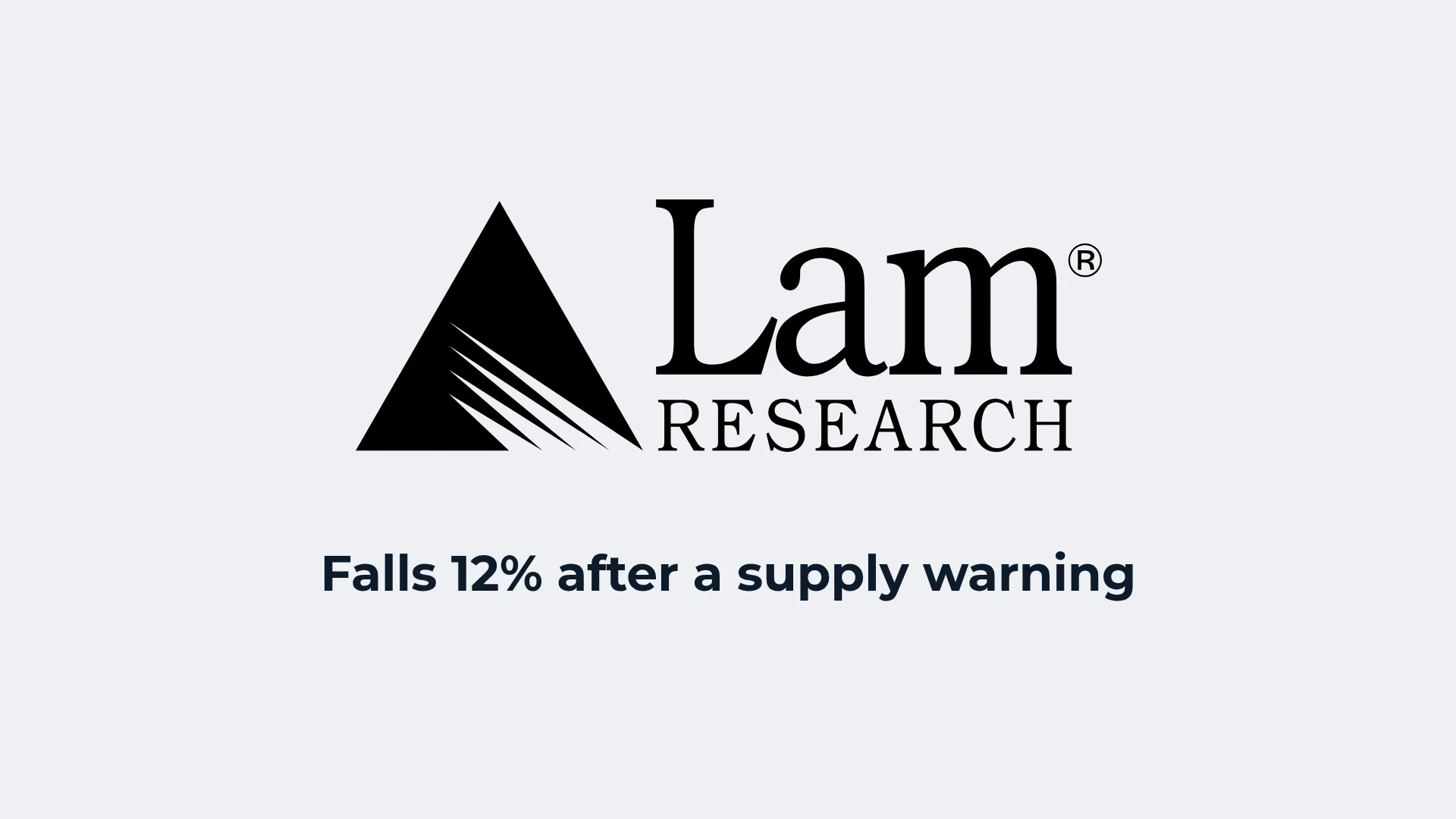
Lam said on October 21 that supply chain constraints held back its December-quarter forecast, and that some equipment planned for December will ship in the March quarter instead. "As we move into calendar year 2027, we see clean room space availability and supply chain constraints for certain components continuing to limit chip makers and equipment companies' ability to fully meet end demand," CEO Tim Archer said on the earnings call.
Helium is being rationed
Polar Semiconductor, a chipmaker outside Minneapolis, buys helium from three suppliers. One of them has put the company on allocation, a form of rationing. "If we do not have helium, we'll have to shut down," said Surya Iyer, Polar's president and chief operating officer.
The semiconductor industry uses about a fifth of the world's helium. Spot prices have tripled this year, said Rich Brooke, a former Air Liquide executive who now consults on helium. Qatar, a major supplier, estimated after Iranian strikes in March that it would take at least three years to bring its Ras Laffan facility back to full operation.
The oversupply forecasts look to 2028 and 2029
CXMT President Cao Kanyu said at a chip conference on October 10 that the company expects to launch a DDR5 RDIMM server module using its 4F² design around the end of the year. A 4F² cell takes up about a third less space than today's common 6F² cell at the same feature size. CXMT hasn't disclosed specifications, shipment volumes, yields, or customers for the product.
Kevin Cassidy, a senior research analyst at Rosenblatt Securities, said of CXMT's plan, "We don't think this is going to swing the supply-demand equation at all."
Counterpoint Research expects DRAM prices to fall about 23% in 2028 from 2027, which would still leave them about 230% above 2025 levels. In a Maeil Business Newspaper column on October 15, editorial adviser Kim Se-hyung wrote that Seoul National University professor Hwang Cheol-seong and Ahn Ki-hyun, executive director of the Korea Semiconductor Industry Association, expect the memory boom to last through 2028. From 2029, they expect new capacity to pour in and turn the market into a "red ocean," a crowded market where competition is fierce. A new memory factory takes about three to five years to build and bring online.
Lam's preliminary outlook for 2027 is more than $200 billion of wafer fabrication equipment spending, "with percentage growth led by DRAM, followed by leading-edge foundry logic and NAND," Archer said.
TrendForce expects memory contract prices to keep rising
TrendForce projected on September 30 that conventional DRAM contract prices will rise 10% to 15% in the fourth quarter from the third, and NAND flash contract prices 15% to 20%. It expects server DRAM to remain undersupplied, though it said the pace of increases should moderate.
At its October 23 close, Micron traded at about 4.2 times analysts' average earnings estimate of $206.89 a share for its fiscal year ending in August 2028, by our calculations from Yahoo Finance data. That fiscal year runs from September 2027 through August 2028, and it overlaps 2028, when Counterpoint expects DRAM prices to fall about 23%. So the multiple rests on profit estimates for the same period the oversupply forecasts begin to cover. It's about where Micron stood a week earlier, when we compared Micron with Cisco after the dot-com crash.
SK Hynix (SKHY) reports third-quarter results on October 28, with a conference call at 9 a.m. Seoul time.
The Kiwoom and Maeil quotes are translated from Korean. The contract's dollar value is the figure stated in Samsung Electro-Mechanics' filing.