Key points
- Meta's revenue tops its forecast
- Meta's capital spending rises 80%
- Meta plans nonvoting Class C shares
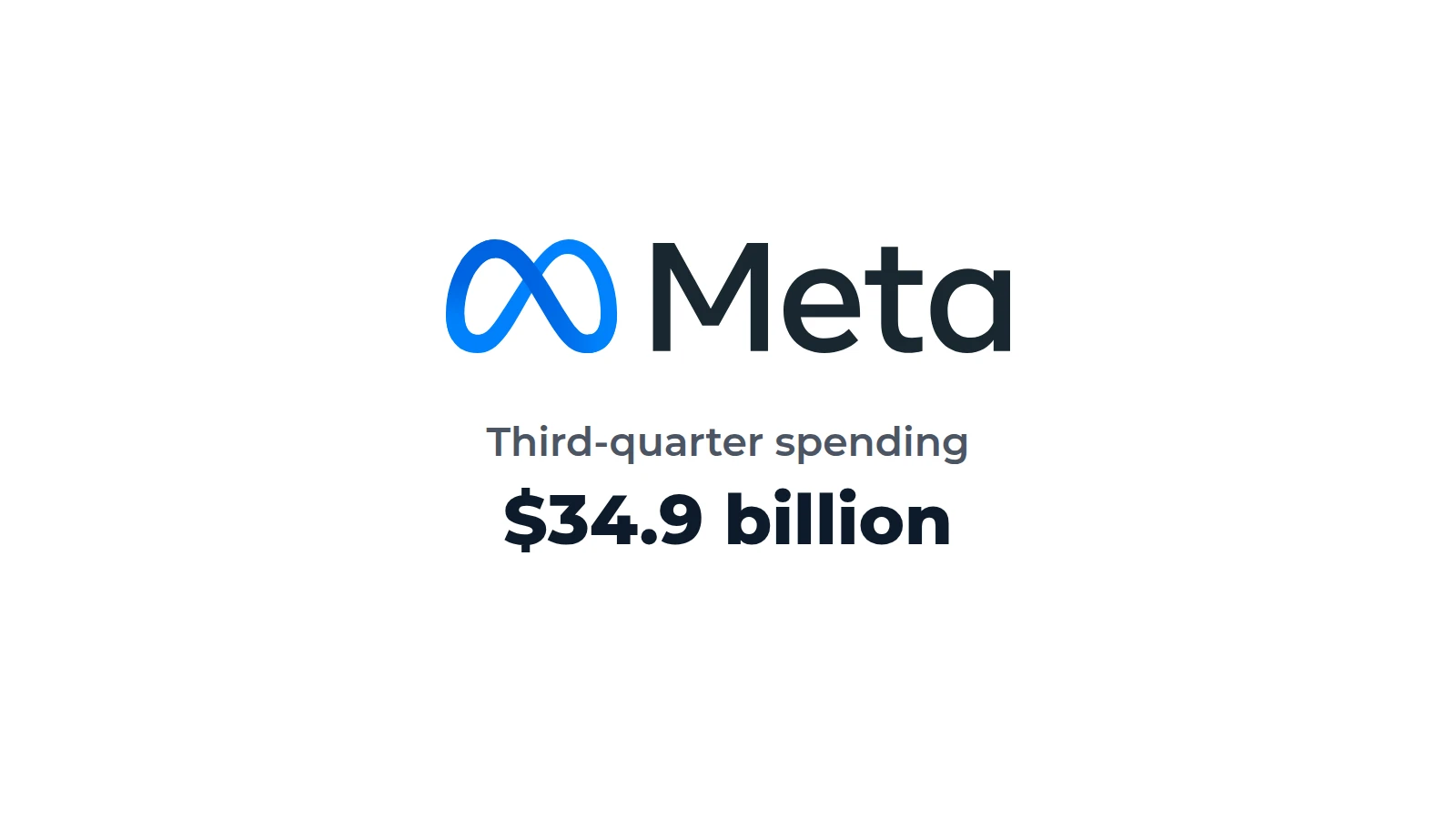
Meta Platforms (META) reported its third-quarter results on Wednesday, October 21, and sales came in at $64.6 billion, a little above the top of the $61 billion to $64 billion it had forecast in July. That's 26% more than a year earlier. The spending grew a lot faster. Meta put $34.9 billion into data centers, servers, and other equipment in the three months, up 80% from $19.4 billion a year ago, according to its results filing.
CEO Mark Zuckerberg sounded pleased with what that money is buying. "Our investments are paying off, the core business is strong, and we're seeing velocity across the board," he said.
Meta expects $73 billion to $76 billion of sales in the last three months of the year. The stock rose in after-hours trading that night, then fell 7.0% on October 22 to close at $648.85, down from $697.52. AI power stocks fell with it.
Why did profit fall if sales were up?
Operating profit, which is what Meta's business earned before interest and taxes, was $13.0 billion, down 37% from $20.5 billion. The drop comes from one charge. Meta booked $9.89 billion for its August agreement with 52 state attorneys general, which settles lawsuits over teen mental health and social media. The agreement calls for payments of up to about $18.59 billion in total.
Without the charge, Meta says operating profit would have been $22.9 billion. Earnings per share would have been $7.40 instead of the $3.83 it reported. The $3.83 is still more than triple the $1.05 of a year ago, but that's because a year ago Meta's tax rate was 87%, which took most of that quarter's profit.
The ad business kept growing underneath the charge. Meta showed 10% more ads than a year earlier, and the average price of an ad rose 14%. About 3.64 billion people used at least one of its apps each day in September, 3% more than last year. Meta also has fewer employees, 66,775 at the end of September, down 15%.
How much is Meta spending on the buildout?
Meta has spent $85.8 billion on buildings and equipment so far this year. It now expects $135 billion to $145 billion for all of 2026, after a July forecast of $130 billion to $145 billion. By our calculations, that leaves $49.2 billion to $59.2 billion for the fourth quarter alone, which would be its biggest quarter of spending yet.
Meta's day-to-day business brought in $32.8 billion in the quarter. That's less than the $34.9 billion it spent on the buildout, which left Meta with negative free cash flow of $2.1 billion. Free cash flow is what's left of that day-to-day cash after paying for the buildout, and a year earlier it was a positive $10.6 billion. It didn't buy back any of its own stock this time, after spending $3.3 billion on buybacks a year ago. It paid $1.36 billion in dividends. Meta ended September with $82.5 billion of cash and investments and $80.9 billion of long-term debt.
For 2027, the filing says Meta is "still developing our budget and capacity plans for next year," but expects to keep investing aggressively in its main business and in AI. CFO Susan Li said on the call that the company won't have anything more specific until its fourth-quarter report, according to the transcript.
Zuckerberg spent much of the call on Muse, the personal AI agent Meta launched this quarter. More than 10 million people in the US and Canada set one up in about a month and a half, and about 25% of them use it on any given day, he said. He wants those agents to work with each other and with the agents businesses use for sales and customer support. "We'd like to create a large-scale Muse network as quickly as possible," he said.
Meta also announced a new class of non-voting Class C shares that works like a two-for-one stock split. We explain how the shares work, and what Zuckerberg first asked for, in a separate story.
The filing also says Meta expects losses at Reality Labs, its headset and glasses business, of $18 billion to $19 billion this year, narrowing to about $15 billion in 2027.
We went over what to watch in Meta's report in our earnings preview. Meta's next report will be on our earnings calendar.
Figures are from Meta's October 21 filing. The fourth-quarter spending range and year-over-year changes are our arithmetic from Meta's statements. Stock prices are official closes for October 21 and October 22.