Key points
- JPMorgan sizes up bank exposure to CoreWeave
- How CoreWeave's bank loans are structured
- Goldman upgrades CoreWeave (CRWV) after its slide
JPMorgan (JPM) sees limited risk to most global banks from CoreWeave's (CRWV) debt, even after borrowing concerns drove a sharp selloff in the AI cloud company's shares and bonds last week, Reuters reported on Oct. 20. The bank cautioned that its estimates rely on simplified assumptions because lenders disclose little about their exposure to AI spending.
CoreWeave shares lost about a quarter of their value last week and continued falling on Oct. 19, closing down 0.4% at $61.12. They traded at $58.59 in premarket trading on Oct. 20 as of 6:14 a.m. ET.
Most bank exposure comes through delayed draw loans
Much of the exposure comes through delayed draw term loans, according to JPMorgan. With that kind of loan, a lender commits a set amount, but the borrower takes the money in stages instead of all at once. JPMorgan said the loans are largely held through special-purpose vehicles, which are separate companies set up to hold specific assets or debt, with money released as projects meet milestones. The report doesn't describe the structure in more detail.
CoreWeave has about $24 billion of committed delayed draw term loans, with $15 billion drawn and $9 billion undrawn, according to JPMorgan. The company has about $50 billion of debt in total.
"From the perspective of financing banks, we view bank exposures to CoreWeave as well managed and very well secured," JPMorgan analysts led by Kian Abouhossein wrote in a note.
The analysts named one main risk for lenders. CoreWeave spends heavily up front to build AI infrastructure, while its revenue arrives over time. JPMorgan expects CoreWeave's free cash flow to stay negative until 2030.
JPMorgan rates CoreWeave "overweight" with a price target of $125 for the end of 2027. That's about 105% above the Oct. 19 close, by our calculations.
Goldman Sachs upgraded CoreWeave on Oct. 19
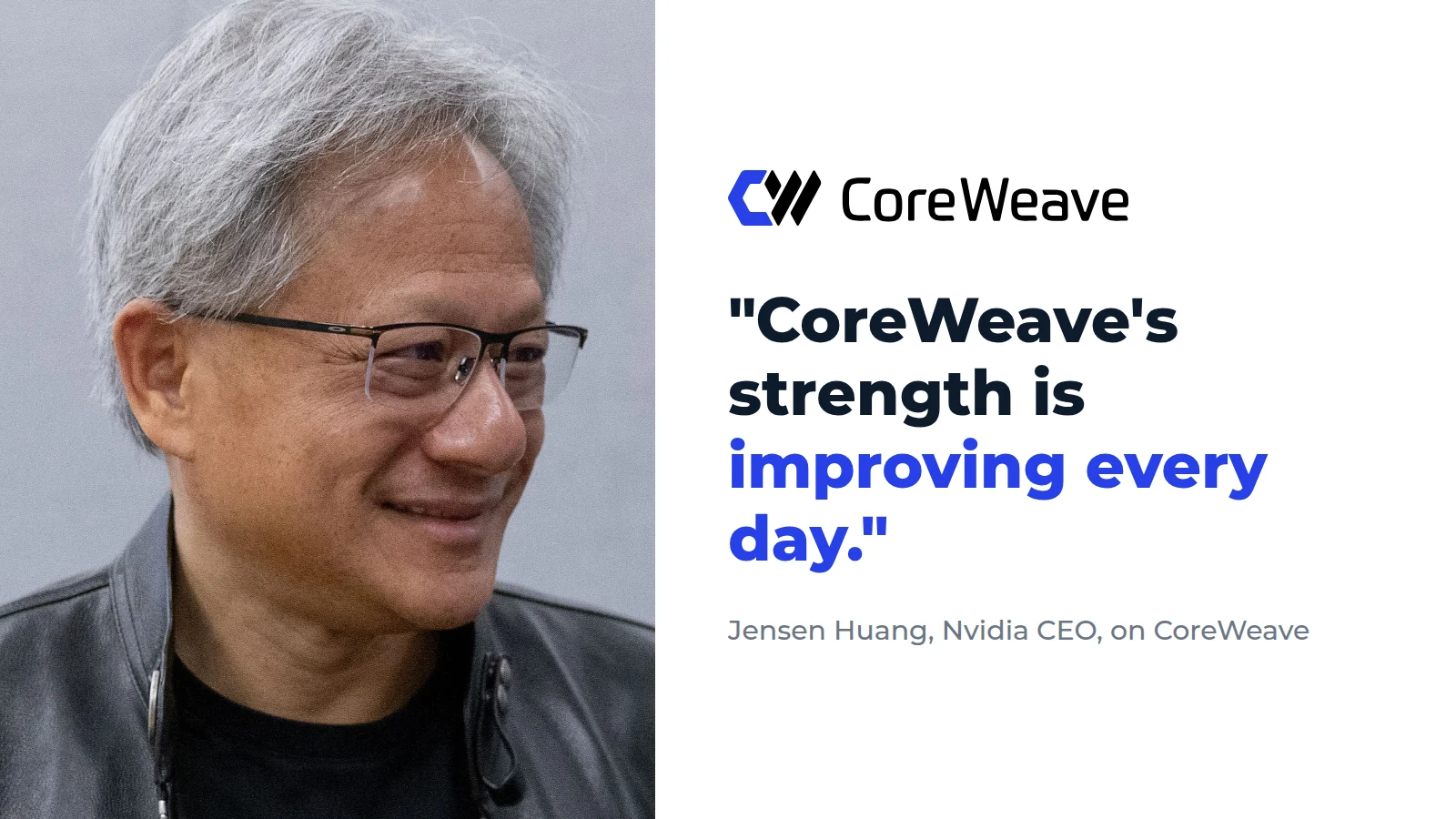
Goldman Sachs (GS) upgraded CoreWeave to "buy" from "neutral" on Oct. 19. Goldman said tight computing capacity and CoreWeave's performance advantage over other neocloud companies should lift its annual recurring revenue per megawatt over the next two years. The firm called the recent pullback a buying opportunity.
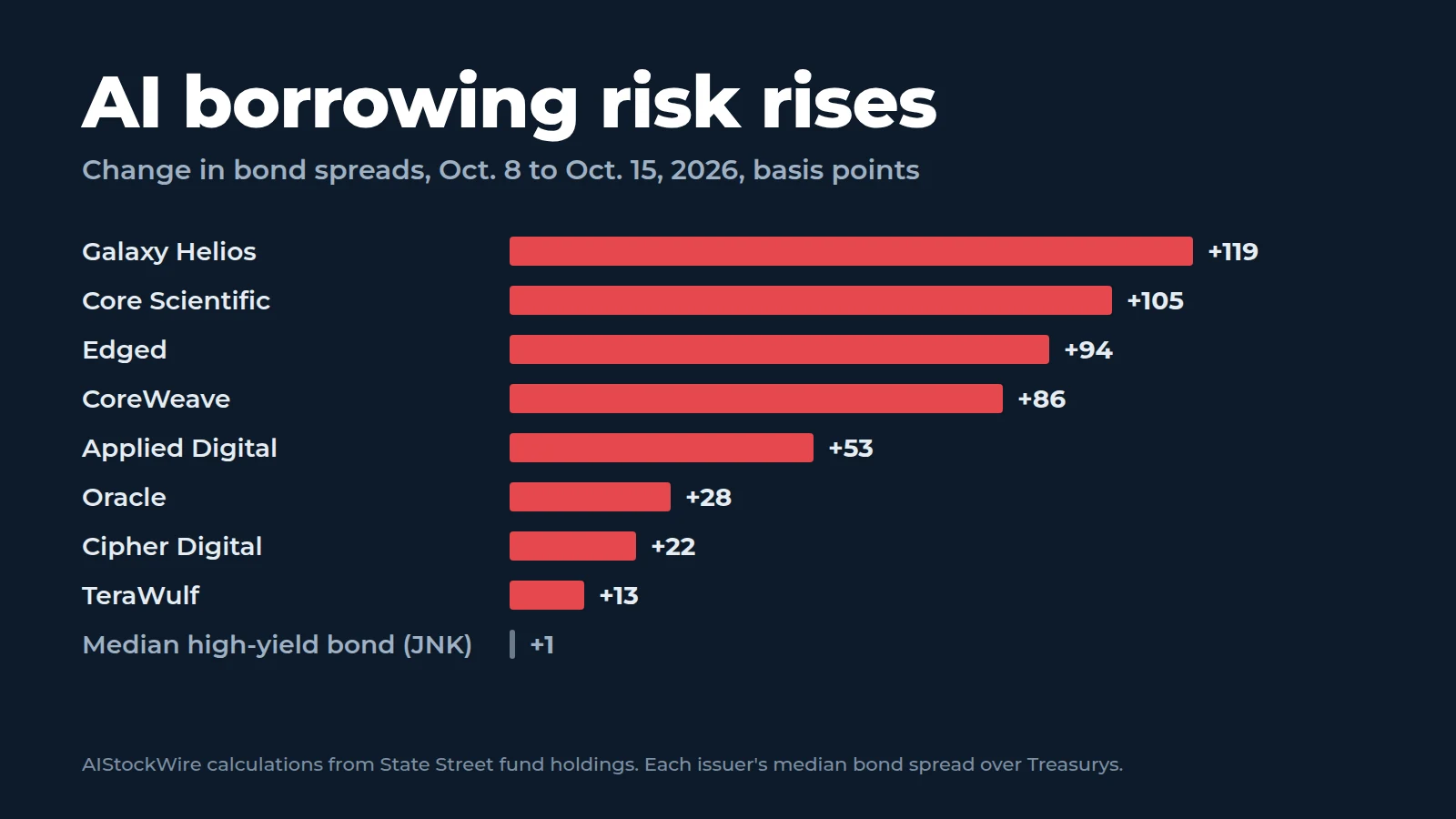
CoreWeave's bonds steadied too. The yield on its notes due 2031 fell 19.5 basis points to 15.13% on Oct. 19, according to Tradeweb data, after reaching about 16% last week. A basis point is a hundredth of a percentage point.
The cost of insuring CoreWeave's debt against default hit a record intraday high of 1,194.5 basis points on Oct. 15, according to ICE Data Services. Spreads on bonds from other AI infrastructure borrowers widened over the same stretch.