Key points
- Nvidia's board adds a national security committee
- Who sits on Nvidia's new committee
- Where Nvidia's security teams now report
- What Nvidia's board chair said about the move
The board of Nvidia (NVDA) created a standing committee on Nov. 17 to oversee the company's national security policies, export control compliance, and global trade risk, hours before Nvidia reports quarterly results after the market closes. Nvidia's National Security Team and Global Trade Compliance Team will report directly to the committee, and to interim chief executive Colette Kress on day-to-day operations, according to Nvidia's announcement.
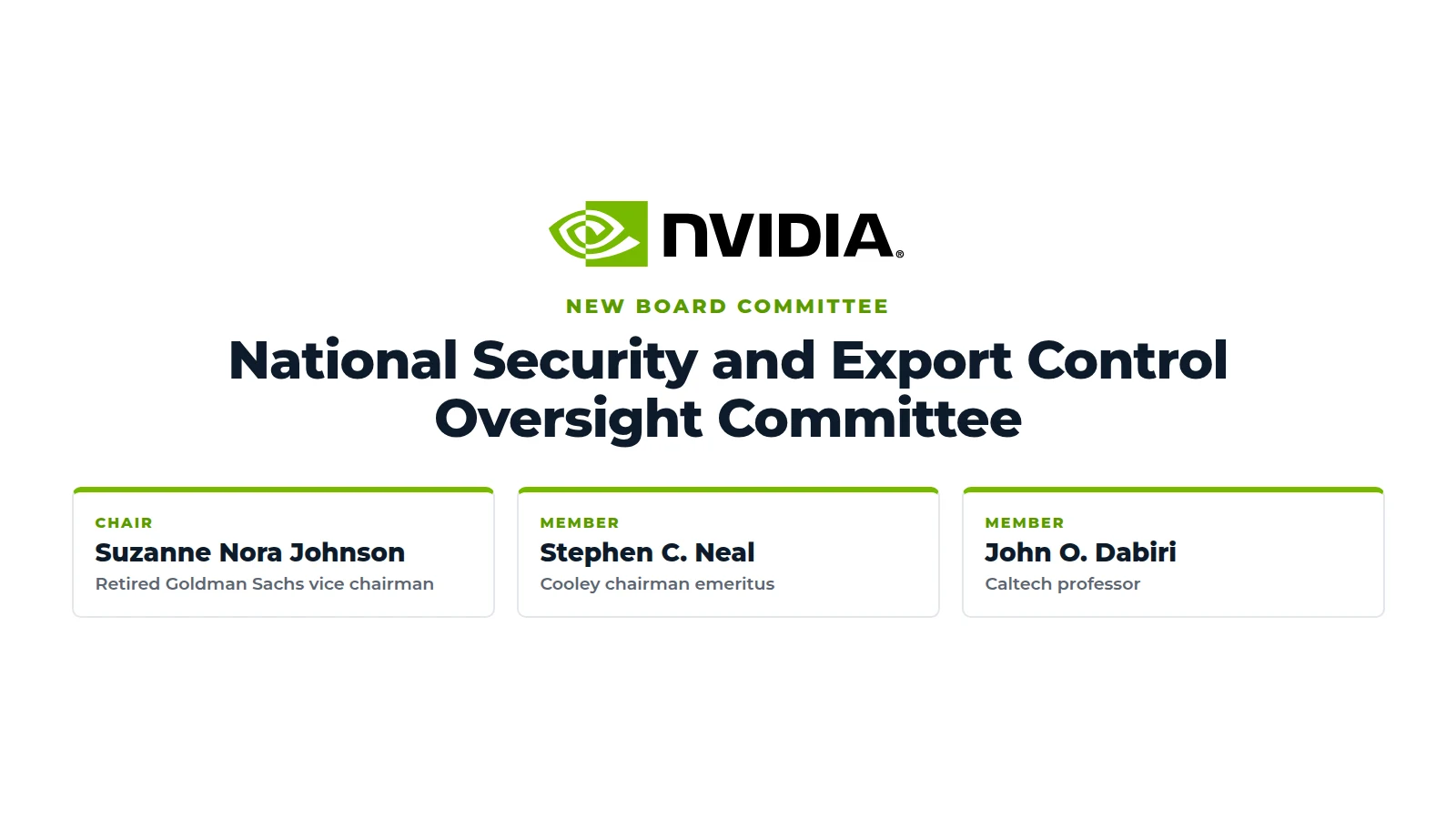
Director Suzanne Nora Johnson, a retired vice chairman of Goldman Sachs, will chair the National Security and Export Control Oversight Committee. Directors Stephen C. Neal and John O. Dabiri are the other two members. The committee will meet at least quarterly, including with management and in executive session.
The committee is the board's fourth standing committee
Nvidia's board had three standing committees before this one: audit, compensation, and nominating and corporate governance, according to the company's 2026 proxy statement. A standing committee is a permanent part of the board's structure, not a special committee set up for a single review.
That makes it separate from the board's investigation of reports that former CEO Jensen Huang was the target of a foreign intelligence effort, which our Huang scandal timeline follows. Nvidia's announcement doesn't mention Huang or the investigation.
The announcement says the committee will oversee Nvidia's ongoing efforts to enhance those two teams. Under the new setup, those teams answer to three directors as well as to Kress.
Who sits on Nvidia's new committee
Nora Johnson spent 21 years at Goldman Sachs and retired as vice chairman. She joined Nvidia's board on July 13, when the board grew from 10 to 11 seats, and sits on the board of Pfizer (PFE). She's also a trustee of the Brookings Institution and the University of Southern California.
Neal is chairman emeritus and senior counsel at the law firm Cooley, where he was chief executive from 2001 to 2008. The proxy describes him as a trial lawyer who has advised boards, special committees, and individual directors on corporate governance. He joined Nvidia's board in 2019 and chaired its nominating and corporate governance committee as of the proxy.
Dabiri is a professor of aeronautics and mechanical engineering at Caltech and a recipient of the National Medal of Science. He served on President Biden's Council of Advisors on Science and Technology from 2021 to January 2025. He has been an Nvidia director since 2020.
None of the three biographies in Nvidia's proxy lists export control or intelligence work. Nvidia says the committee will work with independent outside experts in law, national security, and global trade compliance.
What Nvidia's board chair said about the move
Board chair Harvey Jones, who took that role on Nov. 11 when Huang resigned, said in the announcement that "advanced silicon technologies and the emergence of artificial and superintelligence present unprecedented challenges for national security." He said Nvidia is committed to working with government and industry partners on a framework "to safeguard national security while supporting continued technological innovation."
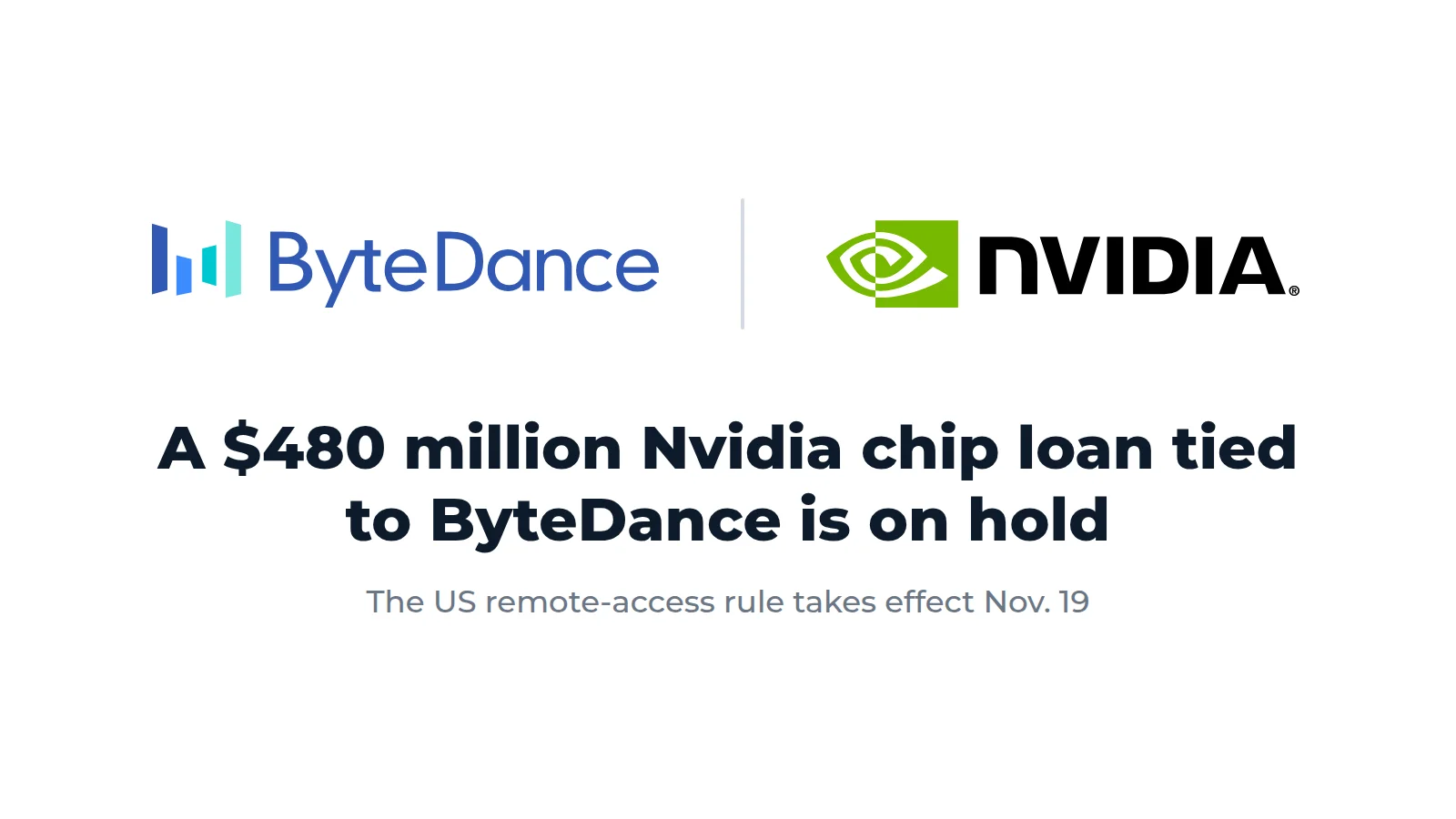
The announcement says the committee reflects the board's commitment to engage more with government stakeholders. The Commerce Department released a rule on remote access to AI chips on Nov. 16, and three House Republican chairmen had asked Huang for a closed-door briefing on Nov. 18.
Nvidia reports its fiscal third-quarter results after the close on Nov. 17. Our earnings preview covers what analysts expect.