Key points
- Oracle carries more debt, backed by a profitable business
- CoreWeave owes less but has an operating loss
- Both have huge lease bills that haven't started yet
Oracle (ORCL) and CoreWeave (CRWV) are two of the biggest borrowers behind the AI data center buildout, and the credit market is paying attention. Oracle's five-year credit default swap spread hit a record 227.15 basis points on Sept. 24. CoreWeave sold $4.2 billion of convertible notes two days earlier.
The two companies borrow in very different ways. Here is each company's debt, incoming cash, and signed commitments, from its latest quarterly filing.
The numbers side by side
| Item | Oracle (Aug. 31, 2026) | CoreWeave (June 30, 2026) |
|---|---|---|
| Debt on the balance sheet | $125.3 billion | $35.1 billion |
| Cash and cash equivalents | $36.4 billion | $5.5 billion |
| Lease liabilities on the balance sheet | $43.8 billion | $16.5 billion |
| Signed leases not yet started | $288 billion | $35.5 billion |
| Remaining performance obligations (RPO) | $664 billion | $103.7 billion |
| Quarterly revenue | $19.3 billion | $2.6 billion |
| Quarterly operating income | $6.7 billion | Loss of $49 million |
| Quarterly interest expense | $1.43 billion | $640 million |
| Quarterly capital spending | $28.5 billion | $6.4 billion |
| Quarterly cash from operations | $23.1 billion | $679 million |
Sources are Oracle's 10-Q for the quarter ended Aug. 31 and CoreWeave's 10-Q for the quarter ended June 30. Debt is the carrying value of borrowings, current and non-current. Lease liabilities combine operating and finance leases. Interest expense is the line on each income statement, and CoreWeave reports its figure net of interest income. CoreWeave's quarterly capital spending and operating cash flow are the six-month totals minus the first quarter, by our arithmetic.
The two lease rows measure different things. Lease liabilities are the present value of payments on leases already in use. Signed leases not yet started are future payments spread over the many years of those leases, and CoreWeave describes its figure as undiscounted. The rows shouldn't be added together into a single debt total.
Oracle: profitable, but spending more than its operations bring in
Oracle's $6.7 billion of operating income covered its $1.43 billion interest bill about 4.7 times last quarter, by our arithmetic. Interest expense was $923 million a year earlier.
The strain is in the cash. Oracle spent $28.5 billion on capital projects in the quarter, more than the $23.1 billion its operations brought in, and that $23.1 billion included $11.4 billion of customer prepayments. Oracle also raised $19.9 billion through an at-the-market share offering during the quarter, issuing 141 million shares, the 10-Q shows.
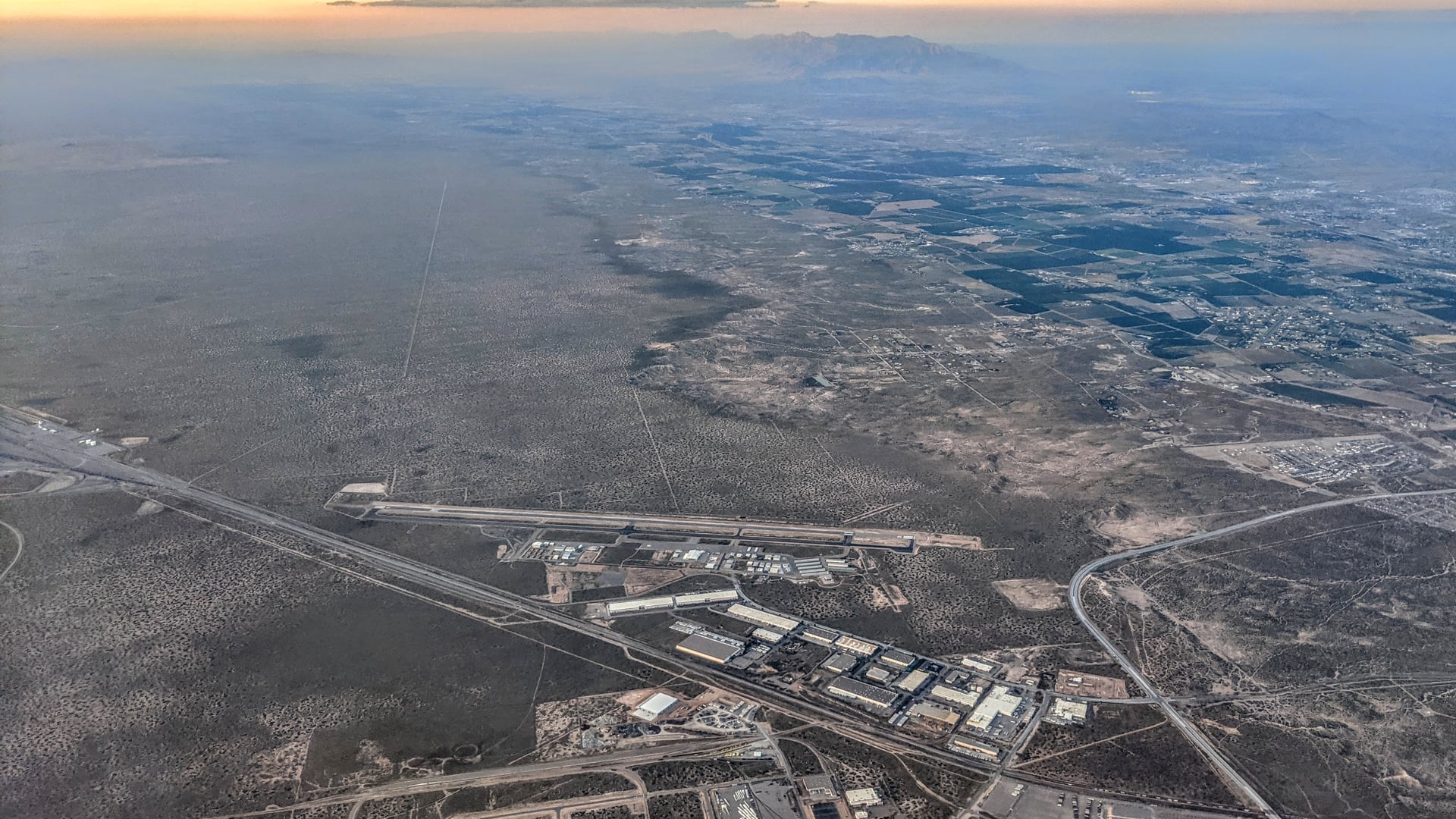
Oracle estimated the fair value of its senior notes and other long-term borrowings at $105.7 billion on Aug. 31, below their $125.0 billion carrying amount. Loans tied to one of its data center projects have traded at 89 cents, and Oracle has invoked force majeure on its New Mexico site.
Oracle also had $288 billion of additional lease commitments, "substantially all related to data center arrangements," expected to start between its fiscal second quarter of 2027 and fiscal 2029, with terms of 15 to 19 years. Those payments aren't in the $125.3 billion of debt.
CoreWeave: less debt, and an operating loss
CoreWeave's borrowings are about a quarter of Oracle's. Its debt table lists coupons of 8.5% to 9.75% on its senior notes, effective interest rates of 7% to 15% on its delayed-draw term loans, and about 2% on its convertible notes. With an operating loss of $49 million last quarter, none of its $640 million of interest expense was covered by operating profit.
About $3.7 billion of the total is non-recourse debt, which is owed by subsidiaries and backed only by their assets, such as data center equipment. The other $31.4 billion is classified in the filing as recourse debt. Principal payments of $4.4 billion are due in the rest of 2026 and $6.2 billion in 2027.
Since June 30, CoreWeave has added to the pile. The company completed the sale of $4.2 billion of 2.875% convertible notes due 2033 on Sept. 22, which isn't in the table above. CoreWeave also had $35.5 billion of signed data center and equipment leases that hadn't started as of June 30, running seven to 16 years.
The contracted revenue behind it
Both companies report remaining performance obligations, or RPO, the contracted revenue they haven't recognized yet. Oracle's was $664 billion, with about 13% expected to be recognized in the 12 months following Aug. 31, 2026. CoreWeave's was $103.7 billion, with 41% expected over the 24 months ending June 30, 2028. Collecting the remaining payments depends on delivering the contracted services and customers meeting their obligations. Some cash has already arrived through prepayments.
If customers fail to meet their commitments, who absorbs the losses? That question connects to a Federal Reserve president's warning about whether the AI ecosystem is becoming too big to fail. Our AI Bubble Index tracks the gap between those commitments and the revenue behind them.
Oracle shares closed at $132.60 on Monday, and CoreWeave closed at $85.07.