Key points
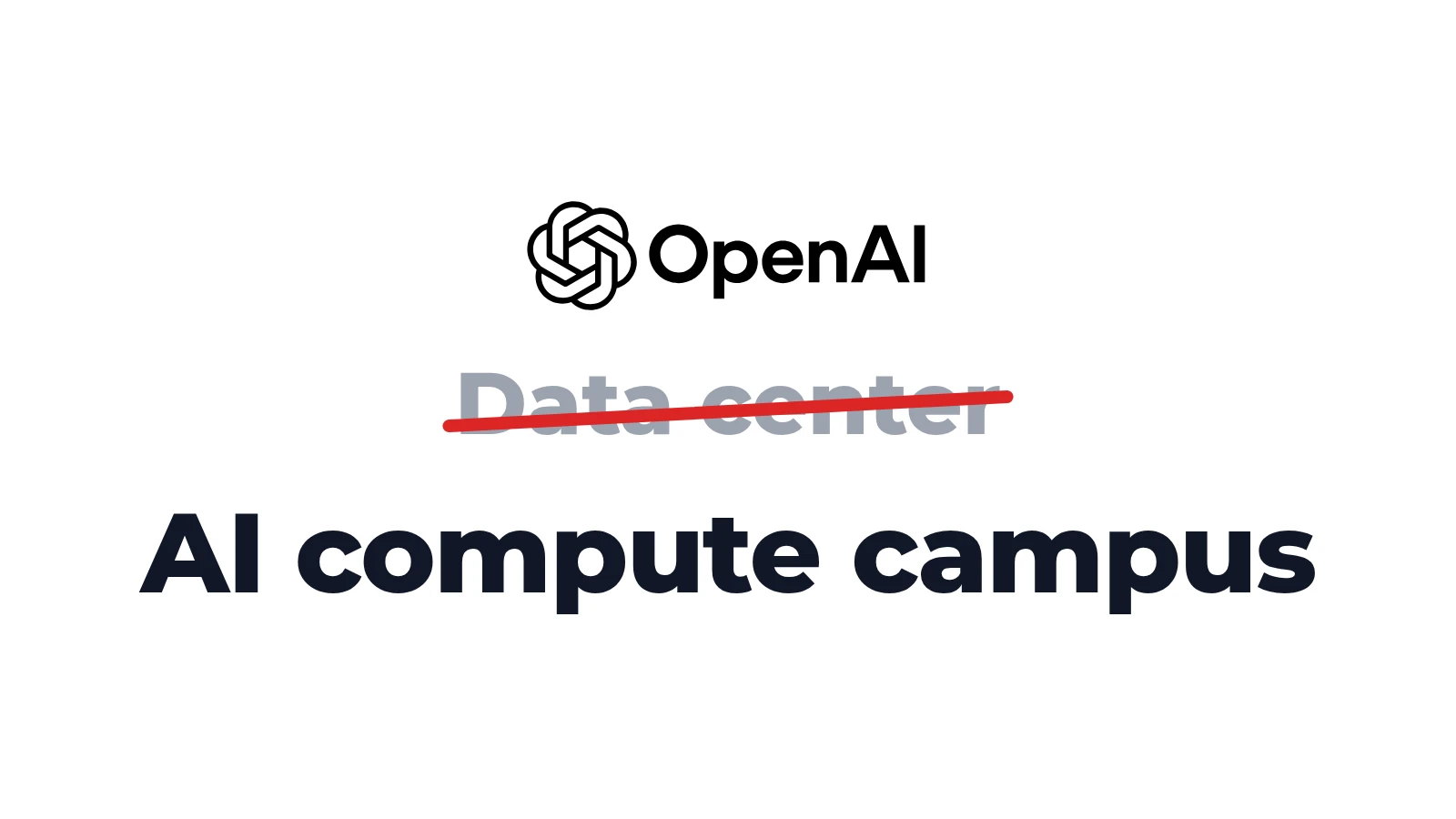
- OpenAI plans to call its data centers "AI compute campuses"
- OpenAI's rebrand comes with community deals and proposed state laws
- Amazon and Microsoft have changed their data center NDA policies
OpenAI plans to start calling the data centers it builds "AI compute campuses," part of a policy and public relations push it will launch right after the November 3 midterm elections, Axios reported on November 1.
Axios described the new name as an intentionally provocative rebranding. OpenAI will argue that the sites it's building, unlike older data centers, can economically transform the communities that host them. Chris Lehane, OpenAI's chief global affairs officer, laid out the plans in an interview.
What OpenAI means by an AI compute campus
OpenAI hasn't published a formal definition. In Axios's account, the term comes with two commitments beyond the buildings themselves. OpenAI will offer new compacts with host communities, and it will propose state legislation that gives residents a meaningful say in how projects are built and what benefits they receive.
OpenAI points to its project in Pike County, Ohio, as the model. Axios said the project promises thousands of jobs in the state's Appalachian region. The site has room for up to 8 gigawatts of capacity, and OpenAI will lease it for 20 years from SoftBank's SB Energy, with Nvidia (NVDA) guaranteeing part of the lease.
"We think the conversation is good and healthy," Lehane said. "It's democracy in action. Communities should hold companies responsible and accountable so they really and truly get a transformative benefit from these projects."
The new name is a response to the data center backlash
Opposition to data centers has crossed party lines, often over electricity bills. In an August memo, the National Republican Senatorial Committee told its own candidates that "the current perception is negative". In California, voters decide on November 3 whether to fast-track environmental reviews under Proposition 45, which opponents say data center developers could use to avoid scrutiny.
OpenAI's state legislation would also move part of that fight to a different level. Most of the opposition plays out at the local level. In Pennsylvania, the state won't issue a permit until a project holds all its local approvals. Only five of more than 100 proposed projects there were fully permitted for their first phase, according to state figures we reported in September. A statewide framework could change where those decisions get made, depending on what the legislation says. OpenAI hasn't released the bill's text, so it isn't clear whether it would limit what local governments can decide.
OpenAI isn't the first to change its approach. Microsoft (MSFT) said in March that it would stop using nondisclosure agreements with local governments on data center projects and end its existing ones. Amazon (AMZN) pledged more than $1 billion over five years for its data center communities on October 2 and said it would stop signing NDAs with government agencies on new projects, GeekWire reported.
A new name is cheaper than new economics. Calling a site an AI compute campus won't change what anyone pays for electricity. The community compacts and the proposed legislation may reveal more about who bears those costs.
OpenAI is preparing for a new Congress
The campaign starts in the lame-duck session of Congress, which opens November 9. Axios expects Democrats to win the House on Tuesday. OpenAI's other proposals include mandatory safeguards it calls "speed limits" for the most powerful AI systems and a push for the US to help set global AI standards.
Lehane also looked past the midterms. "AI is going to be the issue in 2028," he said.
Axios disclosed that it has a content licensing and technology agreement with OpenAI.