Key points
- A 64GB DGX Spark arrives Oct. 23
- The 128GB model just got a lot pricier
- The launch comes amid rising memory costs
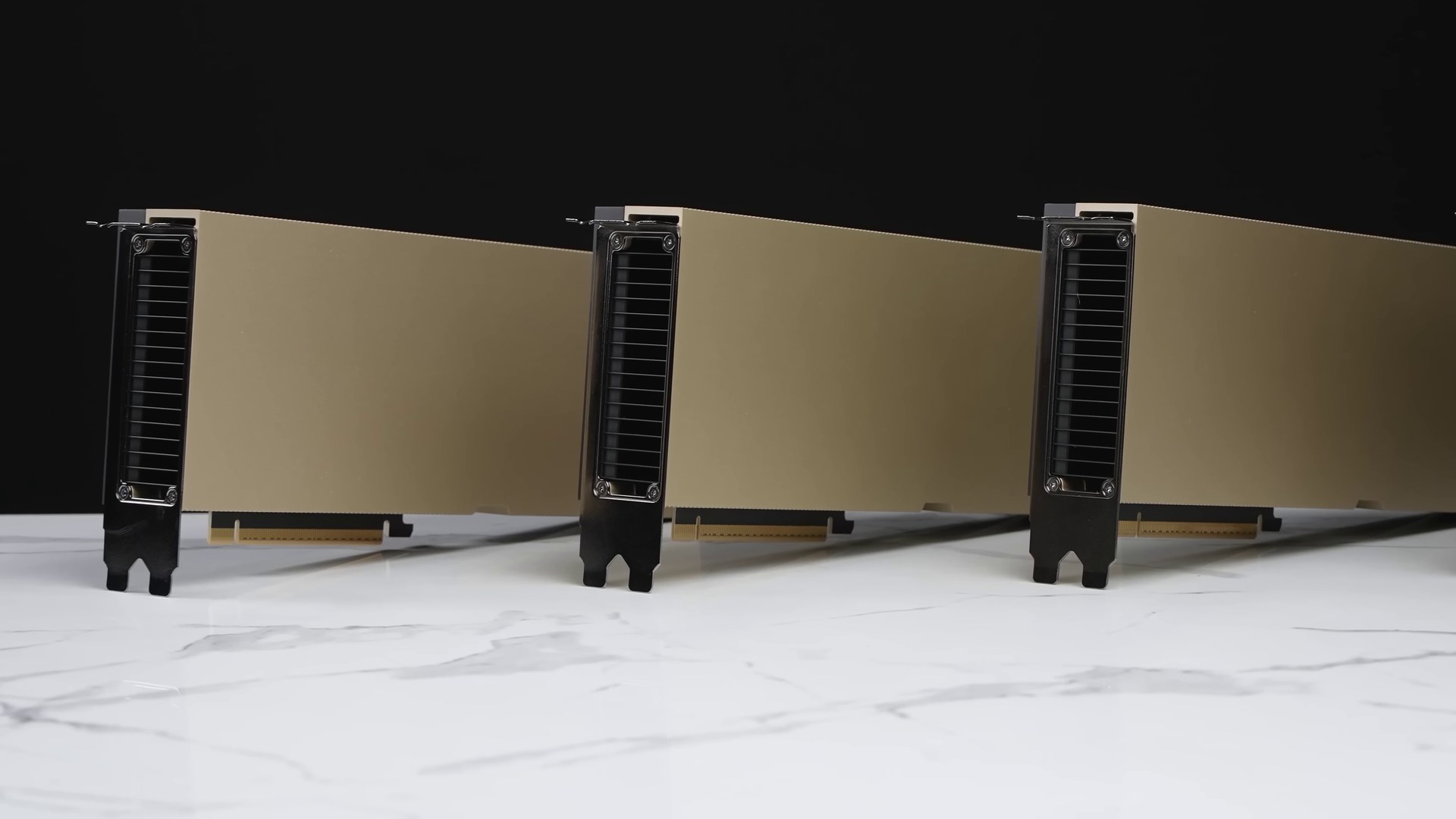
Nvidia (NVDA) will start selling a DGX Spark with 64GB of memory on Oct. 23, starting at $4,999 through Acer, Asus, Dell, Gigabyte, HP and MSI. That's half the memory of the original DGX Spark, which launched a year ago at $3,999.
The original 128GB model now costs more, too. Nvidia raised its price on Friday to $6,950, nearly 75% above its launch price, according to The Register, which blamed soaring memory prices.
What does the 64GB DGX Spark do?
The DGX Spark is a small desktop computer for running and building AI models locally, without renting cloud servers. The 64GB version keeps the same GB10 Grace Blackwell Superchip and software as the 128GB model, and Nvidia says it can run models with up to 100 billion parameters on the device.
Two units can be connected with a cable to pool their memory to 128GB. Nvidia says a pair can run models with up to 200 billion parameters. In its own test with Qwen 3.8 27B, two clustered 64GB systems delivered up to 1.7 times the performance of one.
Nvidia's Sync app sets up the two-unit cluster automatically. "The cluster assistant feature detects connected units, validates device configuration and configures the ConnectX-7 network," Nvidia said.
Why is the DGX Spark getting more expensive?
Memory chips cost a lot more than they did a year ago. At $4,999, the 64GB model is still 25% more than the 128GB version cost at launch. Nvidia's online store listed the DGX Spark as out of stock on Friday, and Tom's Hardware put the going price for a 128GB GB10 system at roughly $7,000 to $9,000, when you can find one.
It isn't just the Spark. Nvidia also raised the price of its Shield TV Pro streaming box to $299 from $199.99 starting Friday and stopped making the standard Shield TV. "The cost of components, including memory, has increased substantially across the industry," Nvidia said, according to Wccftech.
Meanwhile, memory makers' sales and profits are climbing sharply. Micron (MU) reported fiscal fourth-quarter revenue of $54.2 billion on Wednesday, up from $11.3 billion a year earlier. Samsung Electronics and SK Hynix are expected to report record quarterly profits this month.
How is Nvidia stock doing?
Nvidia shares hit a record intraday high of $237.87 on Friday morning, passing the $236.54 peak from May 14. They were up 3.0% at $237.72 as of 10:02 a.m. ET, above the stock's record close of $235.74, also set on May 14.