Key points
- Microsoft nears a $500 million AI deal with ByteDance
- What ByteDance would buy on Microsoft's Azure
- When the Commerce remote-access rule takes effect
- What the rule says about AI models served to Chinese companies
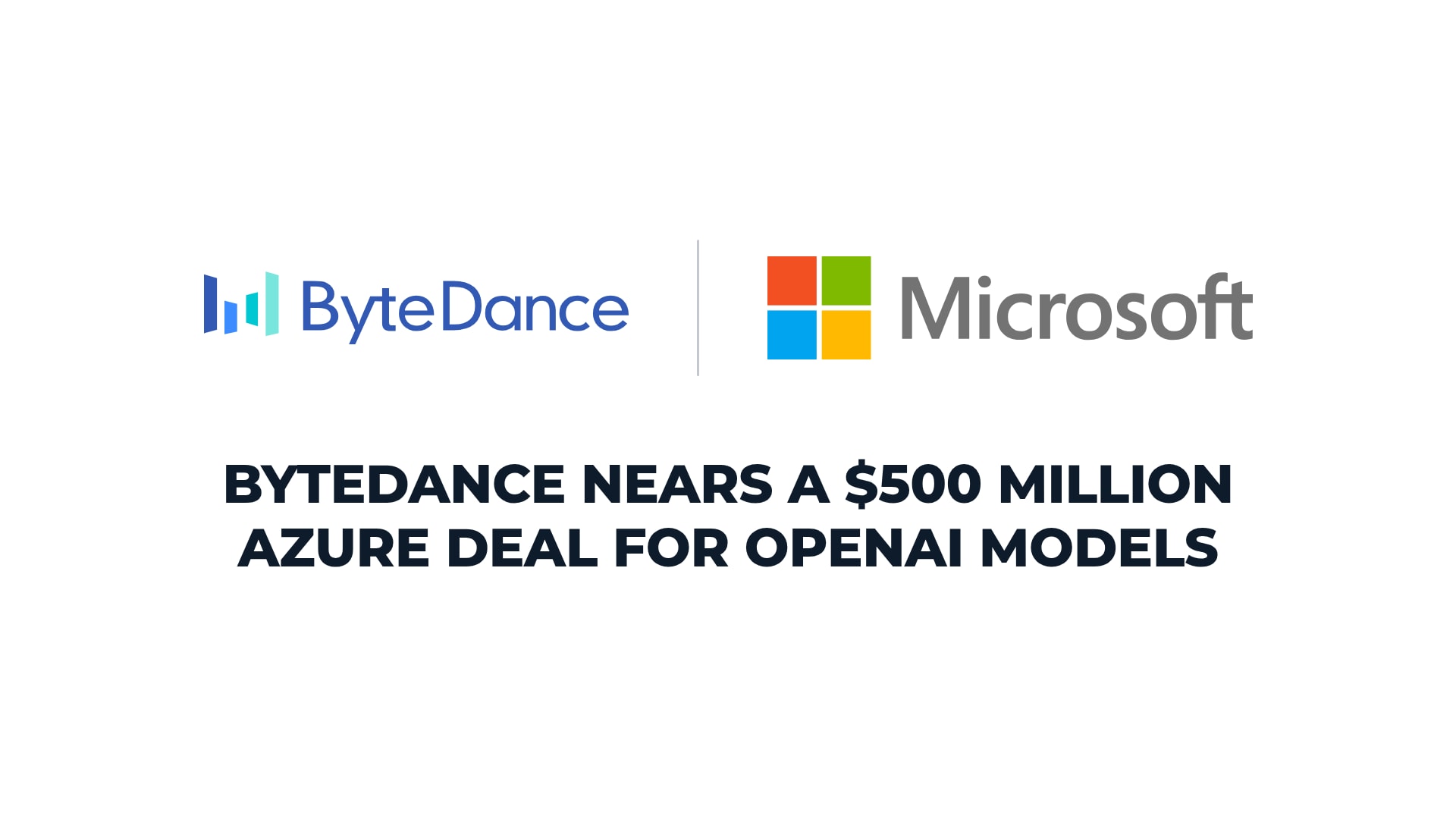
ByteDance is in advanced talks to spend about $500 million more on cloud services from Microsoft (MSFT), mainly for access to OpenAI models through Azure, The Information reported on Nov. 18. The deal would expand ByteDance's existing Azure contract, and it's irking OpenAI, according to the report.
Microsoft shares were at $503.66 at 10:38 a.m. ET on Nov. 18, down 0.5% from the Nov. 17 close of $506.24.
The talks come as a new US rule on remote access to AI chips is set to take effect. The rule covers data centers anywhere in the world that give companies headquartered in China, or whose ultimate parent company is, access to large amounts of AI computing power.
The Information's report doesn't say the rule applies to the deal. We found no statement from BIS, Microsoft, or ByteDance saying that it does.
The Commerce rule takes effect when it is published
The Commerce Department's Bureau of Industry and Security (BIS) released the rule on Nov. 16. It is scheduled for publication in the Federal Register on Nov. 19 and takes effect on the day it is published.
The rule can require a license for advanced AI chips destined for data centers that provide "direct or indirect access" to more than 12 million "aggregate TPP" of computing power to those companies, at one data center or across linked data centers. That limit equals the combined processing power of about 758 of Nvidia's H100 chips, as we explained in our guide to the remote-access rule.
BIS says in the rule that the change will undermine those companies' ability to reach advanced chips "remotely, including through connected cloud computing." A data center that already provides that much computing power to them before the rule takes effect has 90 days to get a license "or face future export restrictions," according to the rule. BIS will review license applications case by case.
The rule mentions AI models served to Chinese companies
The rule's main test is access to computing power, measured in TPP. It doesn't set a separate test for selling access to a finished AI model, such as an OpenAI model on Azure.
The rule does mention models in one place. Its preamble says the license requirement also applies when there is "knowledge" that a data center is providing remote access to a customer outside D:5 that is in turn "providing SI models to a D:5 company," or training models for one. SI stands for super intelligence, the term the rule uses in place of AI, and Country Group D:5 is the export-rule group that includes China.
The rule doesn't say whether a hosted model service like the reported Azure arrangement meets those conditions, or how the computing power behind such a service would count toward the 12 million TPP limit.
The rule exempts computing power provided only for what it calls commercial recommender systems, such as those used by online retailers and social media companies. The exemption comes with conditions: the provider has to report the company's name, the total TPP provided, and its due diligence to BIS. It also excludes any AI system "designed or used to generate novel text, image, audio, video, software, or other content." By that definition, a service that generates text, such as an OpenAI chat model, wouldn't qualify.
Whether Microsoft's sale to ByteDance would need a license isn't clear from the rule's text. The answer would depend on how much computing power the service gives ByteDance and on how BIS applies the rule.
A ByteDance chip loan stalled this week
Lenders paused work on a $480 million loan for Nvidia chips in a Malaysian data center that ByteDance would use, Bloomberg reported on Nov. 17. Bankers worried the loan could violate the same rule, according to that report. We covered the paused ByteDance loan the same day.
The rule also adds a license requirement for advanced AI chips shipped to Malaysia, Indonesia, Singapore, Thailand, and Brazil. BIS says those countries carry "a higher-than-normal risk of diversion."