Key points
- Raytheon wins a multi-year AMRAAM contract
- Little of the ceiling is funded at award
- Executives warn full multiyear funding is not yet appropriated
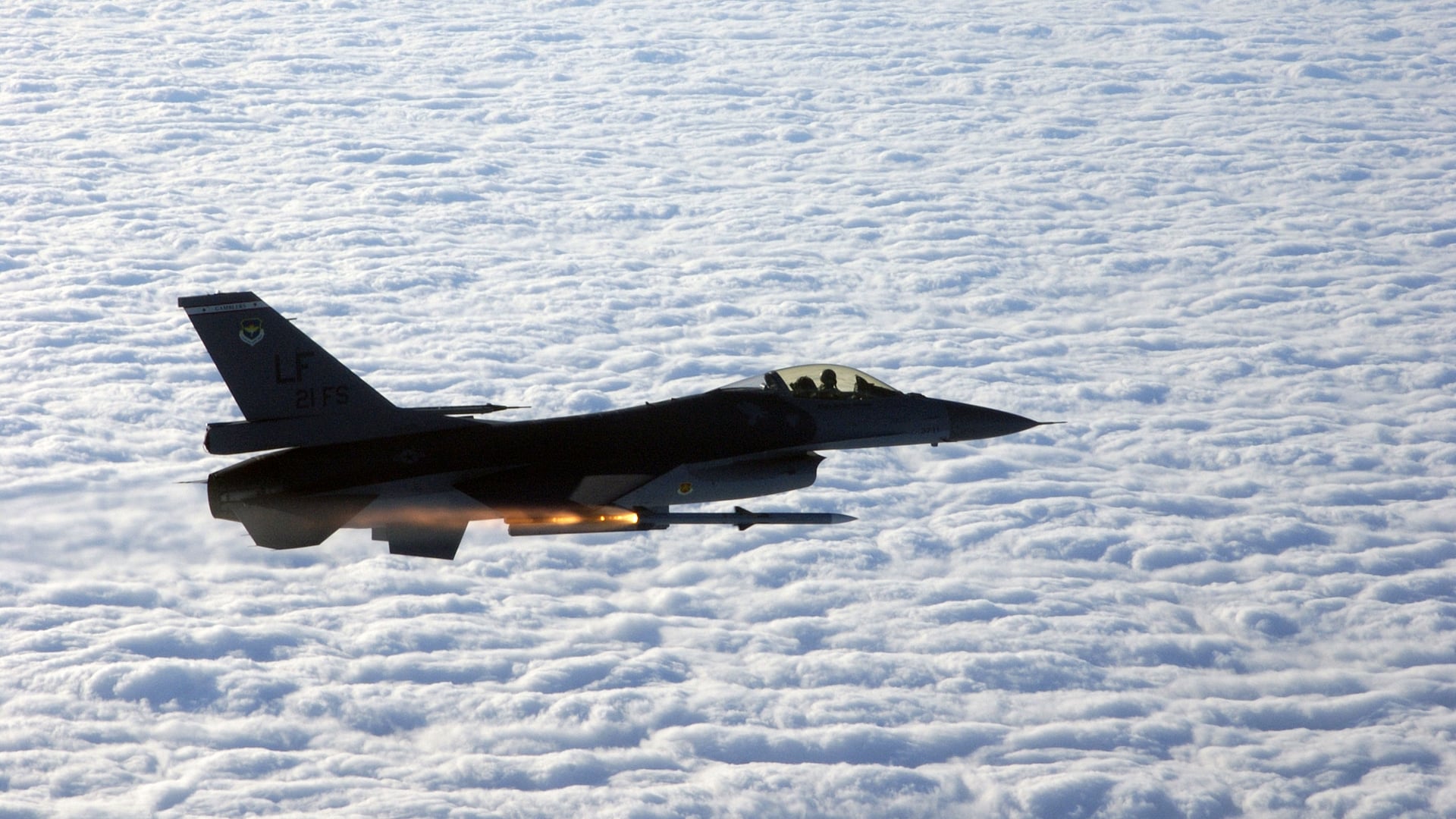
Raytheon, part of RTX (RTX), won an Air Force contract worth up to $20.7 billion for AMRAAM air-to-air missiles, with work scheduled through June 2033. The amount obligated at award was much smaller: $154.4 million, almost entirely from Foreign Military Sales funds.
The Air Force awarded the contract on Sept. 25, and the Department of War announced it Monday. Raytheon issued its own release at 5:10 p.m. ET, describing a five-year contract with two option years.
What the contract covers
The agreement covers complete missiles, guidance sections, direct charge items, and foreign military sales offsets. Sixteen overseas customers are named, including Japan, Taiwan, and Poland. Work will take place in Tucson, Arizona, with completion expected by June 30, 2033.
The award is an undefinitized contract action, which allows work to begin before all terms, including price, have been agreed. The contract combines fixed-price incentive and firm-fixed-price terms.
The contract was awarded without competition. The Air Force Life Cycle Management Center at Robins Air Force Base, Georgia, is managing the procurement.
How much is committed
The announcement lists $85,715 of fiscal 2026 Air Force weapons procurement funds and $154,266,225 of Foreign Military Sales funds as obligated at the time of award. Together that is less than 1% of the $20.7 billion ceiling.
The $20.7 billion figure is the announced contract ceiling, not money paid or fully obligated. An Air Force research contract awarded to Anduril on Sept. 17 obligated $50,000 against an $85 million ceiling. The Pentagon also announced a five-year shell-steel contract worth up to $995 million for Metallus (MTUS) on Sept. 25, the day the AMRAAM contract was awarded.
The last AMRAAM award described as the largest in the program's history was $3.5 billion. The Pentagon announced it on July 31, 2025. That award covered production lots 39 and 40, and Janes called it the largest AMRAAM contract to date. The new contract covers five years with two option years, so the two awards span different periods. The new ceiling is nearly six times the earlier amount.
Full funding remains a concern
Reuters reported, in a story carried by ThePrint, that industry executives have cautioned that Congress "has not yet appropriated the funding needed to support the full multiyear commitment."
Reuters also reported that the contract is part of the Pentagon's "Arsenal of Freedom" initiative. AMRAAM is used in air-to-air combat and in the NASAMS air defense system. Reuters said NASAMS is used by more than a dozen countries, including Ukraine, Oman, and Qatar.
What Raytheon says about production
Raytheon said in its release that RTX nearly doubled AMRAAM production in 2025 compared with 2024. RTX said earlier this year that the company would set an annual production goal of at least 1,900 AMRAAMs. Raytheon also said the company is exploring international co-production. The release says AMRAAM operates on 14 platforms, is fielded by 44 countries, and has more than 7,000 successful live fires in test and combat.
Raytheon President Phil Jasper said the company will keep making "significant investments in our workforce, technology, supply chain and facilities to rapidly scale production capacity and meet surging demand from the U.S. Air Force, Navy and our international partners."
RTX shares closed at $187.66 on Monday, down 0.9%. The company's statement is timestamped 5:10 p.m. ET, after the market closed, so the close preceded Raytheon's release.
Other Raytheon awards
Raytheon appeared in three other awards on the Sept. 28 announcement, all for the Navy. One was a $30.2 million undefinitized modification to qualify additional manufacturing sources for AIM-9X missile components, among them the cryoengine, wiring harnesses, and warhead parts.
Another was a $21.7 million order for engineering to address obsolete components and restart production of the Tomahawk Legacy Integrated Firing Unit, along with 380 production units.
The third was a $19.5 million order for fuze cable assemblies and long-delay detonators for Tactical Tomahawk missiles. The announcement says none of the three was competitively procured.