Key points
- Nvidia weighs more funding for Samsung Electro-Mechanics' plants
- What Samsung Electro-Mechanics will make for Nvidia
- Samsung Electro-Mechanics shares fell 35% after the first deal
Nvidia (NVDA) is considering additional funding to expand production at Samsung Electro-Mechanics (삼성전기, 009150) plants in Sejong and Busan and to bring in advanced equipment, Samsung Electro-Mechanics said on Nov. 18, according to Edaily (이데일리). Mass production from the added capacity would start in 2029, the company said. The two companies will also work together on MLCCs, widening the partnership beyond substrates.
On Nov. 17, Nvidia said it had amended its substrate supply agreement with Samsung Electro-Mechanics to improve operational capabilities at the Korean company's existing factories and support increased production of Nvidia's AI computing platforms. Nvidia didn't give a dollar amount or a capacity figure for the amendment.
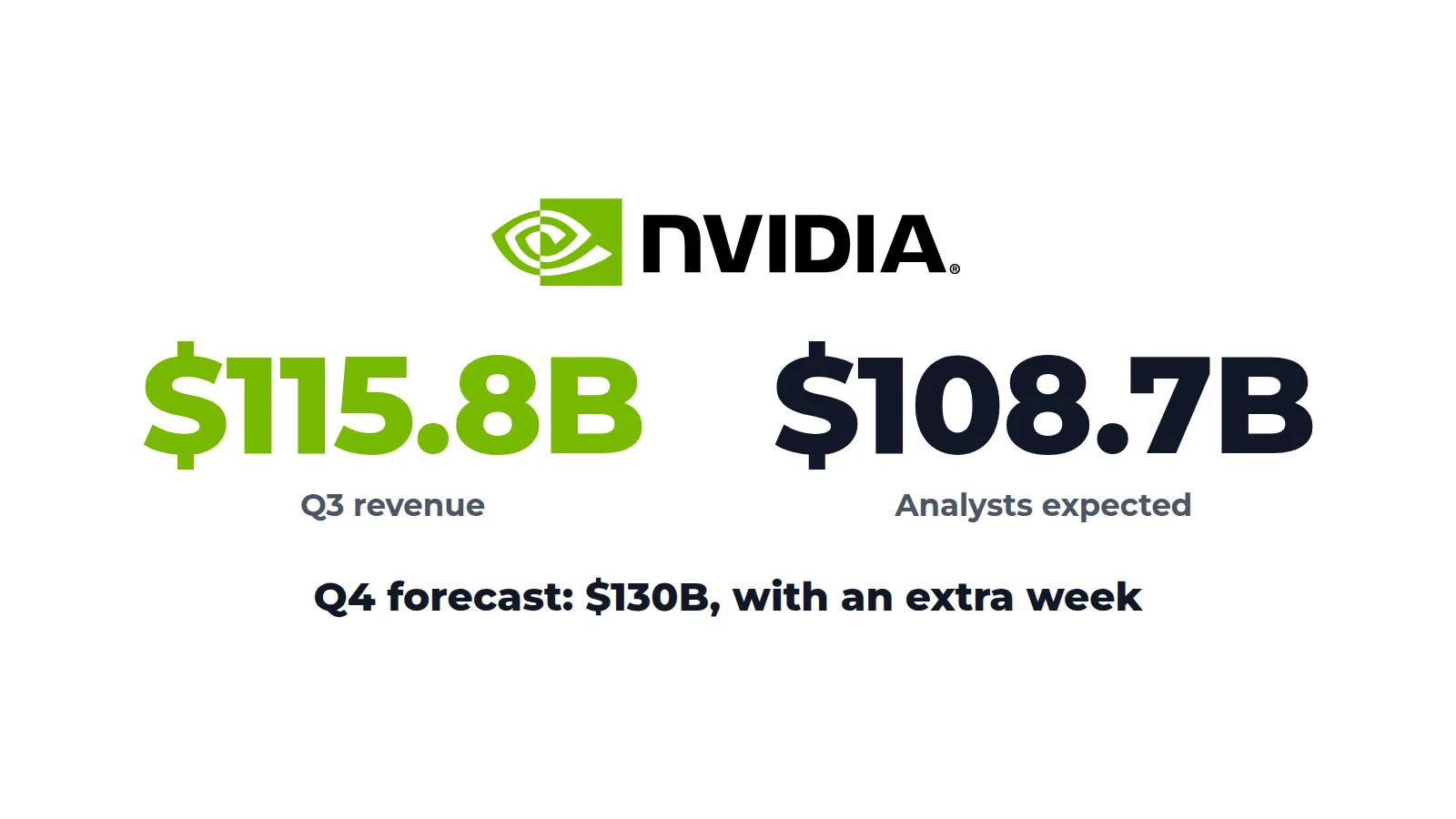
It's the second time in less than a month that Nvidia has named Samsung Electro-Mechanics in its supply plans. The amendment builds on the multiyear agreement Nvidia announced on Oct. 21 for substrate manufacturing in Sejong and Busan. Nvidia released the news after its third-quarter results, which showed its supply commitments rising to $390 billion. On the earnings call, interim CEO Colette Kress said suppliers are Nvidia's top priority for its capital, because some of their supply "needs assistance in terms of capital from any forms of different types of prepays to help them in terms of capacity," according to a transcript of the call.
Samsung Electro-Mechanics shares were up 5.0% at 792,000 won ($593) as of 9:32 a.m. in Seoul on Nov. 18, from the Nov. 17 close of 754,000 won ($565). Chip stocks rose in Seoul after Nvidia's results.
What Samsung Electro-Mechanics agreed to in October
A package substrate is the board a chip sits on. It carries power and signals between the chip and the larger circuit board.
In October, Samsung Electro-Mechanics said it would build production lines just for Nvidia at its plants in Sejong and Busan, with long-term supply from those lines starting in 2027, My Daily (마이데일리) reported. The company will make substrates for Nvidia's computing chips and for the network switches that link chips together inside data centers. It said Nvidia's orders could make up a significant portion of its total annual package substrate capacity by 2028.
"By combining our world-class substrate fine-processing technology and high-reliability MLCC technology, we will perfectly fulfill our role as a total solution provider so that NVIDIA's AI platform can be supplied to the global market on time, with the highest performance and quality," Chang Duck-hyun (장덕현), president of Samsung Electro-Mechanics, said in Nvidia's Nov. 17 announcement.
MLCC, or multilayer ceramic capacitor, is a tiny part that stores and releases electricity. It's the product Samsung Electro-Mechanics has long been best known for.
Taiwan's Kinsus got the bigger numbers
Samsung Electro-Mechanics wasn't the only substrate maker in the Nov. 17 announcement. Under a new agreement, Taiwan's Kinsus plans to expand its substrate capacity dedicated to Nvidia by more than 3.5 times from current levels, with production starting in the second half of 2027, Nvidia said. On the call, Kress said Nvidia had signed new substrate contracts with Samsung Electro-Mechanics and Kinsus and a packaging contract with Taiwan's SPIL, Chosunbiz (조선비즈) reported.
Nvidia also said its agreements with Amkor to expand chip packaging capacity in Arizona and Korea total nearly $3 billion and include prepayments. In October, Nvidia said it planned to raise its total substrate capacity 2.5 times over three years, working with Samsung Electro-Mechanics, Japan's Ibiden, and Taiwan's Unimicron.
The shares fell 35% after the first deal
Samsung Electro-Mechanics closed at 1,168,000 won ($875) on Oct. 21, the day before the first Nvidia deal was announced in Korea. The Nov. 17 close was 35% lower, and 55% below the stock's Oct. 6 close of 1,675,000 won ($1,254). Over the same weeks, chip stocks sold off in Seoul, and Jensen Huang resigned as Nvidia's CEO on Nov. 12.
In October, the company also disclosed a separate 360.5 billion won ($270 million) memory substrate contract. That buyer hasn't been named.
Korean reports are translated. Won figures are converted at 1,335.5 won to the dollar, the Hana Bank rate shown on Naver Finance on November 18, 2026.