Key points
- Nvidia (NVDA) CEO Jensen Huang made his first-ever post on X on July 24, sharing a joint industry letter titled "Open Weights and American AI Leadership."
- Microsoft (MSFT) CEO Satya Nadella posted the same letter nine minutes later, at 9:27 a.m. Eastern.
- 25 companies signed, including Meta, IBM, CrowdStrike and Palantir. OpenAI, Anthropic, Google and Amazon are not on the list.
- The letter defends "distillation," training one model on another's outputs, and argues open models are as safe as closed ones.
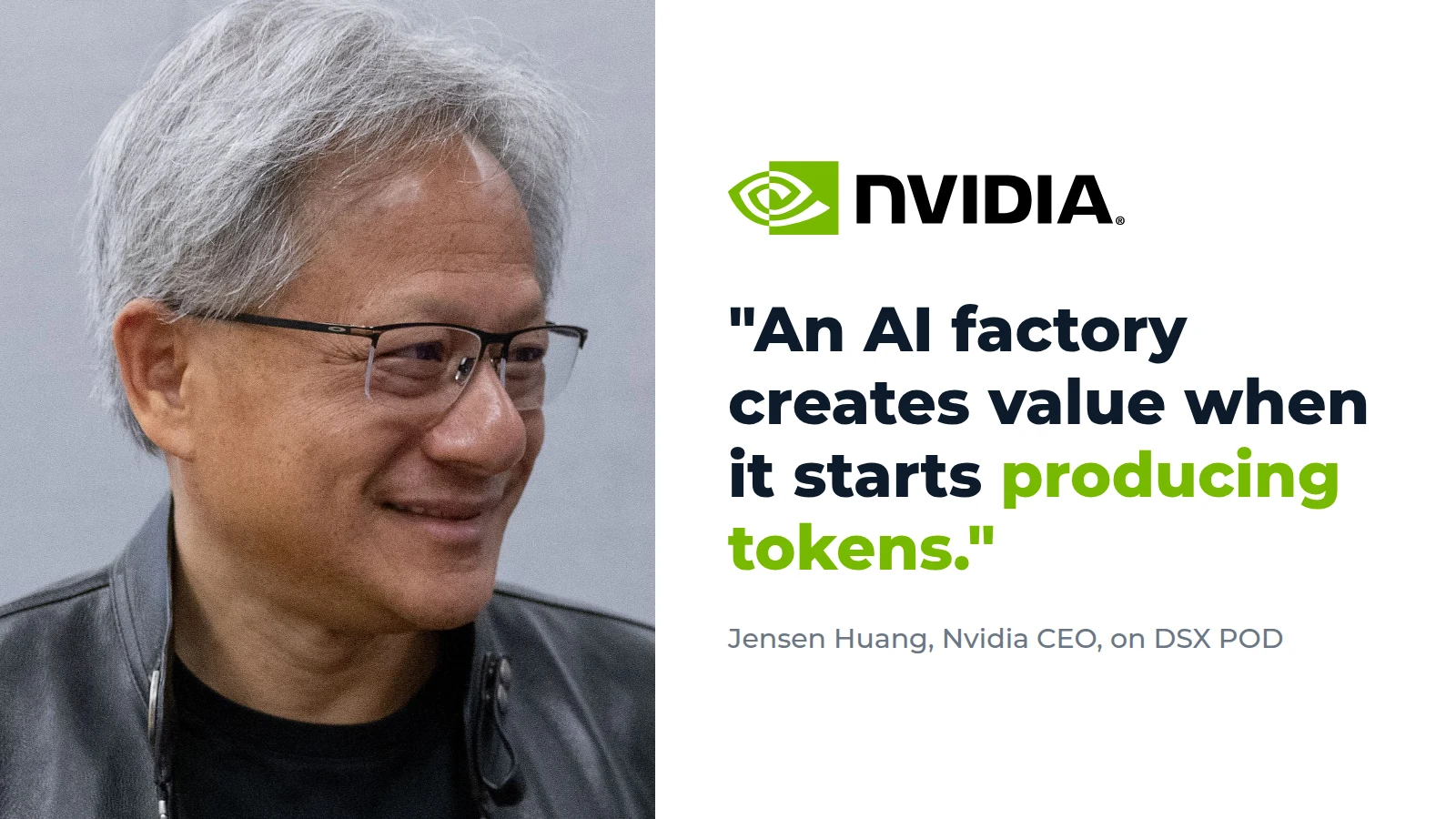
Jensen Huang made his first post on X on Thursday. The Nvidia (NVDA) chief executive joined the platform in June and had not posted until July 24. His first post shared a joint industry letter, co-signed by 25 companies, on open artificial intelligence models.
Update, Oct. 4: Nvidia-backed Reflection is preparing to release an open-weight model expected to compete with the top Chinese open models, Axios reported.
For my first post, I'm sharing a letter @NVIDIA signed on why open models matter. AI will transform every industry, power every company, and be built by every country. Open models strengthen safety and cybersecurity, accelerate innovation and diffusion, and enable sovereignty. The world needs both frontier closed models and frontier open models.
See Jensen Huang's first post on X
Microsoft (MSFT) chief executive Satya Nadella posted the same letter nine minutes later, at 9:27 a.m. Eastern, on his own account.
Open-weight models are essential to a healthy AI ecosystem. Together with others across our industry, we are outlining a path for open-weight models to strengthen American competitiveness and expand economic opportunity, while protecting national security.
See Satya Nadella's post on X
Huang's post drew close to a million views within the hour. Nadella's post drew about 60,000 in a similar window. Nadella has more than 7 million followers and joined X in 2009. Huang's account has about 38,000 followers.
What the letter says
The letter is dated July 24, 2026. It compares the current moment to the 1980s open-source software movement, and says software built by that community now supports most of the internet and systems used by the U.S. military and federal agencies. It says American AI leadership will be judged by whether the country builds an open ecosystem, not by a single frontier model.
Open-weight models are AI systems anyone can download, inspect, modify and run on their own servers. The letter says they cut costs for startups and universities, increase competition among model developers, and let customers avoid getting locked into a single provider.
The letter also addresses the risks. It says that once weights are released, "the weights are beyond the original developer's control, and modified versions are difficult to trace or reverse." It argues closed models carry their own risks because they can be breached or misused in ways outsiders cannot detect. "Just as open-source software demonstrated that transparency can be more secure than obscurity, AI safety may depend on giving more people the ability to test and strengthen the models on which society relies," the letter reads.
The distillation question
The letter defends distillation, the practice of training one model on another model's outputs. It calls the technique "a widely used technique for model improvement, evaluation, and validation." It draws a line between that and "unlawful efforts to extract value from closed models," and says those concerns should be handled through targeted legal action rather than a ban on the technique.
Washington has been moving the other way. Treasury Secretary Scott Bessent has floated sanctions targeting overseas AI developers. OpenAI and Anthropic, two of Nvidia's largest customers, have separately warned officials that China's growing open-source ecosystem threatens American AI leadership.
Huang addressed the same issue two days earlier. He told Axios that Chinese open-weight models like Moonshot AI's Kimi are "excellent" and that American firms should "absolutely" be allowed to use them. Microsoft has been testing Kimi K3 internally, and the model has weighed on chip and AI stocks since its release.
Who signed, and who didn't
Twenty-five organizations are listed at the bottom of the letter: American Innovators Network, Andreessen Horowitz, Arcee AI, Arena, Black Forest Labs, Box (BOX), CrowdStrike (CRWD), Dell Technologies (DELL), Emergence Capital, Hugging Face, IBM, The Linux Foundation, Mariana Minerals, Meta (META), Microsoft, Mistral, Mozilla, Nvidia, Palantir (PLTR), Perplexity, Reflection, Replit, ServiceNow (NOW), Telnyx and Y Combinator.
OpenAI, Anthropic, Google, a unit of Alphabet (GOOGL), and Amazon (AMZN) did not sign. OpenAI, Anthropic and Google run closed frontier models as a core part of their business. OpenAI and Anthropic are the two companies that warned officials about China's open-source ecosystem.
The letter closes by calling on policymakers to expand access to computing power for startups and researchers and to avoid "premature restrictions on open models that stifle competition or drive innovation overseas." The gap between American and Chinese open models has narrowed sharply this year. Nvidia reports earnings next month.
Sources
- "Open Weights and American AI Leadership," dated July 24, 2026, and its published signatory list
- Jensen Huang's post on X, July 24, 2026, and Satya Nadella's post the same morning
- Jensen Huang's interview with Axios on Chinese open-weight models, July 22, 2026
- Related coverage: OpenAI signed a day later, Anthropic has not and Microsoft testing Kimi K3 internally
This is general market commentary and opinion, not investment advice. Markets can go down as well as up, and you can lose money. Always do your own research and consider speaking with a licensed financial professional before making any investment decision.