Key points
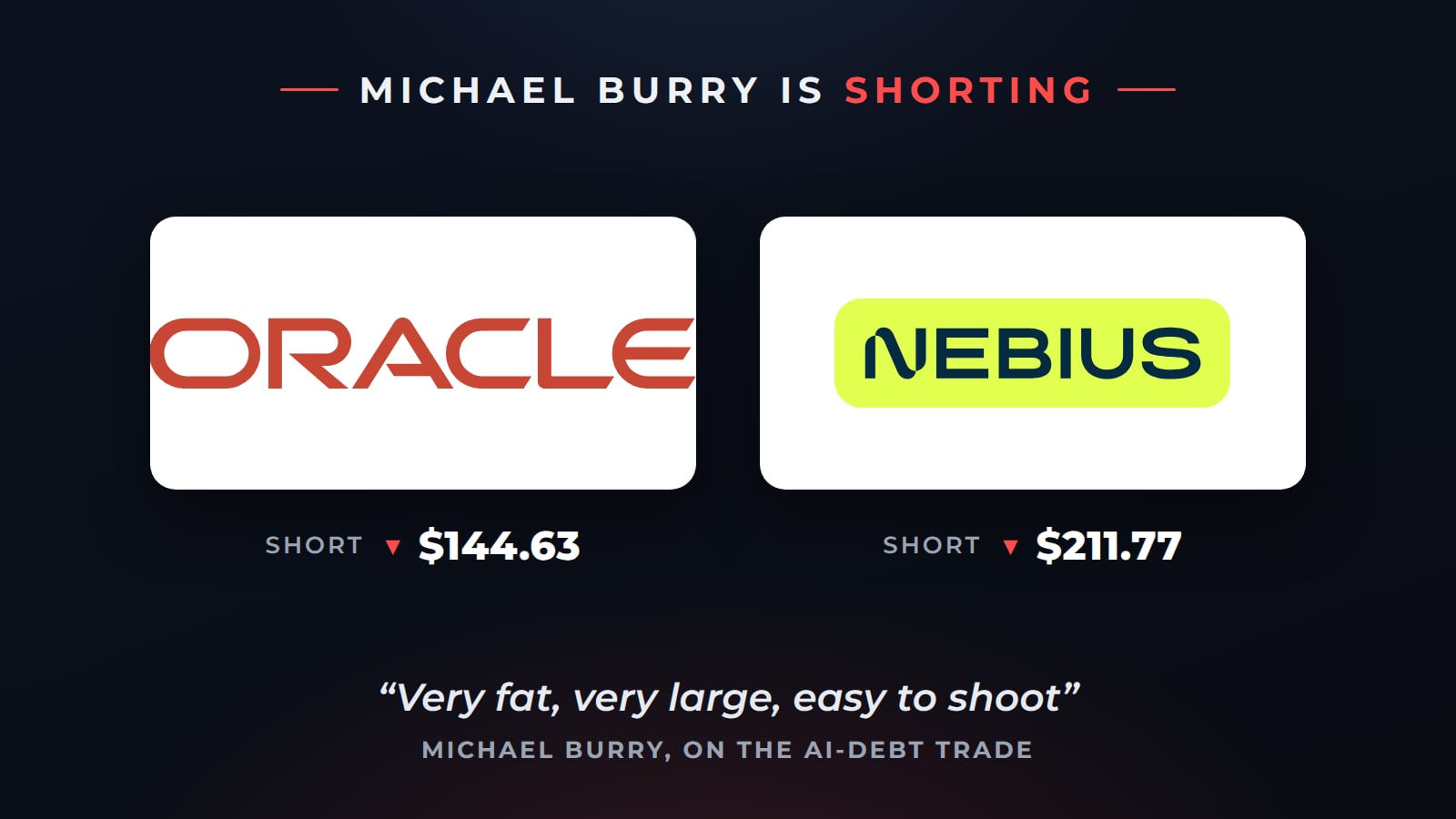
- Michael Burry disclosed two new short positions on August 6, 2026: Oracle (ORCL) at $144.63 a share and Nebius Group (NBIS) at $211.77 a share.
- He shorted the shares directly this time instead of buying put options. He said Nebius puts were too expensive, carrying implied volatility above 100%.
- His case has two parts: hidden leverage from off-balance-sheet liabilities like leases and purchase commitments, and understated depreciation on Nvidia chips that he says inflates earnings. He estimates Oracle overstates 2028 earnings by 26.9% and Meta by 20.8%.
- The Oracle position is a re-entry. Burry closed his earlier Oracle put options on August 5 for a profit, then shorted the stock itself the next day.
Michael Burry is short two of the AI trade's most talked-about names again. He disclosed on August 6 that he had shorted Oracle (ORCL) at $144.63 a share and Nebius Group (NBIS) at $211.77 a share, according to posts on his Substack. Both are bets that the stock falls. This time, in both cases, he shorted the shares themselves instead of buying the put options he usually favors.
Why he skipped the options
Burry said he shorted Nebius stock directly because its put options were too expensive to bother with, carrying implied volatility above 100%. Implied volatility is the market's estimate of how much a stock will move. The higher it runs, the more a put costs to buy. With Nebius options priced that richly, a short on the shares was the cheaper way to bet against it.
The Oracle trade is a re-entry. Burry closed his remaining Oracle puts on August 5 for a profit, a position he first disclosed in January and had already cut in half in July. He'd said he might come back to it if volatility settled down. A day later he did, this time by shorting the stock.
Why he's short both
Burry's bear case has two parts, and he put the first one in a hunting metaphor. He wrote that the companies most loaded with AI-era debt have become fish that are "very fat, very large, easy to shoot." What fattened them, in his telling, is leverage that doesn't always show up on the balance sheet. "The fish have gorged themselves on off-balance sheet liabilities. Backstops. Uncommenced leases. Purchase commitments."
The second part is an accounting argument he's been making for months. He says the big cloud providers building AI data centers write off their Nvidia (NVDA) chips over five or six years, when the real useful life of the hardware is closer to two or three. Stretching the schedule spreads the cost across more years, which makes current profits look higher than he thinks they really are.
He has put numbers on it. In his Substack writing, Burry estimates the group understates depreciation by about $176 billion between 2026 and 2028, and that by 2028 Oracle will have overstated earnings by 26.9% and Meta (META) by 20.8%. He called understating depreciation this way "one of the more common frauds of the modern era."
It's the same accounting-and-disclosure concern he raised earlier this summer, when he pointed readers to a Bank for International Settlements report on how loosely AI's biggest deals are disclosed.
How Oracle and Nebius got here
Oracle's stock has been a round trip. It set an all-time high of $345.72 last year, fell as low as $121.50 on July 17, then climbed back to about $145 by early August, which is where Burry shorted it. On July 9, S&P Global Ratings cut Oracle's credit rating to BBB-, one notch above junk, citing how much of its $638 billion order backlog leans on a single customer, OpenAI.
Nebius is a different kind of stock. It's an AI cloud company, a so-called neocloud that rents out Nvidia computing power, and its shares have more than doubled in 2026. Burry shorted it at $211.77 on August 6, days after it had run up near $226. Nebius reports second-quarter results on August 12.
Where the shorts stand
So far, the two trades have gone in opposite directions.
Oracle traded near $146.55 by midday on August 7, a little above where Burry shorted it, so that short is slightly underwater. Nebius had dropped to about $186, down about 12% from his $211.77 entry in a little over a day, though it's a volatile stock that has moved by more than $70 in a single week this summer.
Burry has been early on these calls before, and one of them is working against him right now. His highest-profile short, Palantir (PLTR), jumped 29% on August 4 after the company reported record growth and raised its guidance, and it traded near $170 on August 7. Burry said on August 5 that he was still short Palantir, and after the rally he said he wished he'd shorted even more of it. The Oracle and Nebius trades are bets in the same direction, against stocks that have been rising.
None of this shows up in a 13F filing. Burry deregistered Scion Asset Management late last year and now posts his trades on Substack instead of filing them with the SEC. We track those posts on his Michael Burry fund page.
The next real test for the new shorts comes August 12, when Nebius reports its quarter.
This is general market commentary, not investment advice. Markets can go down as well as up, and you can lose money. Always do your own research and consider speaking with a licensed financial professional before making any investment decision.