Key points
- FTAI is converting jet engines into power turbines
- New US gas turbines take six years to deliver, Wood Mackenzie says
- Crusoe ordered 13 turbines from ProEnergy
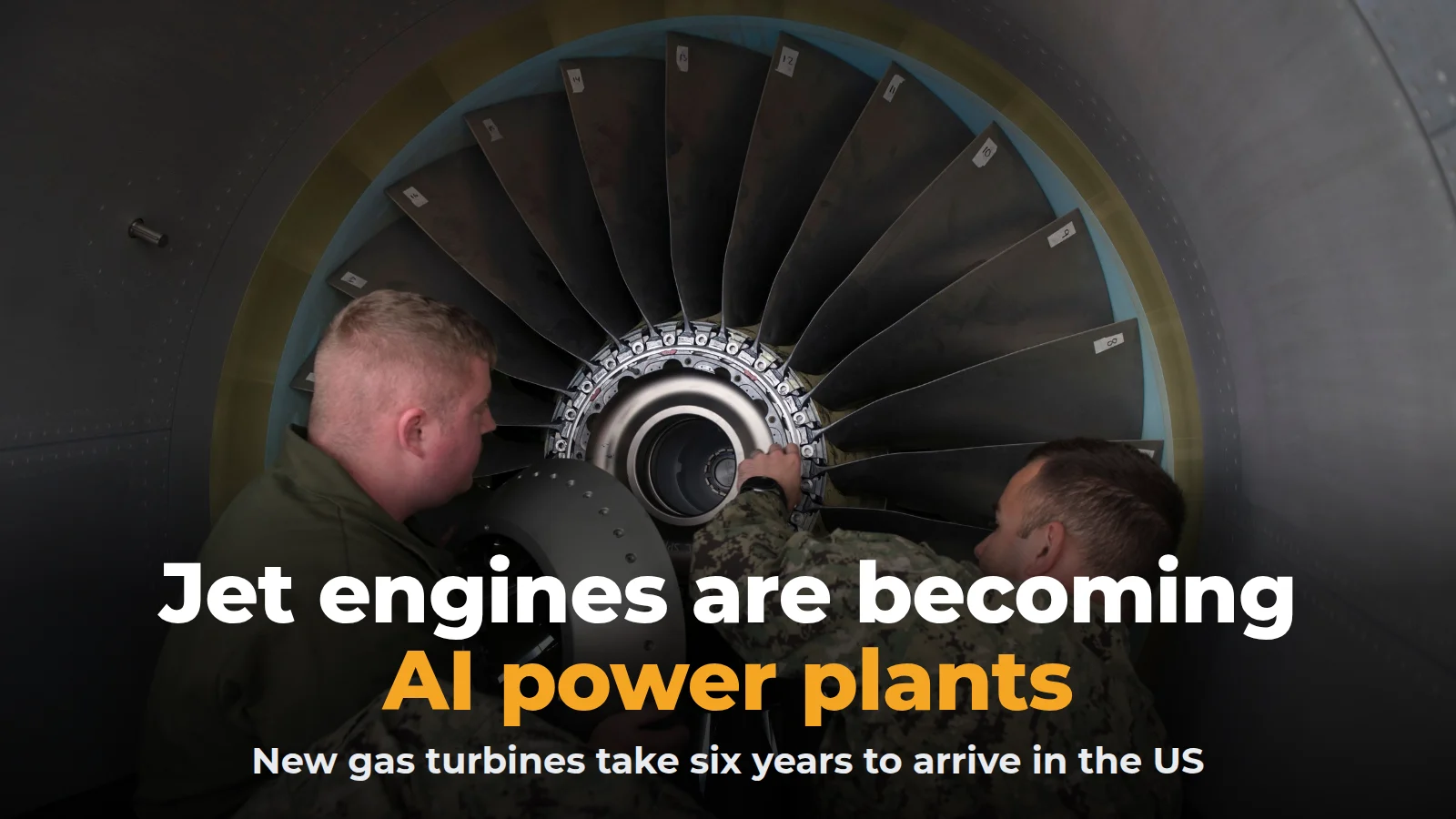
Old jet engines are finding a new job: helping power AI data centers. Companies including FTAI Aviation (FTAI) are converting aircraft engines into ground-based turbines that spin generators to produce electricity.
The equipment is known as an aeroderivative turbine because it uses aircraft-engine technology. Some units are newly built; others use engines that once powered airliners.
Companies racing to power AI data centers are also hunting for second-hand gas turbines, Reuters reported on November 9. New equipment takes too long. In the US, a gas turbine now takes six years on average to deliver, said Aurora Tenorio, senior analyst at energy consultancy Wood Mackenzie.
"Delivery conversations (are) firmly focused on the 2030 to 2031 window," Tenorio said about the US market.
Jet engines become power plants
FTAI repairs and leases airliner engines. Its FTAI Power unit is turning the CFM56 engine from older Boeing 737s and Airbus A320s into a ground turbine called the Mod-1. FTAI said in its third-quarter release on October 29 that it had more than 100 units under contract for delivery in 2027 and 2028 to customers in the US and Canada.
The Mod-1 met its test targets of 25 megawatts at peak and 23 megawatts of continuous power on both natural gas and liquid fuel, according to the release. The turbine hasn't been commercially launched and hasn't generated revenue yet. FTAI Power spent $22 million on research and development in the third quarter.
In July, J&F Power Systems signed a $1.465 billion order with a cloud service provider it didn't name. J&F is FTAI's joint venture with Jereh Group, and the equipment is due in batches through November 2027.
ProEnergy sells aeroderivative turbines based on jet engines made by GE Aerospace (GE). In April, AI infrastructure company Crusoe ordered 13 of ProEnergy's PE6000 units at 50 megawatts each, or 650 megawatts in total. Crusoe executive John Adams called the purchase "a strategic move to rapidly provide the energy capacity our hyperscale projects require."
New turbines take about six years to arrive
Wood Mackenzie puts worldwide gas turbine orders above 100 gigawatts. Reuters didn't specify the period covered by that figure. The consultancy estimates factories can make 60 to 70 gigawatts a year. Siemens Energy, GE Vernova (GEV), and Mitsubishi Heavy Industries dominate the market. All three say AI demand has pushed orders past what they can produce, Reuters reported. GE Vernova alone had 122 gigawatts of gas equipment under contract at the end of September, up from 116 gigawatts in June, according to its third-quarter release.
Analysts at Jefferies estimate that US data centers alone account for nearly 17 gigawatts of demand this year. They say that could more than triple by 2028. They expect global manufacturing capacity to reach about 87 gigawatts in 2028 against 129 gigawatts of expected demand.
Used turbines sell for less than new ones
The secondary market is "very, very hot right now," said Ana Amicarella, CEO of equipment services company EthosEnergy. "We also have seen an escalation on the prices of what people are demanding."
Well-maintained used turbines sell for about $1.5 million to $1.7 million per megawatt, said Origin Partners managing partner Zach Machuca. His firm buys power equipment for data center developers. He put refurbished units at about $1.3 million. New turbines cost about $2 million to $2.5 million per megawatt, according to Aurora Energy Research.
Smaller units can go for much less. Two 14.5-megawatt turbines made by Solar Turbines recently sold for $12.5 million, or about $430,000 per megawatt, said ReflowX general manager Dan Poole. ReflowX connects buyers with turbine owners. Solar Turbines is part of Caterpillar (CAT). Poole said new ones would cost about $35 million and take five years to deliver. Reuters didn't say whether that price covers one new unit or two. Developers who can't get large turbines sometimes put more than 100 small ones at a single site and mix models and brands, said Scott Schreeg, director of sales at equipment supplier SVI Bremco.
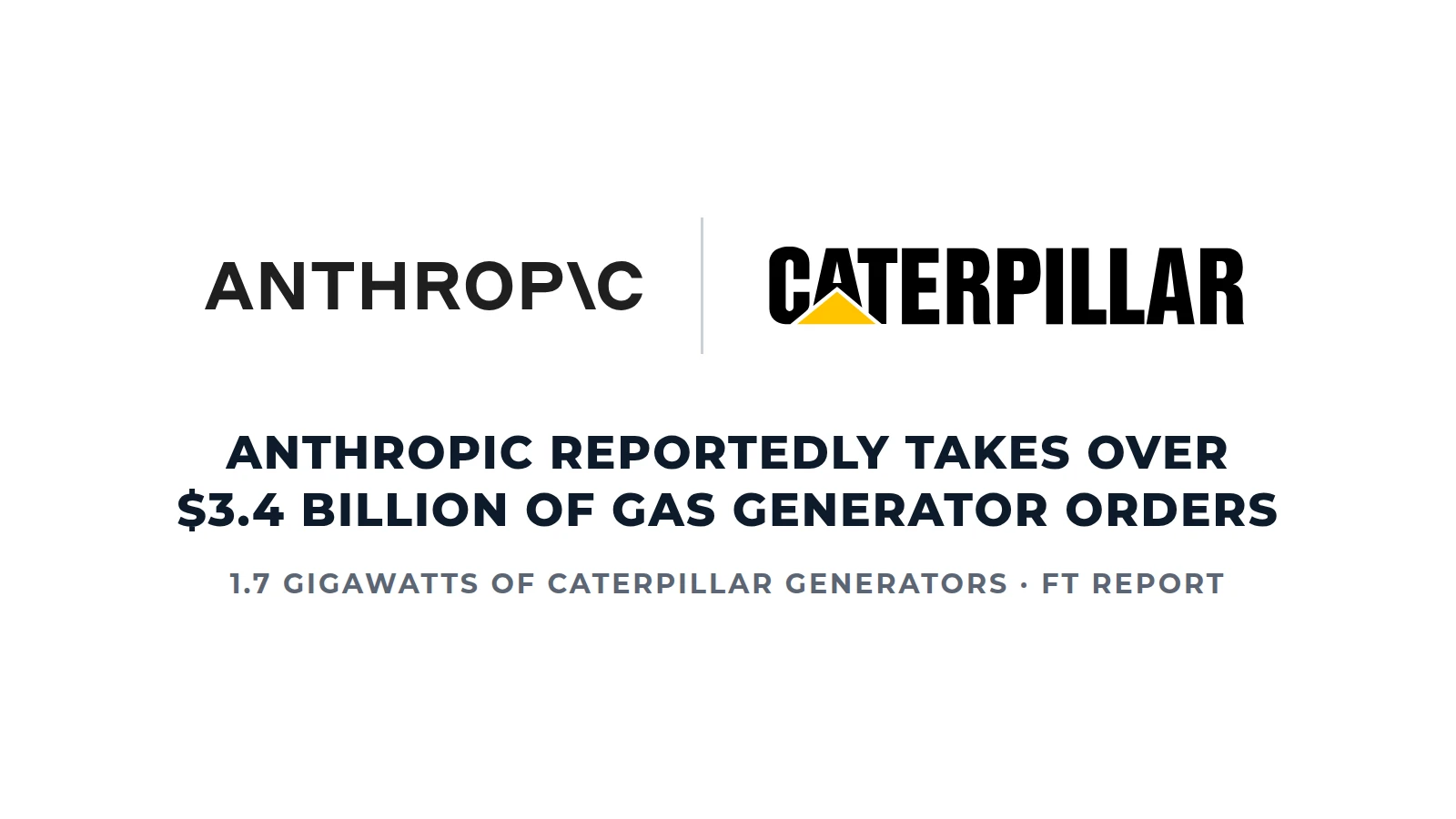
Caterpillar's gas generators are in demand too. Anthropic (ANT) agreed in late September to pay about $3.4 billion to take over another company's orders for them, the Financial Times reported on November 8.
Converted engines come with trade-offs
Older equipment has its own problems, Tenorio said. Overhauled turbines can have unclear maintenance records, limited life left, and weak long-term servicing. Converted jet engines also raise questions about how well they hold up running nonstop as power generators, Reuters reported.
The used market is probably only a partial answer, said Enverus Intelligence Research associate Noor Qureshi. "The market is already constrained, with limited excess supply, so it is unlikely to offset a meaningful share of the delays," she said. Air permits and grid access also hold projects up, Reuters noted.
Some buyers are skipping turbines altogether. Finland's Wartsila has booked about 3 gigawatts of orders from US data centers since spring 2025 for power units that run on gas engines instead of turbines, said Anders Lindberg, who runs its energy business.
"What's driving the market? Lead times, lead times, lead times," Lindberg said.