Key points
- What the Sanders moratorium bill would stop
- How the bill could reach Nvidia's chip exports
- How many votes a national moratorium needs
Sen. Bernie Sanders called for a "national data center moratorium now" after Democrats won control of Congress on November 3. The bill he introduced goes beyond a pause on new projects: it says construction or upgrading of qualifying AI data centers "may not commence or proceed," language that would also stop work already underway.
So far, 22 members of Congress have signed on to the proposals. Sanders, an independent who caucuses with Democrats, has no cosponsors on the Senate bill. Rep. Alexandria Ocasio-Cortez and 20 Democratic cosponsors back the House version.
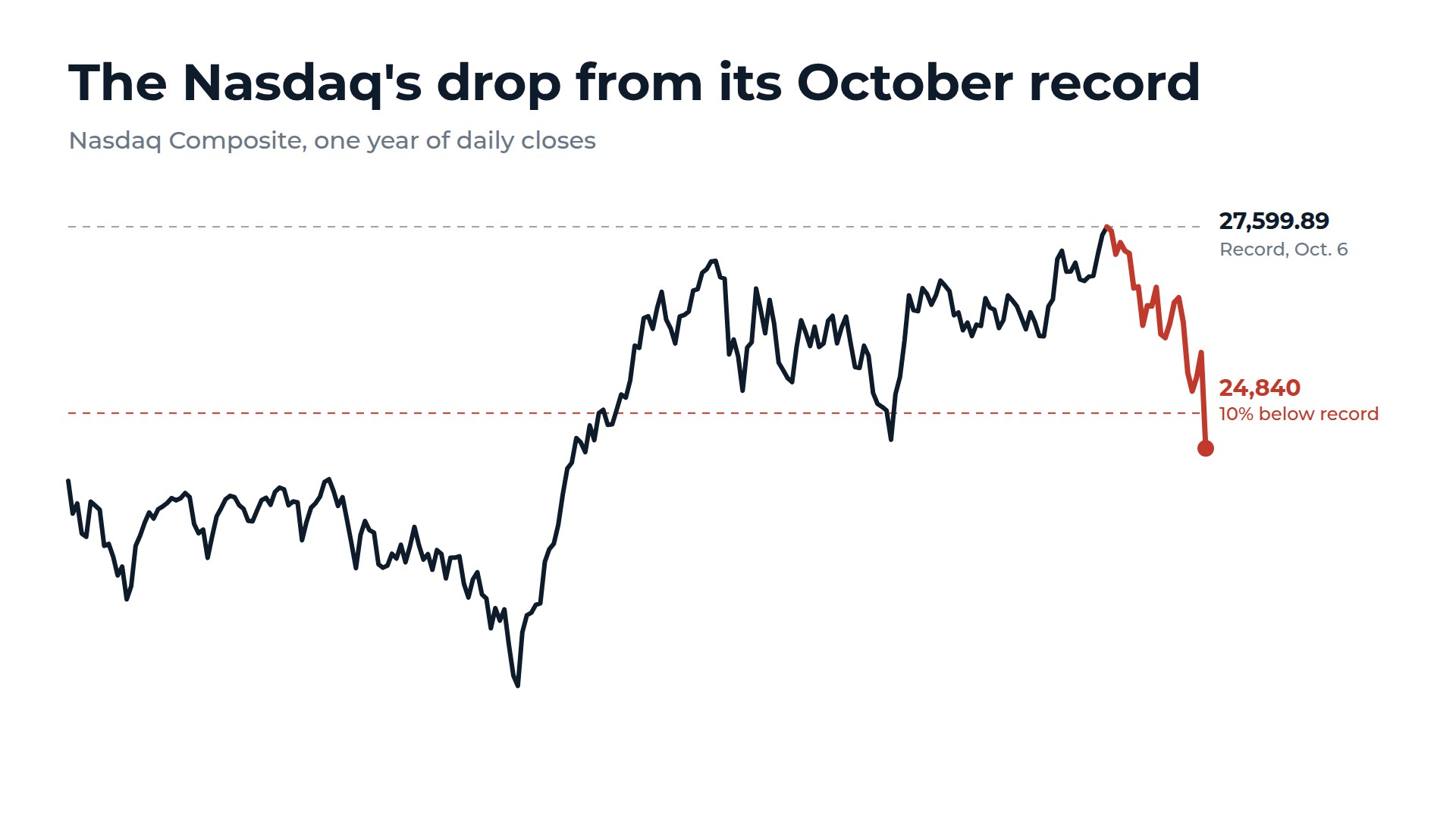
Investors are watching what the election could mean for the AI buildout. The Nasdaq fell 5.5% on November 5 and entered a correction, and CNBC reported that investors worried Democratic wins could affect data center construction. We read the bill to see what it would stop, how it could reach chip exports, and what it would take to pass.
What would the moratorium bill stop?
The bill is called the Artificial Intelligence Data Center Moratorium Act. Section 3 starts the freeze on the day it becomes law, and the wording reaches the "construction or upgrading of new or existing" AI data centers. We found no exception for projects in progress.
A missing exception has already sunk one state ban. Maine's legislature passed an 18-month pause this year, and Gov. Janet Mills, a Democrat, vetoed it because it had no exception for a $550 million project already underway.
Summaries of the federal bill tend to cite 20 megawatts, but that number is only one of two tests. A site counts if it's used for "the development or operation of artificial intelligence models at scale," and that test has no size limit. A site also counts if it tops 20 megawatts and is designed or equipped either to deliver 20 kilowatts or more to a single server rack or to use cooling systems that circulate liquid to individual hardware components or submerge hardware in liquid.
The bill doesn't define "at scale," and it doesn't define "upgrading." Could an operator swap newer chips into an existing building? The text doesn't answer that.
For a sense of size, Census Bureau figures put US private data center construction at an annualized $85 billion in August. Our AI compute commitments tracker lists the contracts riding on that buildout.
When would the moratorium end?
The bill gives no end date. Under the bill, the freeze would remain until Congress enacts one or more laws that expressly end it and meet these conditions:
- Require federal review and approval of AI products before release
- Prevent job displacement from AI and share the wealth it creates with the public
- Ensure new data centers don't raise consumers' electricity bills, worsen climate change, or harm the environment
- Let affected communities approve or reject projects
- Bar government subsidies for those data centers
- Require union jobs with prevailing wages
Sanders said in March that a moratorium would "give us the time to figure out how to ensure that AI is safe and effective." The list is long, though. Of about 150 AI-focused bills proposed during President Donald Trump's second term, The Atlantic counted one that passed.
The Data Center Coalition, an industry group, said in a late-June statement that a federal halt "risks rationing access to cloud and digital services."
How could the bill reach Nvidia's chips?
The part that gets less attention is Section 4. It tells the Commerce Department to prohibit exports of chips, computers, networking gear, and storage systems for AI data centers, or for training or running AI models at scale, to any country without statutes or regulations "comparable" to the laws that would end the moratorium.
That ban would also start the day the bill becomes law. The bill doesn't say how Commerce would determine whether a country's laws are comparable, or which countries would qualify when the restriction begins.
Nvidia (NVDA) is the obvious company to check. Its latest quarterly report shows $36.1 billion of sales, or 38% of revenue, came from customers headquartered outside the US in the quarter ended July 26. Taiwan alone was $27.0 billion.
That's an imperfect guide. Nvidia assigns those sales by the headquarters of its direct customers, and it says the end customer and shipping location may be different. So the figure doesn't show how many of those chips end up abroad.
How many votes would a national moratorium need?
A bill needs a majority in each chamber, and in the Senate it usually needs 60 votes to get past a filibuster. If the president vetoes it, two-thirds of both chambers must vote to override. NBC News had these counts for the House and Senate on the evening of November 5.
| Step | Votes needed | Democratic seats | Short by |
|---|---|---|---|
| Pass the House | 218 | 249 called, 259 estimated | None |
| End a Senate filibuster | 60 | 54 called | 6 |
| Override a veto in the House | 290 | 249 called, 259 estimated | 31 to 41 |
| Override a veto in the Senate | 67 | 54 called | 13 |
Senate seats include independents who caucus with Democrats. Two Senate races were still uncalled, so those gaps could shrink by up to two. Vote totals assume every seat is filled and every member votes.
Those vote counts assume every Democrat supports the bill. Rep. Greg Casar, who chairs the Congressional Progressive Caucus and cosponsored the House bill in September, replied "Yes!" when a colleague wrote that a pause on AI development should be a top priority on Day 1. But Rep. Hakeem Jeffries, the House Democratic leader, told Politico on June 30, "That's certainly not a position that I've articulated at this moment." We didn't find him or Senate Democratic leader Chuck Schumer endorsing the bill since the election.
Rep. Suhas Subramanyam of Virginia, a Democrat, said in the same report, "A nationwide moratorium has issues because we still need to build data centers in the United States." Nadine Smith, who leads the group Color of Change, told TechCrunch, "Even among Democrats, a blanket freeze is contested."
Committees matter here too. The House bill sits in Energy and Commerce and in Foreign Affairs. Rep. Frank Pallone, the top Democrat on Energy and Commerce, backed a federal pause in June but isn't a cosponsor. In July, he said he wants guardrails first, and that if those fail, "the possibility of a moratorium out there is certainly real."
Then there's the veto. Trump's term runs until January 2029, and on election night he told Fox News, "They'll send over things that are insane and I'll veto them." He wasn't talking about this bill in that quote. State Street strategists still drew the same line, writing that "congressional control alone would not be enough to curtail AI-related data center construction in the face of a presidential veto."
The bill also has a calendar problem. Anything that doesn't pass expires when this Congress ends in January, so the moratorium would have to be introduced again.
What could pass instead?
The narrower bills are much further along. The Ratepayer Protection Act passed the House 417 to 3 on September 16. It would make states consider a standard requiring data centers of 100 megawatts or more to cover the cost of the grid upgrades they need.
A Senate procedural vote in late September came up three short at 57 to 43, and the senators who blocked the bill argued it was too weak. Sen. Martin Heinrich of New Mexico offered his own bill that would require large users to pay for the facilities connecting them. With more Democrats arriving in January, Brookings expects new ratepayer bills to be tougher on the industry.
Some companies aren't waiting. OpenAI said on November 5 that at data centers it owns and operates, it will seek community input, publish construction plans, and avoid nondisclosure agreements with public officials.
The quicker route runs through the states, where Trump has no veto. Gina Hinojosa, the governor-elect of Texas, campaigned on a moratorium on new data center construction until the legislature adds requirements, and Texas holds 27% of planned data center gigawatts, according to Wells Fargo. Voters also approved local limits across the country on November 3.
What don't we know yet?
We don't know if Sanders and Ocasio-Cortez will bring back the same text, or soften it to win more votes. We don't know if Jeffries or Schumer will move. A handful of antiestablishment Republicans had backed moratoriums by July, but no Republican is on this bill.
The first number we'd watch is that list of 22. A fast-growing list in January would tell us a lot. A short one would point back to the narrower bills.