Key points
- Undersea cables are the new front line
- Defense primes are buying up undersea specialists
- Kraken offers a more direct bet
A new defense buildout is forming on the ocean floor, and it's already pulling in real money.
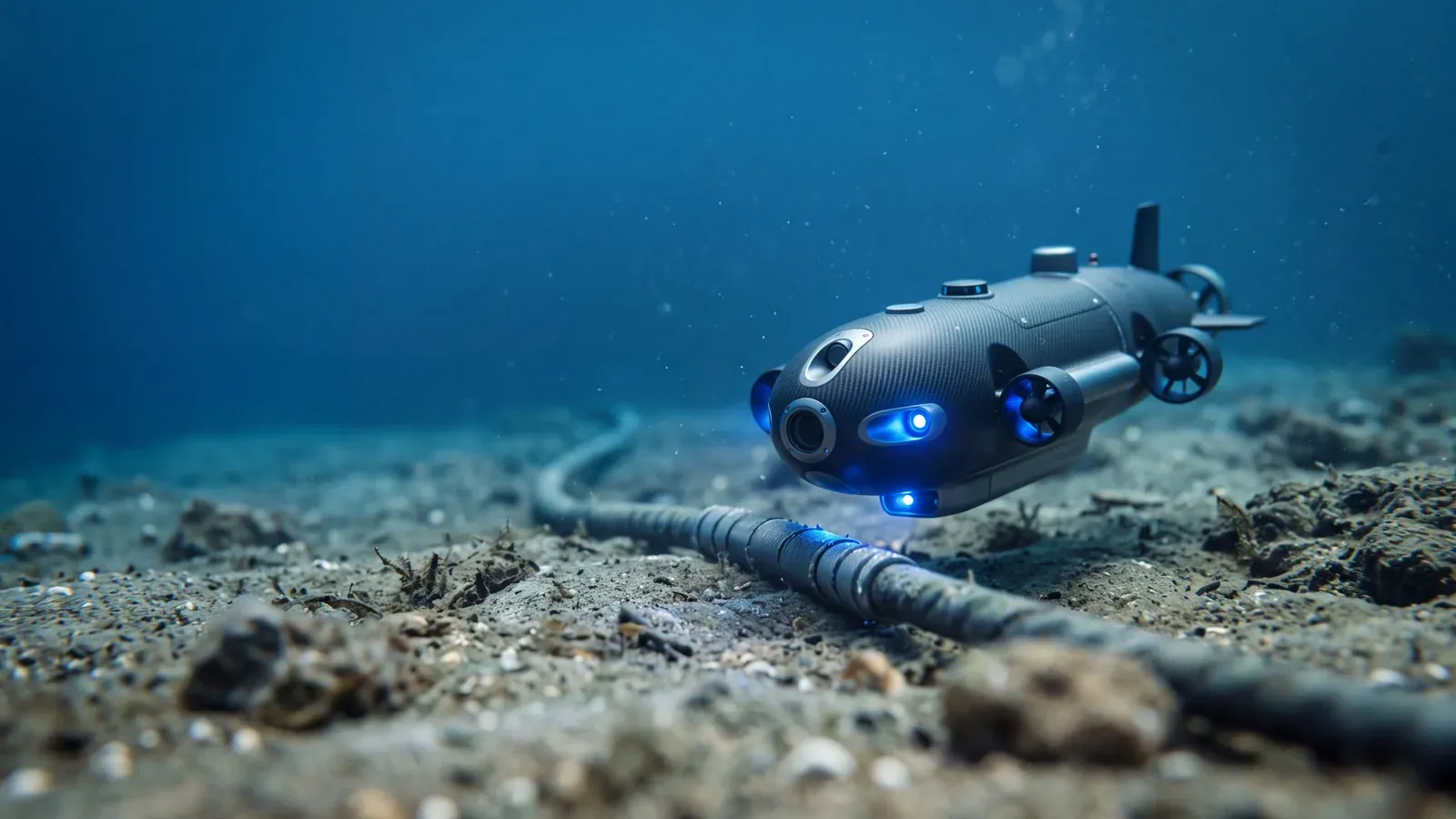
On Saturday, CNBC reported on the push to watch and defend the cables, pipelines and power lines running along the ocean floor. More than 1.5 million kilometers of submarine communications cable were in service as of early 2026, according to TeleGeography. Oil and gas pipelines run down there too, along with cables bringing power ashore from offshore wind farms. You can protect a landing station. Keeping an eye on everything between landing stations is another matter.
Why the seabed suddenly matters
People started paying attention in September 2022, when explosions tore open the Nord Stream gas pipelines under the Baltic Sea. Investigators called it deliberate sabotage. There's been damage near the Arctic and off Taiwan since then, and the pattern has a name now: hybrid warfare. Cyberattacks, energy sabotage, pressure applied just below the line where someone actually fires a shot.
"It's the changing threat environment that's brought this to the fore," Katja Bego, a senior research fellow at Chatham House, told CNBC. She didn't undersell the stakes: "Our whole economy is built on top of this." The aerial version of this story already played out in Ukraine, where cheap drones changed how a war gets fought, and we've written before about how that pushed money into drone stocks. The seabed is the next logical place for it to go.
The money is already moving
You can't defend a million-plus kilometers of cable with warships. The math doesn't work. Frigates and crewed submarines are too expensive and too few to sit on every stretch of seabed that matters. Defense companies are increasingly spending on machines that can.
Fincantieri, the Italian shipbuilder, announced plans in July to spend around 600 million euros ($689 million) on four acquisitions in underwater drones, marine surveying and subsea communications. CEO Pierroberto Folgiero called underwater telecom "the real enabler of this new ecosystem." France's Thales already runs businesses spanning sonar, anti-submarine warfare, mine detection and autonomous underwater systems. A German firm called Euroatlas has built an autonomous underwater vehicle named GrayShark that can be sent to a patch of ocean and left to run a mission on its own.
Verineia Codrean, Euroatlas's chief strategy and partnerships officer, described the whole thing as a scale problem. "It is virtually impossible to cover the entire ocean," she told CNBC. "You just need to know which are the areas that are more interesting to have that constant visibility." The company says its GrayShark contracts with unnamed European navies already top 100 million euros, and the drones aren't armed. Then Codrean said the line that tells you where this heads: "What we are building, so are our non-allies or our enemies building as well." That's where I think this goes. Once both sides have robots wandering the seabed, you need robots that hunt the other side's robots. Machine against machine, underwater, with no crew on either end.
So who can you actually buy?
Lockheed Martin (LMT) has made the biggest move in this group. On July 6, Lockheed agreed to buy Ultra Maritime for $3.45 billion. Ultra makes sonar, sonobuoys and torpedo-defense systems. If the deal closes, the business will join Lockheed's Rotary and Mission Systems unit. Lockheed was already a major naval contractor; the acquisition would add more of the equipment used to find threats underwater. We made the bull case on Lockheed around its summer earnings. Its shares closed Friday at $533.49.
There are other large-company ways to follow the theme. Boeing (BA) makes the Orca extra-large unmanned undersea vehicle. Huntington Ingalls (HII) builds Navy submarines at Newport News and makes REMUS underwater drones. Undersea systems are only part of either business. That limits how much a new order can move the company's overall results.
Kraken Robotics (KRKNF) offers a more direct bet. The Canadian company makes synthetic-aperture sonar and batteries designed to work under deep-sea pressure, and sells to NATO navies. Kraken also spent the summer buying European subsea businesses. There's more riding on this market for Kraken than for Lockheed or Boeing. That makes its orders, margins and acquisitions worth watching closely. Its roughly $3 share price, by itself, says nothing about whether the stock is cheap.
The honest read
Bego gave CNBC the warning investors should take seriously: underwater drones are nowhere near as developed as the aircraft used in Ukraine. Water makes visibility and communication difficult. A vehicle has to navigate, gather useful information and get it back to its operators. Doing that reliably at sea is harder than a demonstration makes it look.
I'm watching who wins repeat orders and whether those systems perform once navies put them to work. Lockheed's proposed acquisition shows what a defense prime is willing to pay for an established undersea business. I own a small Kraken position, bought in the low $3s. I like its direct exposure to undersea sonar and batteries, but I want to see repeat orders and stronger sales before making it a large position. The cables need watching. We're still learning which machines can do it.
This is general market commentary and reflects my own opinion, not investment advice. Always do your own research and consider speaking with a licensed financial professional before making any investment decision.