Key points
- S&P puts Nvidia on watch for a one-notch cut to its AA rating
- What S&P says could push Nvidia's cut past one notch
- Why Nvidia's rating matters for up to $118 billion in partner guarantees
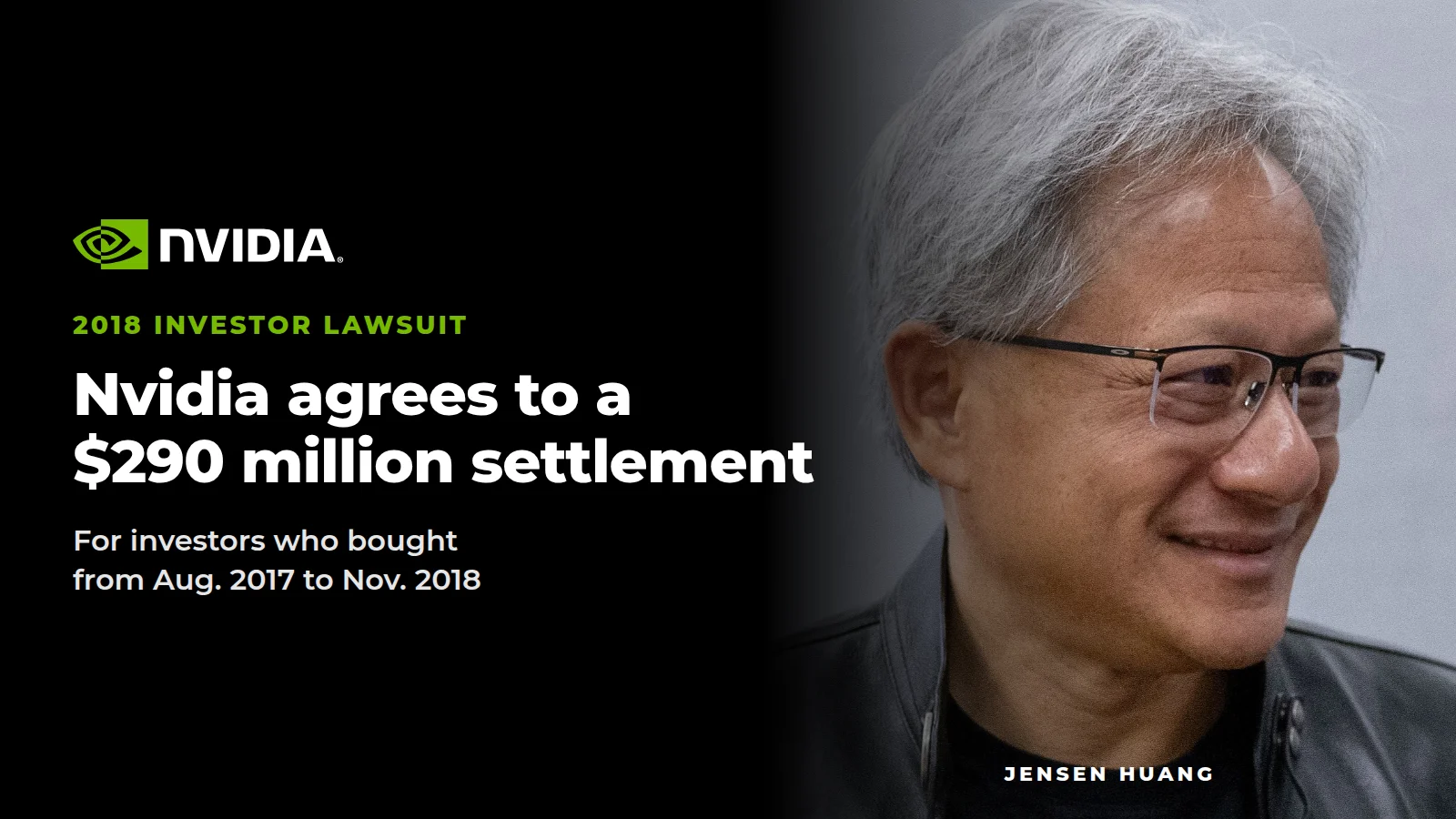
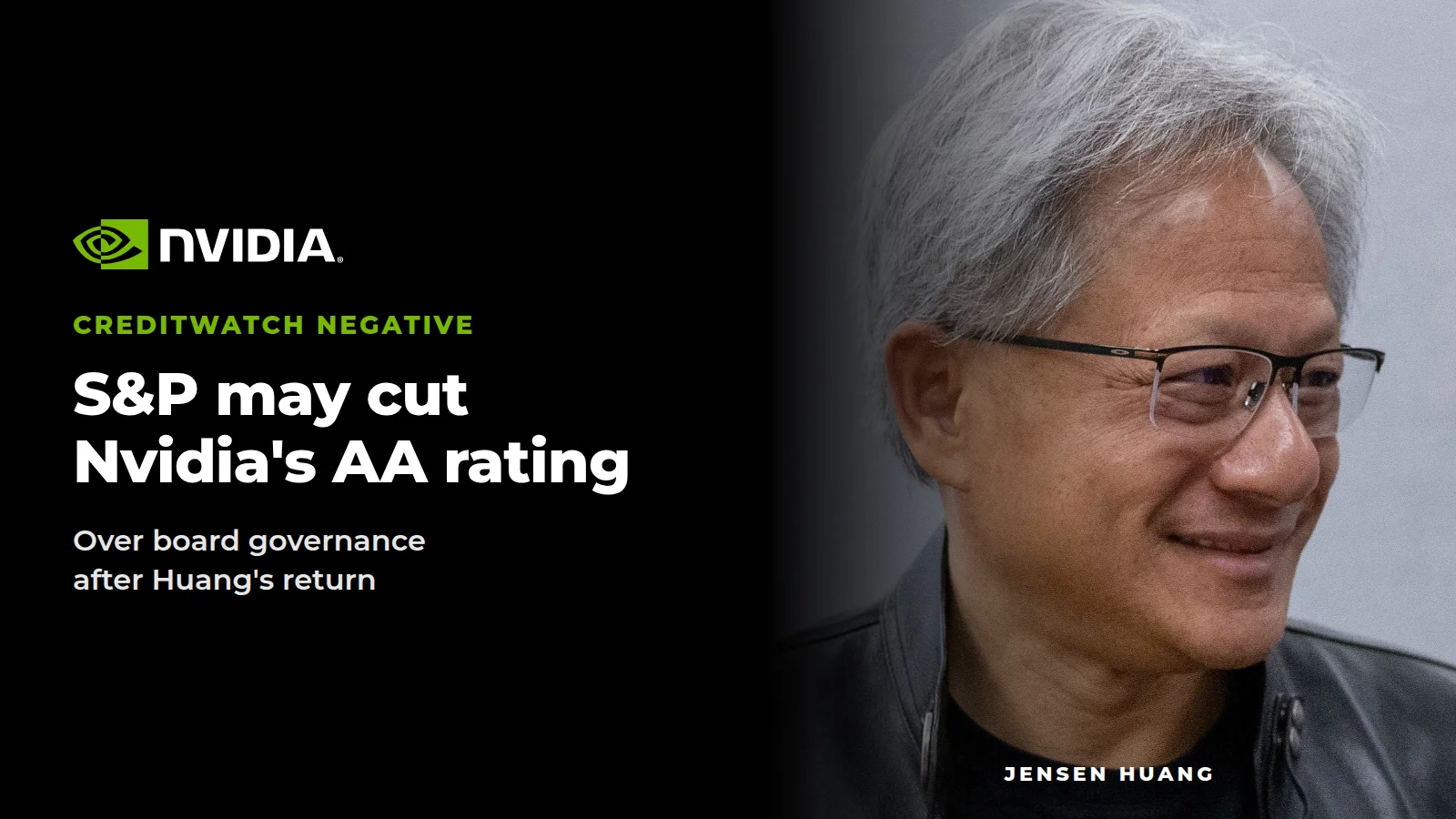
S&P Global Ratings placed Nvidia (NVDA) on CreditWatch with negative implications on Nov. 25, warning that it may cut the chipmaker's AA credit rating by one notch after CEO Jensen Huang resigned and then returned, Bloomberg reported. AA is S&P's third-highest rating, and a one-notch cut would take Nvidia to AA-.
S&P cited "vulnerabilities in Nvidia's management and governance framework, especially in regard to its board structure, composition, and effectiveness," according to The Wall Street Journal. Nvidia's board reinstated Huang on Nov. 22, 11 days after he resigned. That return doesn't fully answer S&P's questions about how the board oversees the company's code of conduct for executives, Reuters reported.
Nvidia shares were down 4.5% at $148.33 at 2:54 p.m. ET.
S&P expects a cut of no more than one notch, with one exception
S&P generally aims to resolve a CreditWatch within 90 days, which in this case would mean by late February. It expects any downgrade to be limited to one notch "unless investigations or disclosures lead us to believe Nvidia's reputation or future business prospects have been harmed," the agency said.
More scrutiny is coming. Huang is scheduled for a closed-door interview with three House committees on Dec. 1 and a public Senate hearing on Dec. 3. California's attorney general served Nvidia with an investigative subpoena on Nov. 19 and has said the investigation is ongoing.
Moody's Ratings has already moved. It kept Nvidia's Aa1 rating, one notch above S&P's AA, on Nov. 18 but lowered its outlook to stable from positive, citing Huang's resignation and the lack of a formal succession plan, MarketWatch reported.
Nvidia lends its credit rating to its partners
Nvidia's rating matters beyond its own bonds. Nvidia's guarantees for partners had a maximum exposure of $118 billion as of Oct. 25, according to Nvidia's third-quarter CFO commentary. The largest is credit support for SB Energy's data center campus in Ohio, which OpenAI is leasing for 20 years. The guarantees become effective in phases as the buildings come online, starting in fiscal 2029. Nvidia's exposure builds to a maximum of $105 billion and then declines as OpenAI makes lease payments. Nvidia said many neoclouds and frontier labs "are growing faster than their balance sheets and long-term credit profiles can support."
Nvidia also has the option to guarantee the rest of the Ohio site, about 3.78 more gigawatts. If it doesn't by a set date, OpenAI must find a replacement guarantor for that capacity rated at least A- by S&P, or the Moody's equivalent, according to SB Energy's IPO filing. The filing doesn't say a downgrade of Nvidia would require a replacement for its existing guarantees. A one-notch cut would leave Nvidia at AA-, three notches above the A- bar.
Nvidia had $32.4 billion in long-term debt and $53.5 billion in cash, cash equivalents, and marketable debt securities as of Oct. 25, according to its third-quarter results. Its long-term debt was $7.5 billion on Jan. 25.