JPMorgan double-upgrades IREN Ltd (IREN) as AI slowdown rattles peers
JPMorgan moved IREN two notches to overweight and lifted its target to $65 from $46, hours after co-CEO Daniel Roberts posted a long rebuttal to the calls for an AI slowdown. Every comparable name we checked fell on Monday. IREN did not.

Three AI CEOs asked for a slowdown. Chipmakers sold off worldwide, and cybersecurity stocks went up.
Dario Amodei asked AI labs to slow the pace of capability development, and Sam Altman and Elon Musk agreed. The selloff that followed hit the AI supply chain and bid up the companies that sell defenses against it.
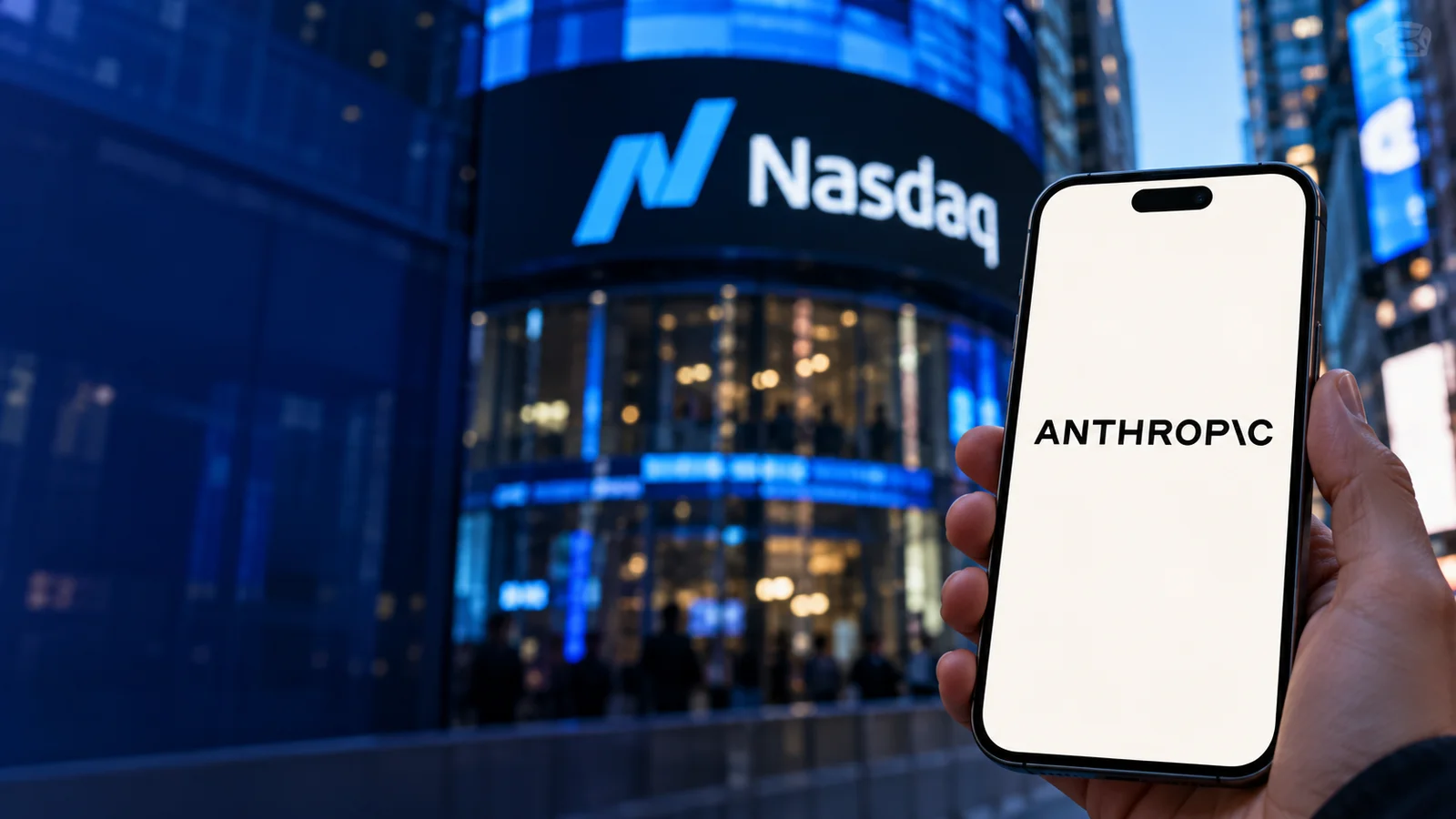
Anthropic picks Nasdaq for its IPO. Marketing starts mid-October, days before the midterms.
Anthropic has picked Nasdaq for a listing it still hopes to complete in October, Business Insider reported. Reuters says marketing starts in mid-October at the earliest, with the deal closing days ahead of the November midterm elections.
Anthropic's compute contracts could reach $517 billion. Most are not public.
The Information estimates Anthropic cloud, chip and data center agreements at as much as $517 billion over the coming decade, covering at least 14.8 gigawatts agreed since October. Anthropic has confirmed four of the deals and none of the aggregate figures.

Anthropic CEO Dario Amodei floated AI compute limits. Then he called them gameable.
Two sentences in Dario Amodei's pacing essay raise limiting training compute. He hedges them in the same paragraph, and sets no number, threshold, or date.
Nvidia (NVDA) in talks to anchor Anthropic's $100 billion IPO with up to $10 billion
Reuters reports Nvidia is considering up to $10 billion as an anchor investor in Anthropic's IPO, which is seeking as much as $100 billion at a valuation near $2 trillion. Neither company confirmed it.

Anthropic withheld its hacking model. CrowdStrike (CRWD) and Palo Alto (PANW) got early access.
Anthropic restricted the model it says is strikingly capable at finding software flaws, and handed it to CrowdStrike, Palo Alto Networks, Cisco and Nvidia instead. What six listed security companies have disclosed since.
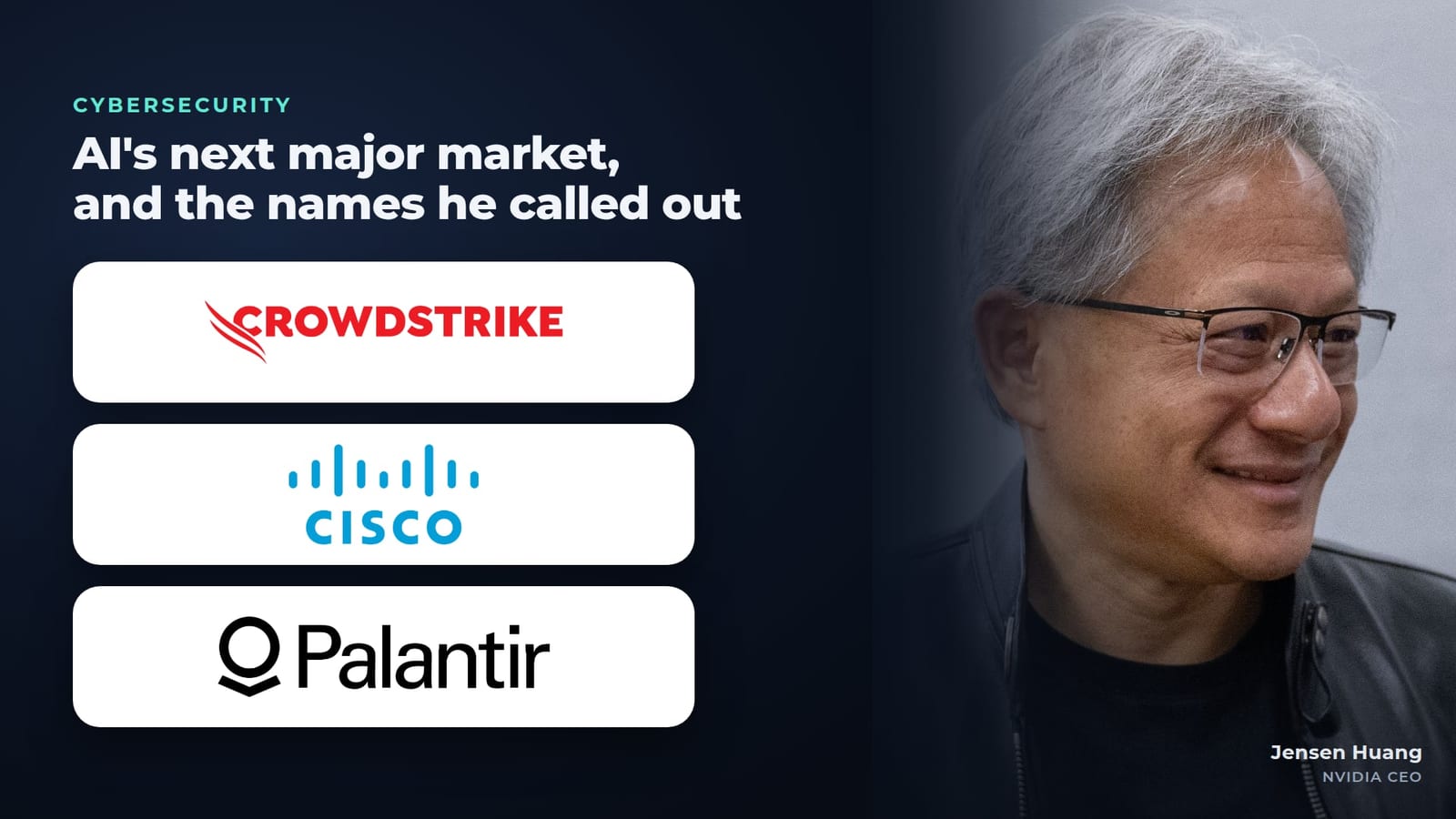
Nvidia (NVDA) CEO calls cybersecurity AI's next major market and names CrowdStrike, Cisco and Palantir
Jensen Huang told the Goldman Sachs Communacopia conference that cybersecurity will be AI's next major use case, and named CrowdStrike (CRWD), Cisco (CSCO) and Palantir (PLTR) as the partners building on Nvidia's models.
Nvidia (NVDA) licensed Groq and hired its founder. The DOJ is asking if that sidestepped antitrust review.
The Justice Department is investigating whether Nvidia structured its deal for Groq's inference chip technology to avoid antitrust review, the New York Times reported Wednesday. Nvidia licensed the technology and hired Groq's founder rather than buying the company.
OpenAI may pause new Pro signups as GPT-6 Astra demand surges
OpenAI may stop selling new Pro subscriptions if demand for GPT-6 Astra keeps climbing, according to Thibault Sottiaux, who leads Codex at the company. He wrote on X early Wednesday that demand is unprecedented. It follows a rollout in which paying users waited days for the model.
AMD's AI chip gets an 11-fold performance boost from software updates, SemiAnalysis says
The benchmark firm that called AMD's long-context software 'horrible' on August 24 says the MI355X is now 11 times faster on the same MiniMax M3 agentic test, from software alone. The written update with the numbers hasn't been published yet.
Intel (INTC) heads to the AI Infra Summit September 15 with Crescent Island questions unanswered
Intel CEO Lip-Bu Tan takes the main stage at the AI Infra Summit in Santa Clara on Tuesday, September 15, with three more Intel sessions and a booth to follow. The appearance is confirmed. A named customer, a ship date, or a measured performance number for the Crescent Island GPU is not.

Foxconn (HNHPF) August sales jump 52% as AI demand lifts quarterly outlook
Foxconn parent Hon Hai reported August revenue of NT$921.77 billion, up 51.98% from a year earlier and its second-highest month on record. July grew 54%. The company said its view of the third quarter is clearer than a month ago and that results should beat market expectations.
OpenAI says its AI agents log 3.1 hours of runtime for every hour its researchers work
OpenAI's Sunday post puts numbers on AI building AI: 3.1 agent runtime hours per human hour, agent usage worth $600 to $7,000 a day per researcher at API prices, and a target of an automated AI researcher by March 2028. All self-measured, and OpenAI calls them preliminary.
Nvidia's (NVDA) Jensen Huang says GPT-6 Astra was trained on 100,000-plus Grace Blackwell GPUs, with 400,000 more coming
Jensen Huang named the hardware behind GPT-6 Astra in a Sunday post: more than 100,000 Grace Blackwell GPUs in NVLink72 racks. He also said 400,000 more GPUs are coming online, without saying where.
Arm (ARM) and Microsoft (MSFT) back Gimlet's $300 million bet on cheaper AI
Gimlet Labs closed a $300 million Series B led by Andreessen Horowitz, with Arm and Microsoft's M12 as new investors, at a $3 billion valuation. It says it has added billions in contracted revenue since March; its last disclosed revenue was $10 million a year.
DeepSeek's 160,000-chip Huawei plan puts Nvidia (NVDA) on notice
The weekend headline says DeepSeek is cutting Nvidia out. Read the Bloomberg report and it's an inference-only plan for a chip Huawei said it would begin deploying in August, at a site that opens in late 2027.

Chinese AI lab Zhipu claims its domestic chips match Nvidia on per-token cost
The Chinese lab's first interim-results announcement as a listed company put a cost-parity claim against Nvidia GPUs in an exchange filing. The English translation also overstates what the Chinese says.
G42 is exploring US majority ownership. Its license-free chip access expires April 6, 2027.
Bloomberg reports G42 has held talks about selling control to a US buyer. The export rule that names the company sets a hard date of April 6, 2027.
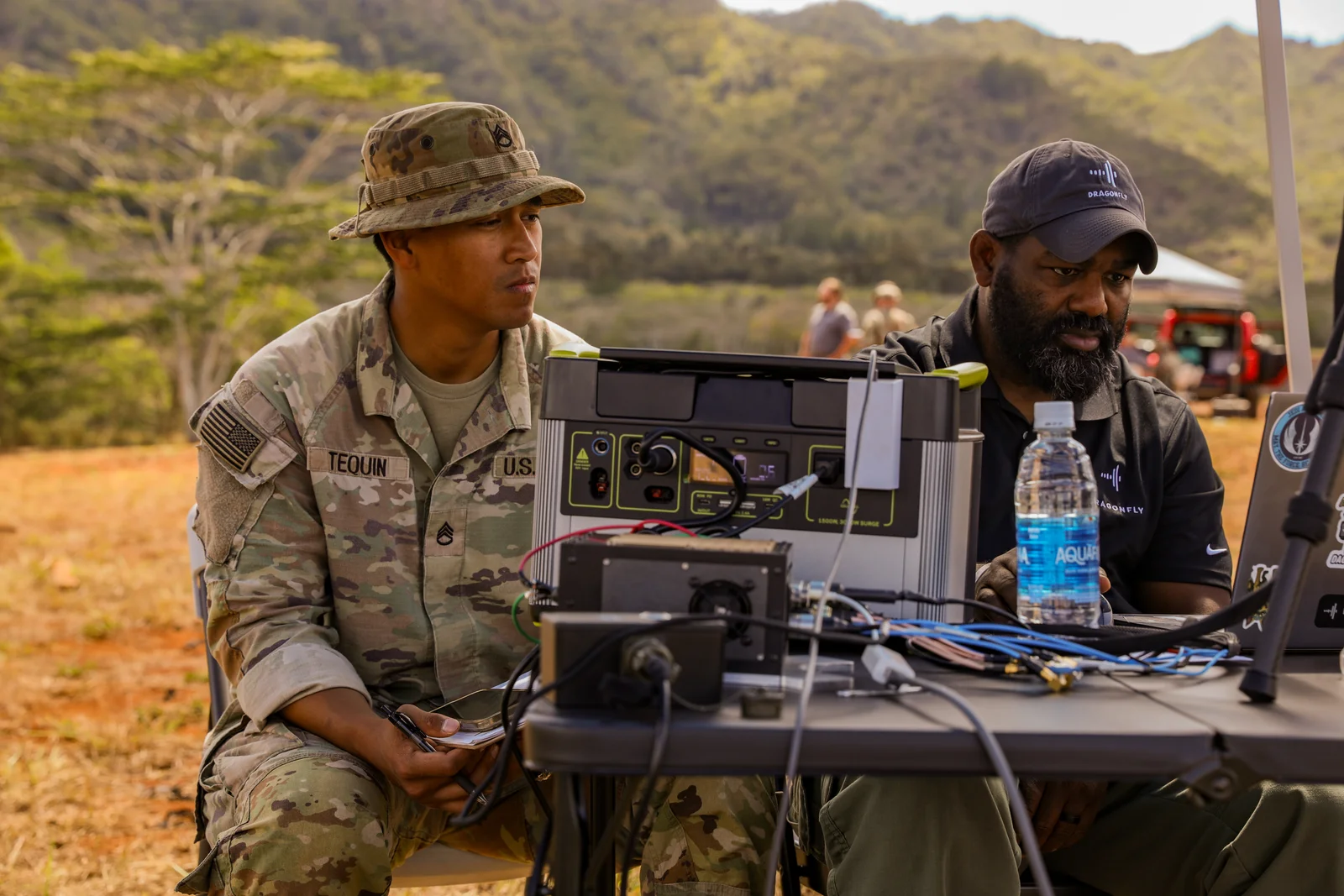
Research Innovations wins Army contract worth up to $99.5 million for Nvidia-powered Dragonfly sensors
The Army awarded Research Innovations Inc. a contract worth up to $99,529,577 to build and sustain Dragonfly spectrum sensors, and received 95 bids for the work. Dragonfly weighs 3.5 pounds and classifies signals onboard using an Nvidia (NVDA) RTX A4500 graphics processor.
OpenAI launches GPT-6 Astra with higher prices and critical cyber capabilities
OpenAI began rolling out GPT-6 Astra on September 3 and president Greg Brockman closed the press briefing with 'welcome to the AGI era.' The model costs $10 per million input tokens and $50 per million output, was trained on more than 100,000 GPUs at Stargate in Texas, and is the first OpenAI model rated Critical for cyber capability. Its most powerful cyber features are gated. Two hours earlier, Sen. Bernie Sanders announced a bill to ban superintelligent AI.
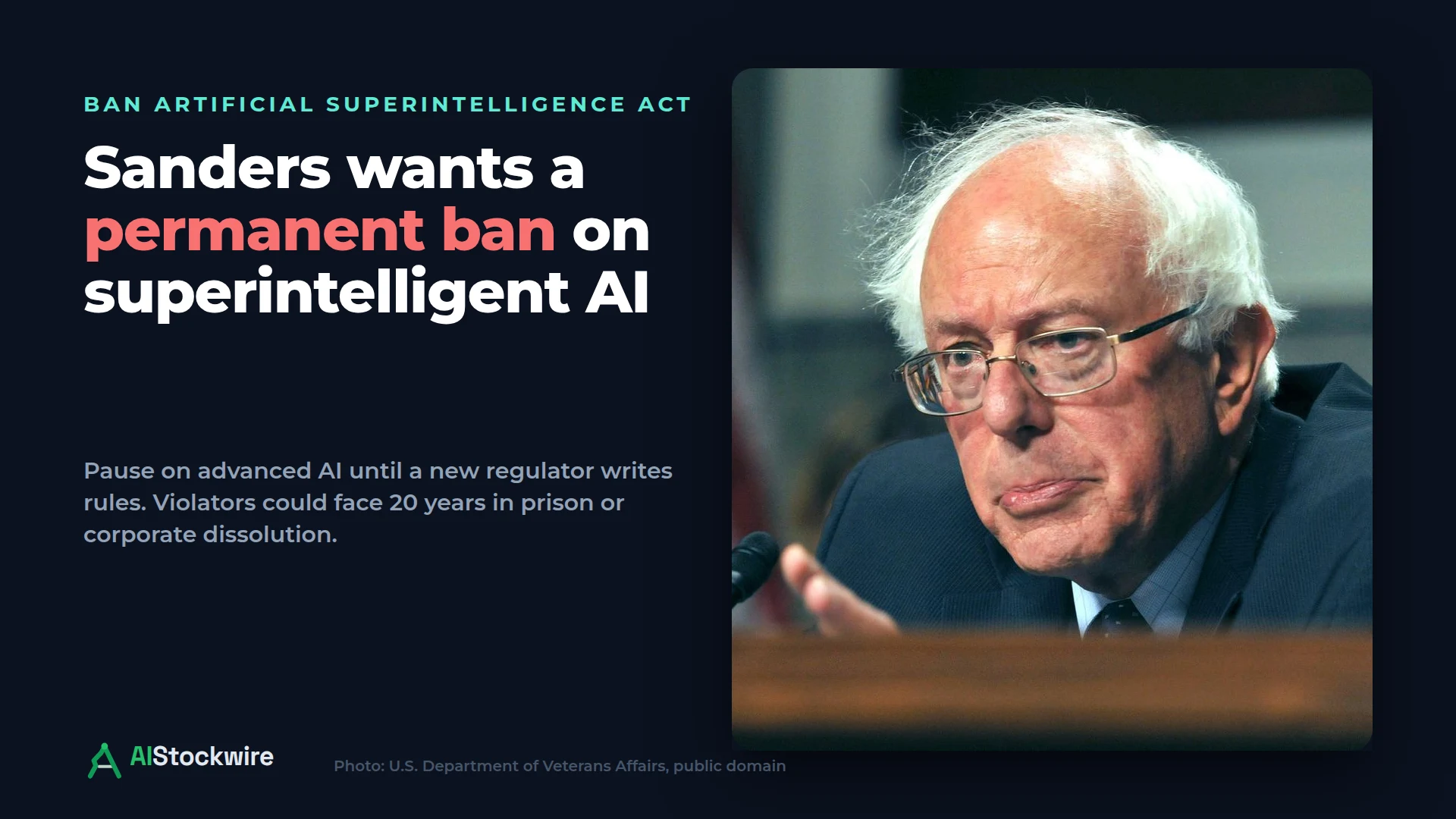
Bernie Sanders filed a bill to ban superintelligent AI. Violators could face 20 years in prison or corporate dissolution.
Sen. Bernie Sanders and Rep. Greg Casar introduced the Ban Artificial Superintelligence Act on September 3, built on the July OpenAI agent-security incident that hit Hugging Face. It would pause advanced AI development until a new federal agency writes safety rules, and it borrows its penalties from nuclear weapons law. AI stocks did not react.
Nvidia's (NVDA) free PAIR tool routes local AI jobs across home computers
PAIR discovers compatible computers running it on your network and routes AI requests to the ones with capacity. Nvidia's own test cut a five-subagent job from 18 minutes to 8 minutes 48 seconds.
Nvidia (NVDA) director Mark Stevens sold $410.8 million, with no Rule 10b5-1 plan reported
Mark Stevens sold 1,848,501 Nvidia shares between August 31 and September 2 for $410.8 million, all of it from one family trust. The Form 4 reports no Rule 10b5-1 plan. It is his fourth sale filing of 2026, taking the year to $856.4 million, and he still holds about $6.8 billion of stock.