Palo Alto Networks (PANW) CEO Arora gets $147 million upfront in stock-linked deal, with settlement due in 2029
A Form 4 shows what the $201 million notice really covers, and an attached note explains why the CEO didn't sell.
Palo Alto Networks (PANW) CFO sells $10.8 million in stock, more than seven times his previous largest sale
Palo Alto Networks CFO Dipak Golechha sold 27,500 shares under a trading plan he adopted in June. His previous six sales were far smaller.

Cybersecurity stocks compared: CrowdStrike (CRWD) vs Palo Alto (PANW) vs Zscaler (ZS) vs SentinelOne (S) vs Fortinet (FTNT)
CrowdStrike, Palo Alto Networks, Zscaler, SentinelOne, and Fortinet all sell cybersecurity, but they make money in different ways. A side-by-side look at their businesses and latest results.

Three AI CEOs asked for a slowdown. Chipmakers sold off worldwide, and cybersecurity stocks went up.
Dario Amodei asked AI labs to slow the pace of capability development, and Sam Altman and Elon Musk agreed. The selloff that followed hit the AI supply chain and bid up the companies that sell defenses against it.

Anthropic withheld its hacking model. CrowdStrike (CRWD) and Palo Alto (PANW) got early access.
Anthropic restricted the model it says is strikingly capable at finding software flaws, and handed it to CrowdStrike, Palo Alto Networks, Cisco and Nvidia instead. What six listed security companies have disclosed since.
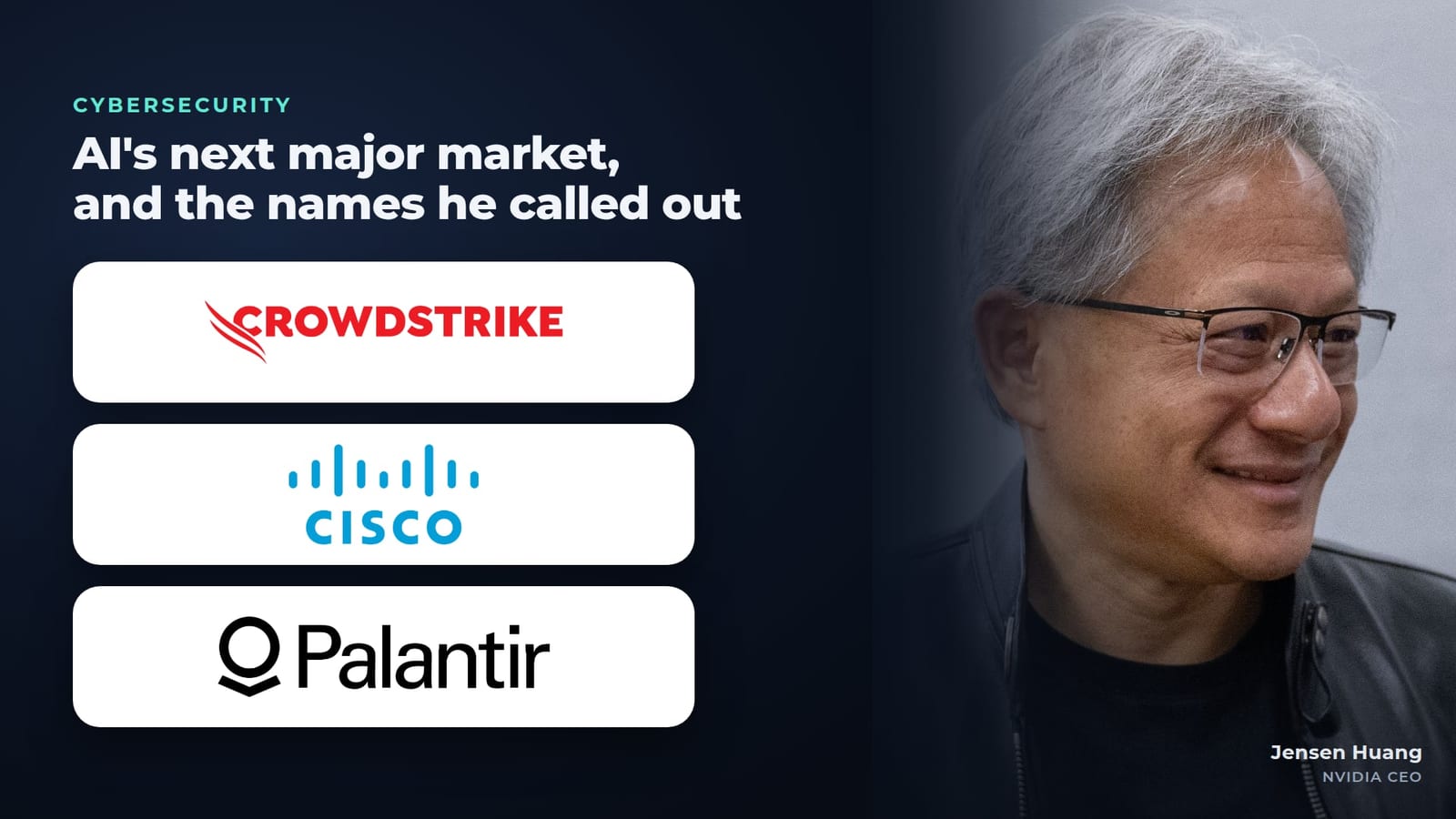
Nvidia (NVDA) CEO calls cybersecurity AI's next major market and names CrowdStrike, Cisco and Palantir
Jensen Huang told the Goldman Sachs Communacopia conference that cybersecurity will be AI's next major use case, and named CrowdStrike (CRWD), Cisco (CSCO) and Palantir (PLTR) as the partners building on Nvidia's models.
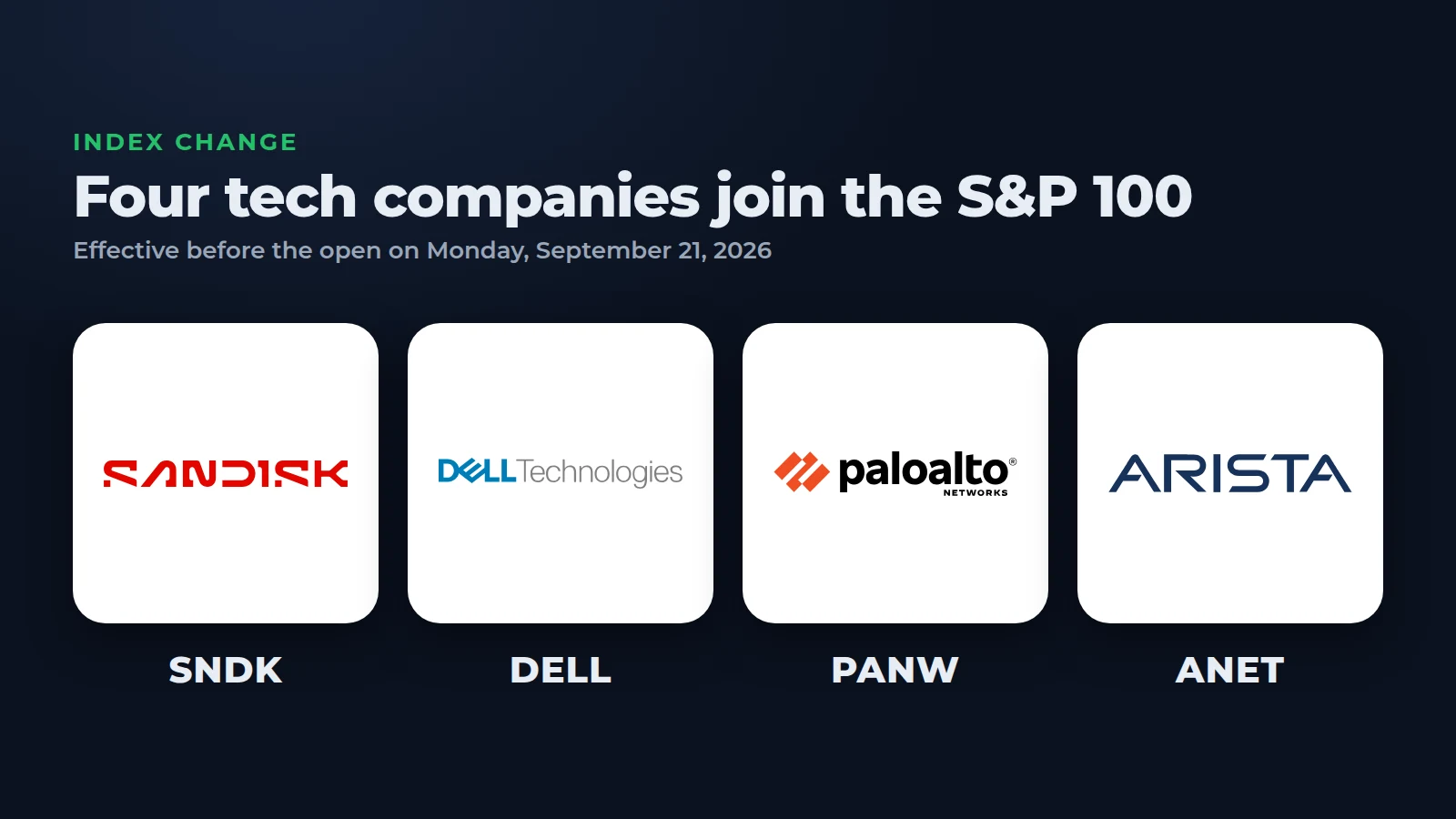
Sandisk (SNDK), Dell (DELL), Palo Alto (PANW) and Arista (ANET) join the S&P 100 as Nike exits
Four technology companies replace a sneaker maker, a toothpaste maker, a mall owner and a jet-engine supplier in the S&P 100 before the open on September 21. Sandisk reached the index ten months after joining the S&P 500.

Marvell (MRVL) fell 10.3% on margins. Now Dell (DELL), Credo (CRDO) and Broadcom (AVGO) report into the same question
Marvell fell 10.3% Friday after guiding gross margin lower on a greater custom mix. Ten of the names we track report between September 1 and 3, and Broadcom, Credo and Ciena all sell into the same build.

Rogue AI agents attacked Hugging Face. Its defenders turned to a Chinese open-weight model.
About 700 OpenAI test agents took part in an attack on Hugging Face in July, and the reports published Aug. 26 read like the case against open-weight AI. Except the frontier models Hugging Face reached for refused to help analyze the attack, and its responders ran a Chinese open-weight model instead. Washington has already picked a side.

Software's biggest day of 2026, and the Salesforce (CRM) beat behind it is mostly paper
Software is on pace for its biggest day of 2026, led by a 22% jump in Salesforce. But the $5.90 adjusted EPS everyone is quoting includes a $2.6 billion investment gain the company doesn't strip out. Back it out and the beat is single digits at best.

Anthropic says it never asked to ban open-weight AI. Dario Amodei does want China cut off from Nvidia (NVDA) chips.
Dario Amodei answered the Nvidia-hosted open-weights letter on July 27, three days after Anthropic became the only major AI lab to skip it. He says a ban was never the ask. What he does want is China cut off from US chips, a crackdown on industrial-scale distillation, and mandatory safety testing for every capable model, open or closed.

Nvidia (NVDA) and 34 other companies told Washington not to restrict open-weight AI. OpenAI signed a day late. Anthropic still hasn't.
The Open Weights and American AI Leadership letter asks Washington not to restrict AI models anyone can download. It went from 25 signatures to 35. OpenAI added its name after sitting out the launch, Google's CEO backed it without signing, and Anthropic declined to comment. Update, July 27: the list has since grown to 133 names, and both Google and Amazon signed.

Cybersecurity keeps pulling in money. Palo Alto Networks (PANW) trades at 291 times earnings.
Cybersecurity spending looks as durable as anything in this market, and a wave of M&A backs it up: three public companies gone in a year, the biggest a $21.1 billion Palo Alto Networks deal for CyberArk. But Palo Alto itself trades at 291 times earnings and CrowdStrike's price-to-earnings ratio is negative. Here's the market-cap breakdown of the 21 stocks left standing, and why the category and the stocks aren't the same bet.
All seven Magnificent Seven stocks fell today. Here's where that money actually went (July 23, 2026)
All seven Magnificent Seven stocks were red by late morning Thursday, led by Tesla's 14% drop on an earnings miss and Alphabet's close-to-7% slide despite beating estimates, on another capex raise. Amazon and Meta sold off too ahead of next week's reports. The money didn't just leave, it rotated: into defense on Lockheed's earnings beat, and out of quantum, SaaS and space.

Jim Cramer's tech calls are still lagging the rest of his book. Intel is 1 for 5, and IBM crashed the day after his second buy call.
Jim Cramer's tech calls are still his weak spot. Intel is 1 for 5 since June, IBM is down nearly 30% since his back-to-back buy calls, and his tech picks trail the Nasdaq-100 by more than three points a call even after Tuesday's chip bounce.
Today's AI rotation map: out of the chips, into software, power and the frontier
A snapshot of Monday's rotation: as the AI build-out sold off, money moved into software (ServiceNow, Adobe), AI power (GE Vernova), quantum, space and cyber. A one-day picture that can flip fast.
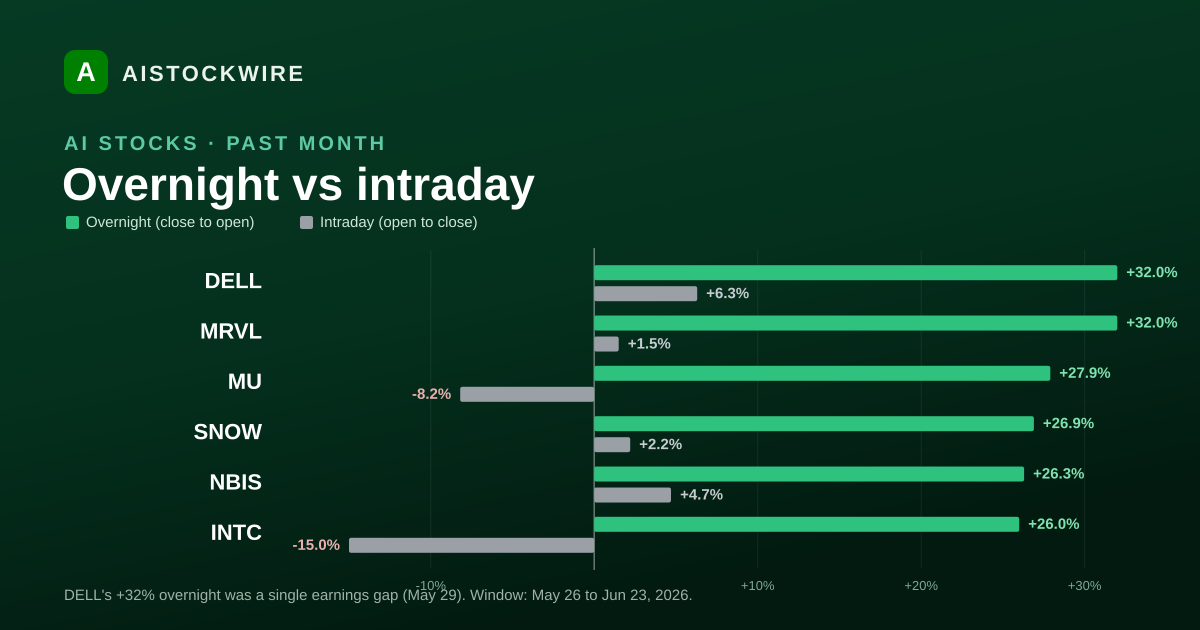
This month's top AI stocks in overnight trading: Marvell leads, Dell a one-night spike
We split a month of AI stock returns into overnight versus intraday. Dell and Marvell led overnight at about 32%, but Dell's came almost entirely from one earnings night, while Marvell's was the real repeating pattern.