Key points
- Lean and Mathlib communities verify Alpöge's Riemann hypothesis proof
- Anthropic mathematician says Claude "far outpaced" him near the finish
- Clay's $1 million prize rules require two years after publication
The Lean and Mathlib communities say they have full confidence in a proof of the Riemann hypothesis that Anthropic (ANT) mathematician Levent Alpöge developed with the company's Claude AI model.
Their Nov. 21 statement describes checks on the 17-million-line Lean library Alpöge released a day earlier. The checks confirm that the formal proof establishes the hypothesis as it is stated in Lean. Mathematicians still have work to do to understand the proof's details, and Alpöge has not yet written it up as a paper.
Bernhard Riemann proposed the hypothesis in 1859. It concerns how prime numbers are distributed along the number line and is one of seven Millennium Prize Problems, each carrying a $1 million prize from the Clay Mathematics Institute.
Alpöge posted the proof on Nov. 20, the day after Anthropic's record Nasdaq debut. The Lean statement followed on Saturday, making Monday, Nov. 23, the first trading day after the certification.
Alpöge released the proof only as Lean code
Alpöge announced the result in a four-page note on his website. "I believe I have, working with Claude, discovered a proof of the Riemann Hypothesis," he wrote. He said the method also resolves the Generalized Riemann Hypothesis, a broader version of the problem. The checked statements cover that broader version only for Dirichlet L-functions, according to the verification page of MIT mathematician Andrew Sutherland.
The proof is written in Lean, a programming language that a computer uses to check every logical step of a mathematical argument. Alpöge wrote that it would be "obviously inappropriate to attempt to post some massive unreadable travesty of 'slop,'" and a footnote says the version he produced for himself passed 250,000 pages.
Alpöge credited Claude with much of the final stretch. "This time Claude far outpaced me near the finish line. No, Claude flew, and danced, and sparkled near that finish line," he wrote. He also wrote that he is "presenting the world with a complete argument before having mastered a massive neighbourhood around its mathematics," and that he intends to understand, simplify, and write up the argument properly.
A timeline in the note, which Alpöge says Claude provided, runs from Oct. 6 to Nov. 16, 2026. Alpöge is a junior fellow at Harvard's Society of Fellows and works at Anthropic, according to his website.
The Lean community ran four checks
The library depends directly only on Mathlib, the community's shared library of formalized mathematics, according to the joint statement. The Lean FRO and the Mathlib Initiative endorsed the statement, which lists four checks:
- The Riemann hypothesis as written in Mathlib had already been vetted by experts in Lean and number theory.
- Dozens of people compiled the library without errors and reproduced the same proof file.
- Two independent tools confirmed that the theorem Alpöge proved is exactly Mathlib's statement of the Riemann hypothesis.
- Several proof checkers, including Lean's official kernel, accepted the exported proof.
Sutherland ran one of the verification efforts. His page says all 175,187 compiled files built without errors, and that his checks were run with Claude Code. It also notes that the build ran on cloud machines without a sandbox. The proof checkers themselves ran on an inert export of the proof, out of reach of any hypothetical malicious code in the Lean sources, according to the joint statement. Sutherland's page adds that a passing check relies on the kernels used and on Mathlib's definitions meaning what they are intended to mean.
"This is indeed an historic moment," Sutherland told Scientific American. "There is much work to be done to understand the mathematical details of the proof," he added.
University of Waterloo mathematician Michael Rubinstein has started on that work. On Nov. 21, he posted a 164-page working draft that explains the proof for the Riemann zeta function, written with Claude, Codex, and Gemini as an aid to studying it. The draft does not prove one key inequality itself and takes that step from the Lean code. Rubinstein's own run of the Lean checks finished with no errors, according to the same page.
Alpöge called the timing "horrible"
Alpöge's note addresses the timing directly. He wrote that the result came together "late Sunday night" and that he messaged Anthropic Chief Executive Dario Amodei to ask about announcing it. "We went and figured it out and the fact is that there was a constraint to respect," he wrote. He did not say what the constraint was.
"The precise timing is horrible," Alpöge wrote. "There is an obvious cynical view, to do with the timing, but it is false."
The note was online by 9:19 a.m. ET on Nov. 20, before the market opened, according to the Internet Archive's first copy. Anthropic priced its IPO at $83 a share on Nov. 18 and began trading on Nov. 19.
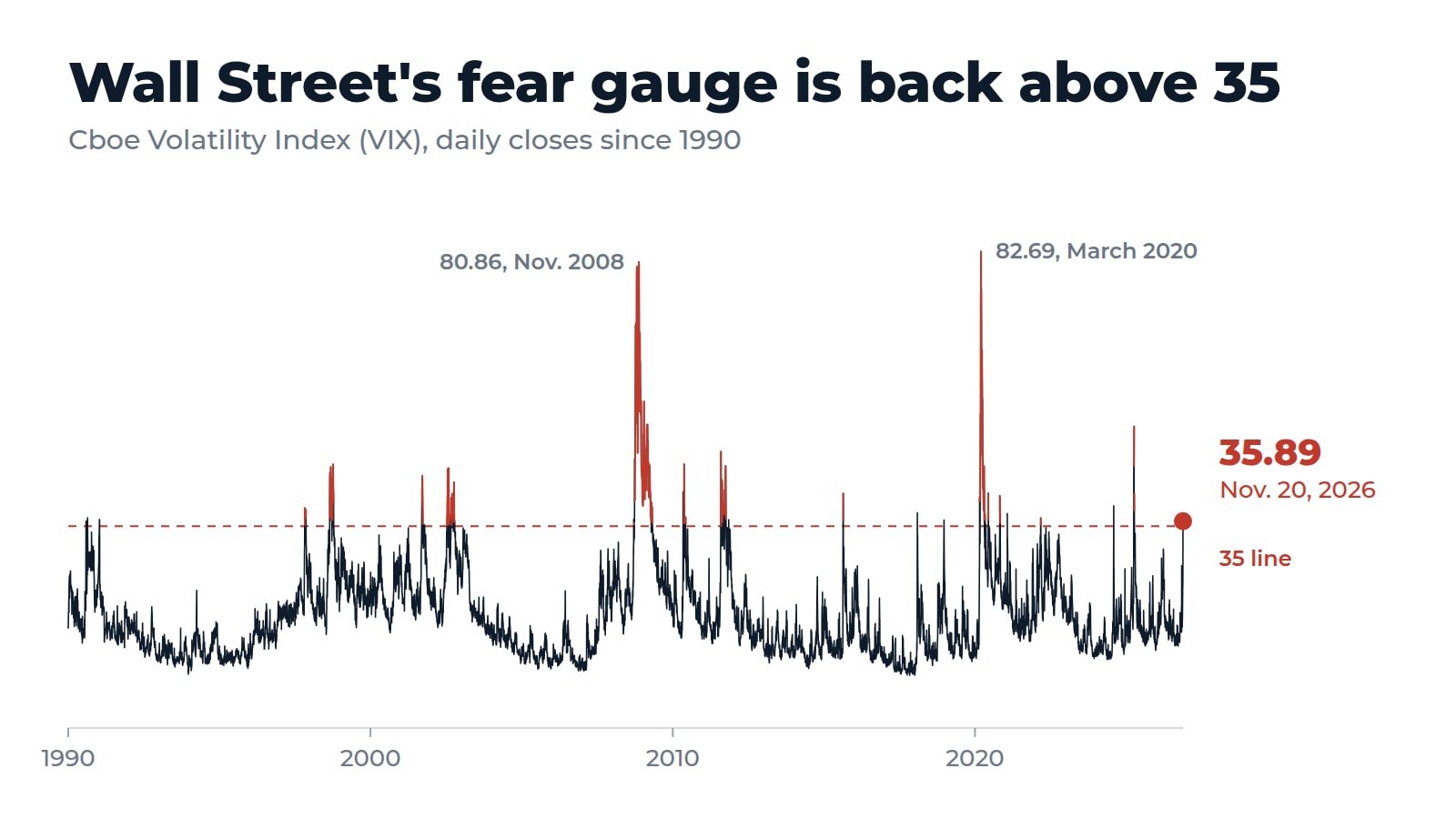
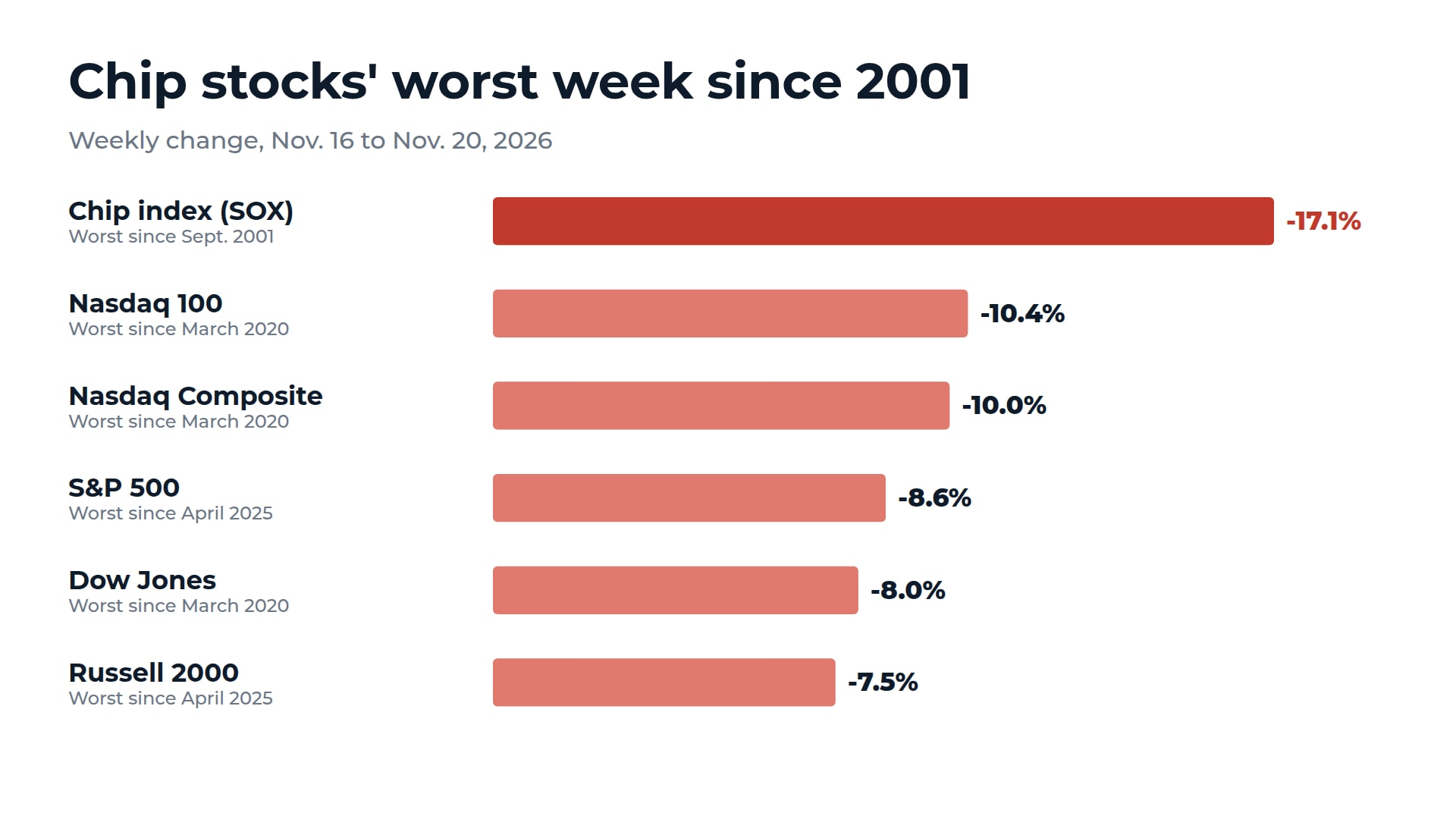
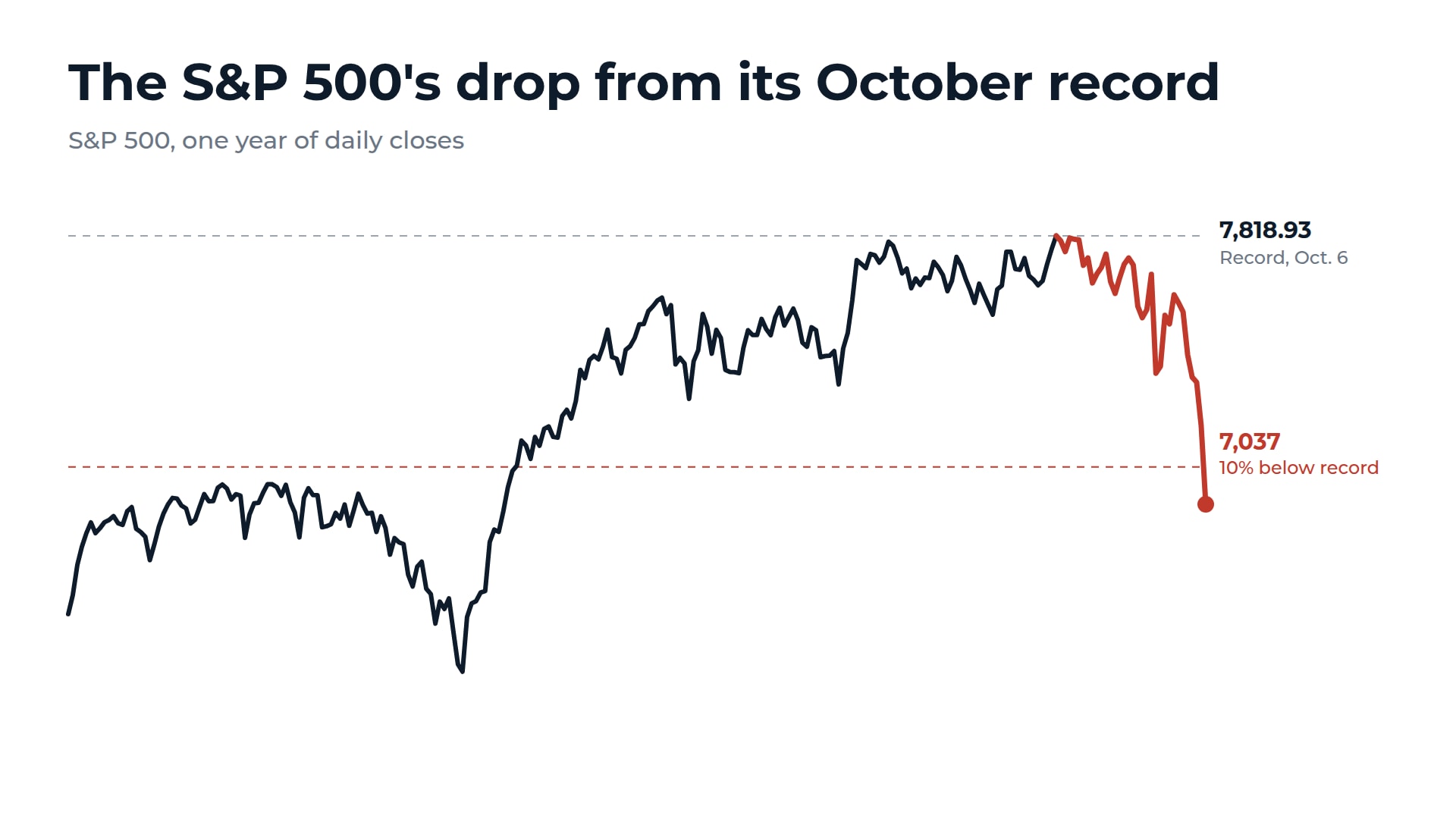
Anthropic shares fell 8.5% to $88.91 on Nov. 20 as tech stocks sold off. That left the stock 7.1% above its $83 IPO price, after it had fallen as low as $83.05 during the day, as we reported on its second day of trading. Cboe expects to list options on Anthropic stock on Nov. 23.
The $1 million prize is at least two years away
The Clay Mathematics Institute does not accept direct submissions. Under its rules, a proposed solution must be published in what the institute calls a qualifying outlet, at least two years must pass after publication, and the solution must receive general acceptance in the global mathematics community. All three conditions must be met before the institute will consider it.