Key points
- Elon Musk told Tesla's July 22 earnings call that Micron gave the company a "very significant allocation" of memory chips on "reasonable" terms, and Micron (MU) shares rose close to 3% intraday the next day.
- The next day, Intel's CEO told his own earnings call that "memory has become the biggest supply constraint challenge" the company faces, ahead of logic, wafers or substrates.
- SK Hynix's (SKHY) CEO said July 10 that customer demand will outstrip the company's production capacity even beyond 2030, calling 2027 the worst memory shortage in the industry's history.
- China's CXMT priced an $8.6 billion IPO with its retail tranche oversubscribed near 244 times; the world's fourth-biggest DRAM maker starts trading on Shanghai's STAR Market July 27.
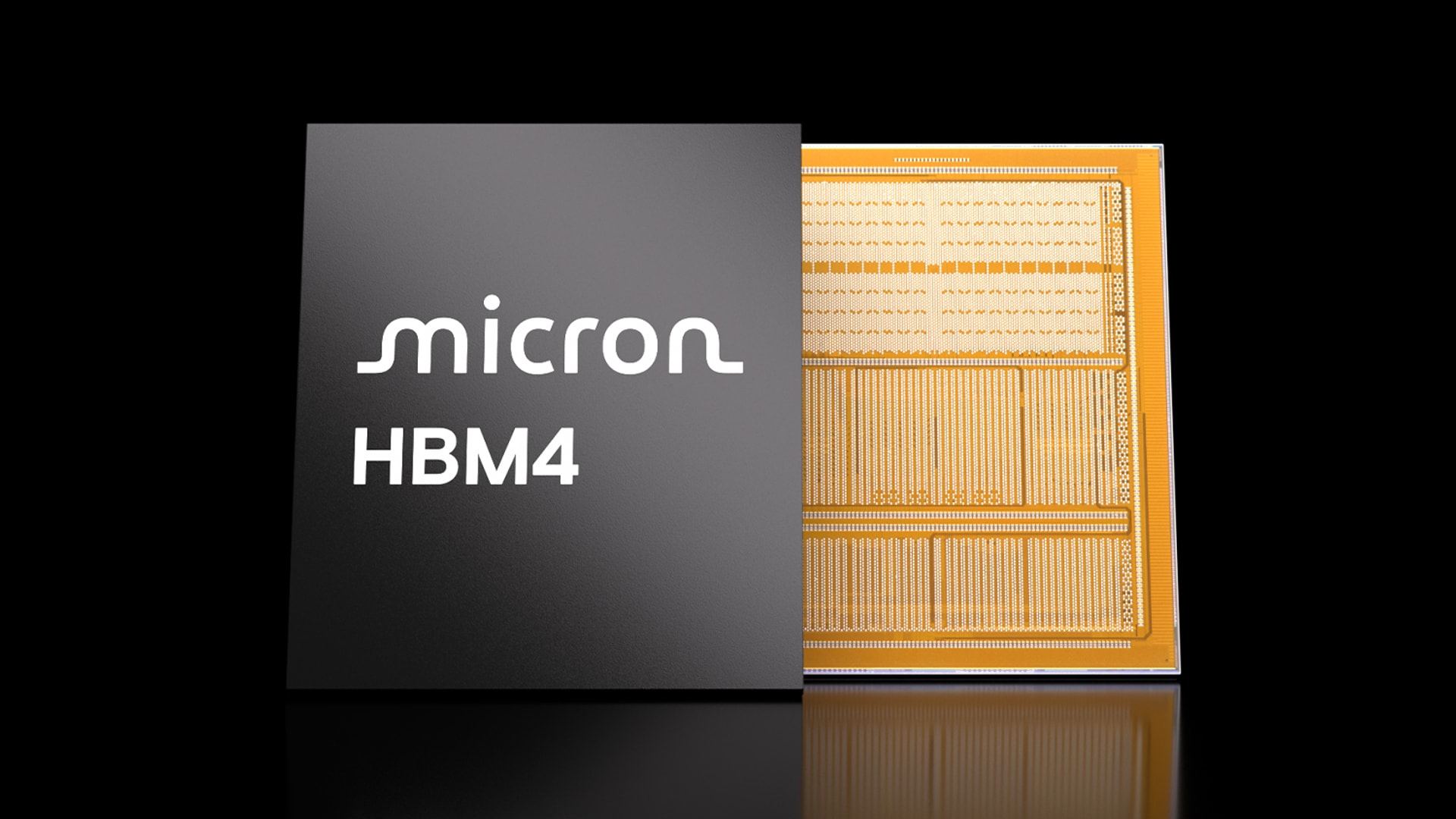
Something really odd happened. Companies don't usually thank a supplier by name on an earnings call. Elon Musk did it anyway, on Tesla (TSLA)'s July 22 earnings call, thanking Micron (MU) for a "very significant allocation" of memory chips on "reasonable" terms, while calling chip pricing "pretty insane." Coming from the buyer, that's a stronger signal than anything a supplier could have said.
Micron shares rose close to 3% intraday on July 23, the same session the Nasdaq fell 2.15%. Alphabet and Tesla had both just raised their AI spending guidance, and Wall Street took the bigger numbers as a warning instead of a win. Memory stocks moved the opposite direction. That's the same pattern we flagged a few weeks ago: memory is driving these chip-stock swings on its own, ahead of anything else in the AI trade.
Intel's CEO said the quiet part out loud, the same week
Intel (INTC) chief executive Lip-Bu Tan made the same point a day later, on Intel's own July 23 earnings call. He told analysts the industry faces "one of the most severe supply constraints in its history across leading-edge logic, silicon wafers, memory, and substrates," and that "these shortages will persist for the foreseeable future." Pressed on which constraint hurt most, he didn't hedge: "Memory has become the biggest supply constraint challenge, and we're collaborating with the three major memory vendors." Not logic. Memory, ahead of everything else Intel makes or buys.
Intel's own earnings that day were messy for unrelated reasons, a real revenue beat paired with an $11 billion GAAP loss from a non-cash charge tied to the government's CHIPS Act stake in the company. The memory comment had nothing to do with that charge. It came from a chipmaker with no reason to talk its book on DRAM prices, describing the same shortage Musk was describing a day earlier, from the buyer's side instead of a supplier's.
SK Hynix's CEO isn't hedging
Nine days before that, SK Hynix (SKHY) chief executive Kwak Noh-jung told reporters that customer demand will keep outrunning the company's production capacity well past 2030, and that 2027 could be the worst memory shortage the industry has ever seen. "Our customer demand continues to go up, while our capacity has limitations," he said. SK Hynix has already committed its entire 2026 production capacity to existing orders, most of it high bandwidth memory bound for AI accelerators at Nvidia and Google.
That warning is worth separating from what happened to SK Hynix stock on the Kospi overnight into July 24, when it fell 8.34% alongside a 7.59% drop in Samsung Electronics and a 5.72% slide in the Kospi index itself. That selloff tracked the same Alphabet and Tesla spending worry that hit US tech on Thursday, plus an overnight spike in oil past $100 a barrel, not a change in the memory math. A stock can fall on a risk-off day for reasons that have nothing to do with whether its underlying product is in short supply.
AMD is paying for the shortage, not just watching it
Advanced Micro Devices (AMD) sits on the other side of this trade from Micron and SK Hynix. Chief executive Lisa Su said earlier this year that AMD had "secured enough supply to certainly meet and exceed" its targets for AI chips, but also warned that "in the time of tight supply, we are seeing some cost increases on the memory side," costs the company expects to cut into its second half gaming and PC margins. That warning was still the backdrop this week when Su used AMD's Advancing AI event on July 22 and 23 to detail the Helios rack platform and a full MI400 lineup built around as much high bandwidth memory as the company could fit into it. AMD stock still fell close to 4% into Thursday's close, in line with the broader tech selloff, but the memory-heavy design choice tells its own story. Even the companies buying memory, not selling it, are now designing hardware around how much of it they can get.
The other side of the trade: CXMT's IPO
ChangXin Memory Technologies (CXMT), China's largest DRAM maker and the world's fourth-biggest behind Samsung, SK Hynix and Micron, priced its Shanghai STAR Market IPO at 8.66 yuan a share this month, raising near $8.6 billion in Asia's biggest listing so far this year. The retail portion of the offering was oversubscribed 243.93 times before a clawback reallocated shares, which brought the final retail figure to 212 times. Institutional demand came in around 570 times the shares on offer. The base deal raised 57.9 billion yuan, and a full overallotment would take it to 66.6 billion yuan, near $9.8 billion. Trading is set to begin July 27.
CXMT turned its first annual profit in 2025 after years of losses, and first quarter 2026 revenue jumped 719% year over year to 50.8 billion yuan. None of that happens without real, paying demand for the DRAM CXMT makes. CXMT and GigaDevice (603986.SS), the Chinese chipmaker some US investors already hold through memory focused ETFs, share a founder. Zhu Yiming started GigaDevice in 2005 and chairs it today, and he is also chairman of CXMT. GigaDevice designs and sells DRAM that CXMT actually manufactures, so owning GigaDevice is already a partial bet on CXMT's factory output, even before CXMT's own shares exist. Memory stocks have been volatile enough this month that a bet like that needs a strong stomach. Sandisk alone lost 29% in a week before Goldman put a price target on it 60% above where it traded.
Why this isn't just hype
Add it up and five companies are now saying the same thing about memory, each from a different seat, inside about two weeks. Musk is the buyer, thanking a supplier on a public call. Tan runs a rival chipmaker and ranked memory as his single biggest supply problem, ahead of logic and wafers. Kwak runs the supplier, and he's the one putting a number on how long the shortage lasts. Su's company pays the higher price every quarter and is still designing its newest hardware around getting more of it. CXMT just raised close to $9 billion betting there's room for a fourth major DRAM maker at all. A hype cycle usually looks like one story, repeated by everyone covering it. This is five people with nothing to gain from agreeing with each other, saying the same thing anyway.
TrendForce still expects DRAM contract prices to climb another 13% to 18% in the third quarter and NAND another 10% to 15%, a slowdown from the near-doubling pace of the first half of 2026, but a climb all the same. That's good for Micron and SK Hynix right now, and for CXMT once its shares start trading July 27: supply stays tight, and prices still have room to run before Kwak's shortage shows any sign of easing. SK Hynix reports earnings July 29, the first real test of whether its own numbers back up what its CEO has been saying.
Sources
- Tesla second-quarter 2026 earnings call, July 22, 2026, for Elon Musk's remarks on memory allocation and chip pricing
- Intel second-quarter 2026 earnings call, July 23, 2026, for Lip-Bu Tan's supply-constraint remarks
- Korean press coverage of SK Hynix chief executive Kwak Noh-jung's July 10, 2026 remarks to reporters
- AMD Advancing AI event, July 22 and 23, 2026, and Lisa Su's earlier remarks on memory cost increases
- ChangXin Memory Technologies Shanghai STAR Market IPO pricing and subscription figures; TrendForce DRAM and NAND contract price forecasts
- Related coverage: the SK Hynix earnings preview, the Korea memory bottleneck and the DRAM ETF adding GigaDevice
None of this is investment advice, and memory stocks have already shown this month how fast a rally can reverse in a single session. What sits behind all five of this week's comments is AI data center demand for memory, which is the same demand Kwak says outruns his capacity past 2030.