Key points
- Pentagon leaders discussed a 1950 law over Nvidia's CEO
- The Pentagon says the conversations never happened
- What the Defense Production Act lets a president order
- Why the law offers no clear path to a CEO
Defense Secretary Pete Hegseth and Deputy Defense Secretary Steve Feinberg discussed using the Defense Production Act as leverage over Nvidia's (NVDA) board to bring back Jensen Huang as CEO, The Washington Post reported on Nov. 25. The talks took place over the weekend before Nvidia's board reinstated Huang on Nov. 22, according to the Post.
Officials explored using the law to force Nvidia to shift more of its production to military projects unless the board restored Huang, the Post reported. A Pentagon official denied the account. "The conversations described between DOW senior leaders never happened and no such proposal was made by the Secretary, Deputy Secretary, or Under Secretary," the official said.
The Defense Production Act is a 1950 law that lets a president put national defense orders ahead of a company's other business. It gives no clear way to install a CEO, the Post reported, though the threat of using it could serve as a warning to a board.
What the Post reported about the Pentagon talks
Emil Michael, the Pentagon's technology chief, was also part of the conversation, according to the Post. Pentagon leaders argued that Huang's leadership at Nvidia was vital to US national security. It's unclear whether the idea reached President Donald Trump or Vice President JD Vance, according to the Post.
The Post also reported that Trump asked Vance to help broker Huang's return. A person familiar with the board's thinking told the Post the board didn't see the Pentagon talks as a threat.
Trump has said he pushed for Huang's return. He told CNBC on Nov. 23 that he had been speaking to Nvidia's board "directly and indirectly," as we reported at the time. Nvidia's board said it received input from senior levels of the US government before it reinstated Huang, 11 days after accepting his resignation.
What the Defense Production Act lets a president do
Congress passed the Defense Production Act in September 1950, during the Korean War. Its core power is in Section 101, which lets the president require that contracts or orders "he deems necessary or appropriate to promote the national defense shall take priority over performance under any other contract or order."
The same section lets the president require a company to accept and perform those orders ahead of others. It also lets the president allocate "materials, services, and facilities" as needed for national defense. The law's penalty section sets a fine of up to $10,000, up to a year in prison, or both for anyone who willfully violates these rules or orders. A later federal sentencing law sets a higher general maximum for offenses of that class: $100,000 for individuals and $200,000 for organizations.
Presidents have leaned on the law in emergencies. During the pandemic, both the Trump and Biden administrations used it to steer medical supplies, vaccines, and test kits, Lawfare noted in February. The government used it to ration aluminum, copper, and other materials during the Korean War.
The law offers no clear path to a CEO
Section 101's powers cover contracts, orders, and the allocation of materials, services, and facilities. In Nvidia's case, the leverage the Post described was production. A priority order could push Pentagon work ahead of the chips Nvidia sells to its commercial customers.
Hegseth has threatened to use the same law before. In February, he raised it in a dispute with Anthropic (ANT) over limits on military use of its AI models. Lawyers questioned then whether the law can force a company to make a product it doesn't already make. Lawfare's analysis said the statute's text "doesn't go that far."
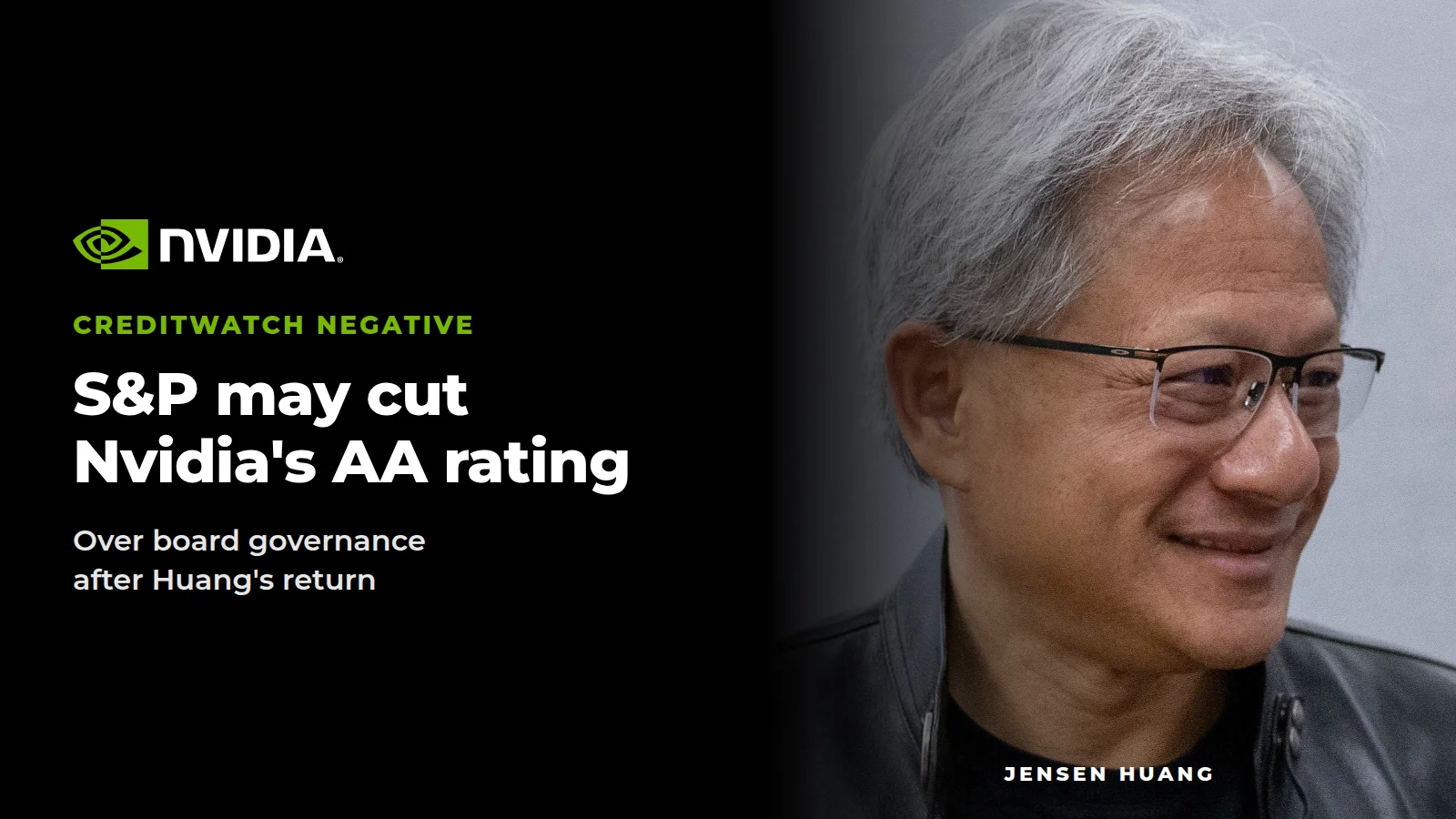
S&P Global Ratings put Nvidia's AA credit rating on review for a possible downgrade on Nov. 25, citing its management and governance.