ASML Holding N.V. - New York Re (ASML) news and analysis

Leopold Aschenbrenner's latest filing shows he closed 13 of his 16 options positions and moved more than half his fund into SanDisk and Micron
Situational Awareness LP reported $8.46 billion of put positions on March 31 and one on June 30. The money went into SanDisk, Micron, Nebius and STMicroelectronics.
Applied Materials (AMAT) posted a record quarter and guided higher. Shares fell in extended trading
Applied Materials posted its highest quarterly revenue ever, beat Wall Street on both lines and guided the fall quarter higher. The stock still fell. DRAM is now 26% of equipment sales.
Intel (INTC) is selling $15 billion of new stock. The US government paid $20.47 a share last August
Intel filed a preliminary prospectus on August 10, 2026 to sell $15 billion of common stock, with the price still unset. Here is the dilution math, and what the government, SoftBank and Nvidia paid for the same stock in the low $20s.
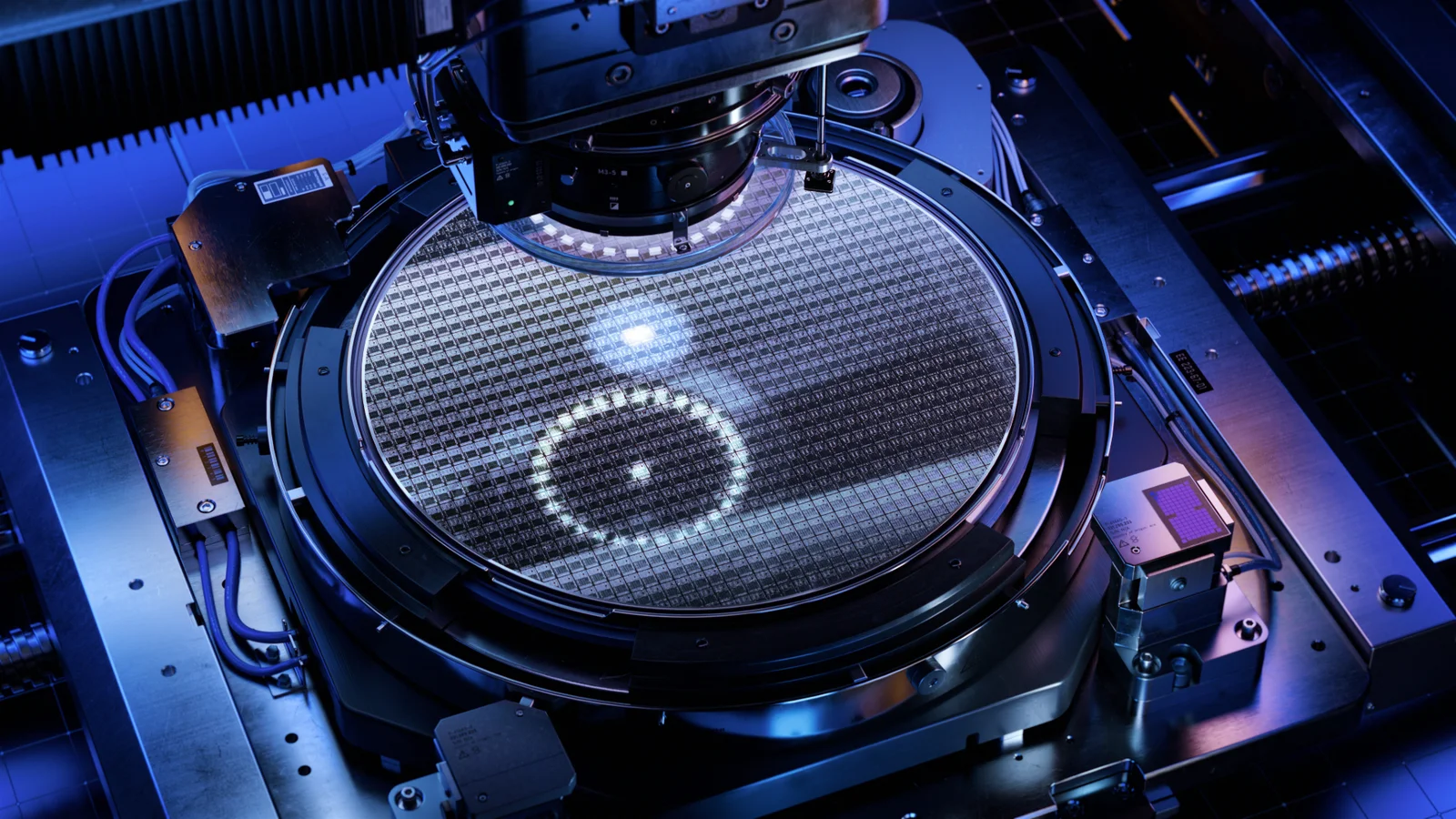
Leopold Aschenbrenner just bet $500 million against ASML's (ASML) lithography monopoly. His fund almost didn't survive the week he got married.
Leopold Aschenbrenner put $500 million into Source Foundry, a startup going after ASML's lithography monopoly, a week after his fund nearly collapsed the same week he got married.
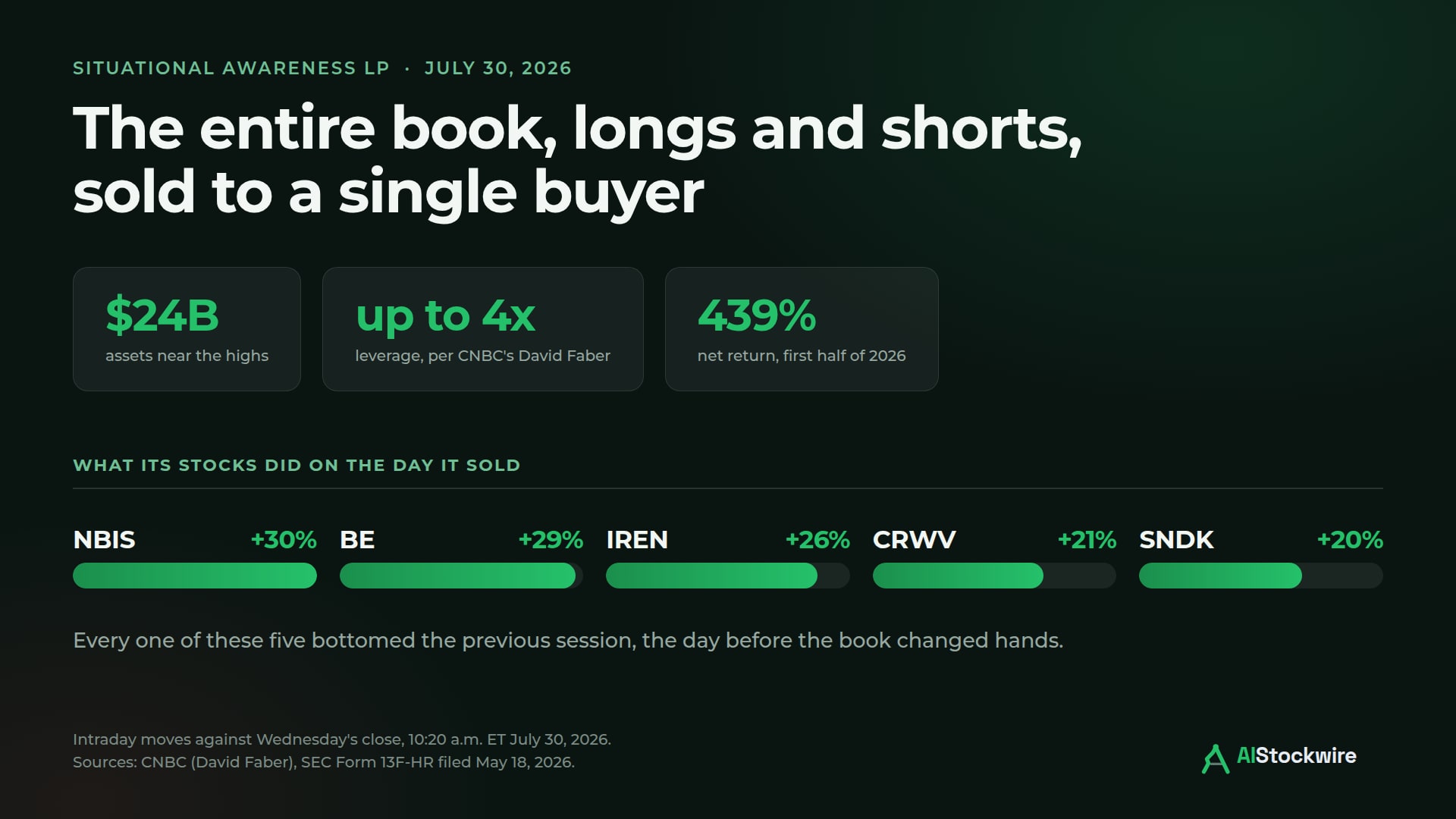
Leopold Aschenbrenner's AI fund sold its levered stock book, longs and shorts, to a single buyer. It was levered as much as four times.
CNBC's David Faber reported that Situational Awareness sold its entire public equities book, longs and shorts together, to a single buyer. The fund reached $24 billion near its highs and ran leverage of as much as four times. Its last public filing shows 62% of a $13.68 billion book was bets against chip stocks, and the stocks it owned outright fell twice as far.
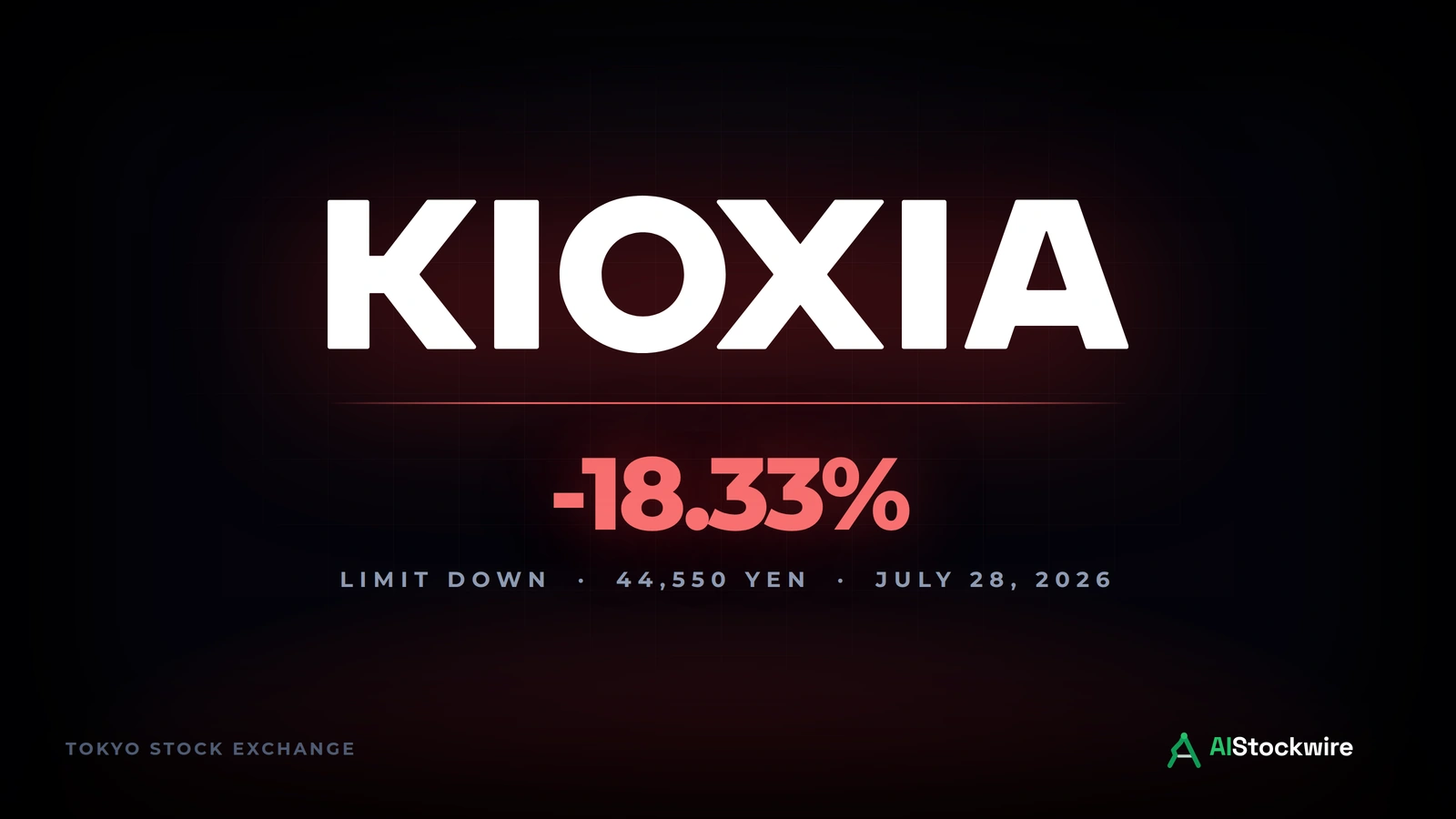
Kioxia hit limit-down again and is down 60% from its June peak. Sandisk (SNDK) co-owns its factories (July 28, 2026)
Kioxia closed at its limit-down price of 44,550 yen ($272 USD), down 18.33%, after finishing at the bottom of its daily band on July 17 as well. It is 60.5% below the 112,700 yen peak it set on June 22. It shares the Yokkaichi and Kitakami NAND plants with Sandisk (SNDK), which is why the two keep falling together.

Michael Burry posted three charts making the AI bear case. Two of them show the selling already happened.
Burry shared three Bloomberg charts on the AI trade. One maps the circular deals around Nvidia (NVDA). The other two show big tech forward multiples back at or below their 10-year averages, with Apple (AAPL) the lone expensive name and the only megacap missing from the circular map.
Korea's Kospi fell 10.84% and halted trading. Nvidia (NVDA) is flat and Micron (MU) is down 10% (July 28, 2026)
Korea's Kospi closed at 6,023.66 on Tuesday, down 10.84%, its fourth largest one-day fall on record, after Korea Exchange stopped all trading for 20 minutes. Samsung and SK Hynix each lost more than 13%. The US carryover went into memory and storage, with Sandisk (SNDK) down 14.52% and Micron (MU) down 9.54%, while Nvidia (NVDA) held flat and the Dow rose.
Nasdaq futures were up over 1% and things looked good. Then chips tanked and took the whole gain with them, led by ASML, Micron (MU) and Nvidia (NVDA) (July 27, 2026)
Futures pointed to a strong open on the Iran ceasefire and a 6.79% drop in oil. QQQ opened up 1.09% and was negative within the hour. Three chip headlines did it, and two of them came out of China: a domestic DUV lithography report that hit ASML, and CXMT's Shanghai debut that hit Micron.
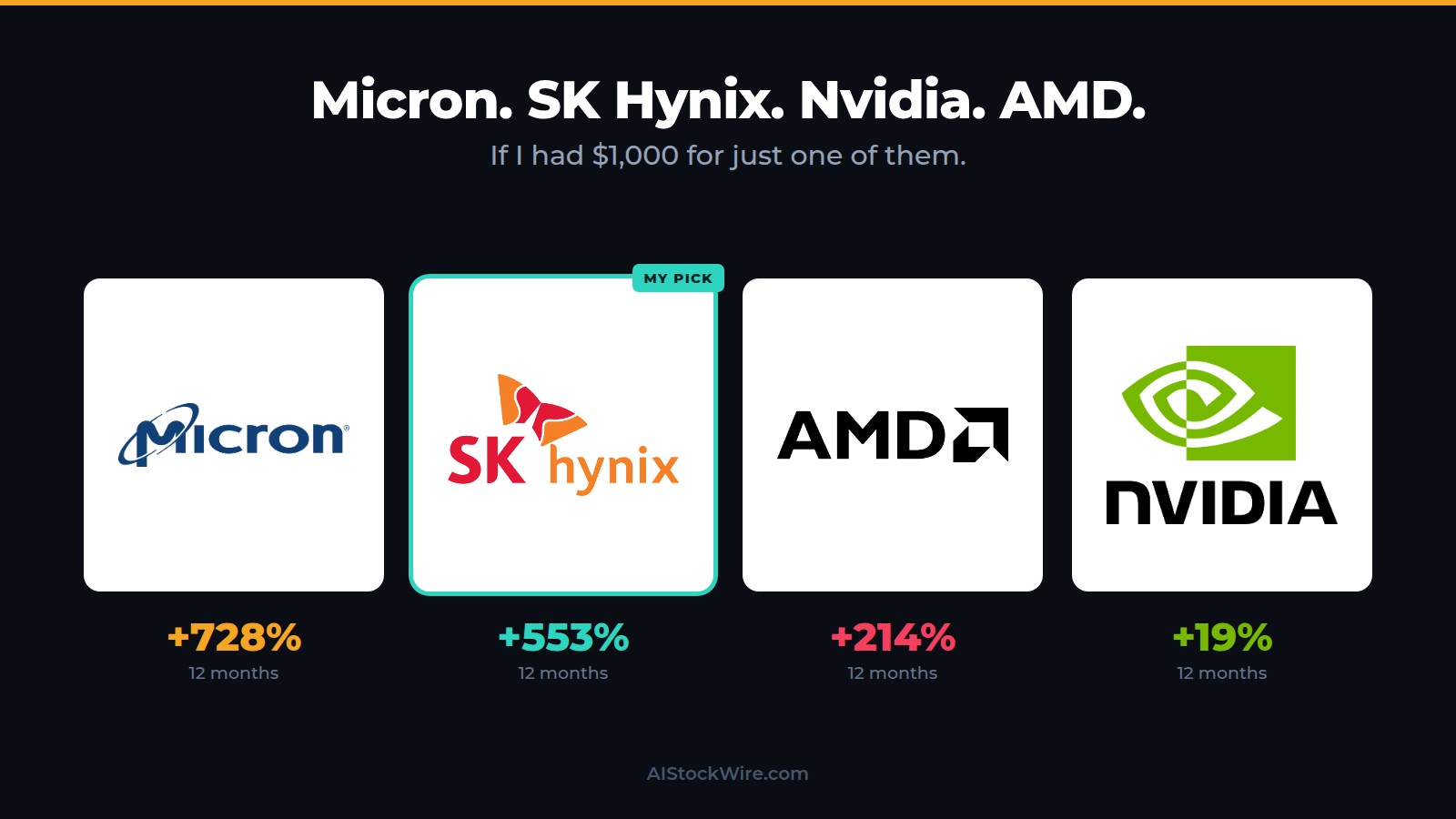
If I had $1,000 for one AI chip stock, I'd buy SK Hynix (SKHY) over Nvidia (NVDA), Micron (MU) and AMD
Nvidia and SK Group signed a $500 billion AI infrastructure deal late Friday night, after both New York and Seoul had closed for the week. Given $1,000 for one of the four AI chip stocks, I'd put it in SK Hynix, which trades at 5.6 times forward earnings even after its 28% ADR premium against 6.4 for Micron.
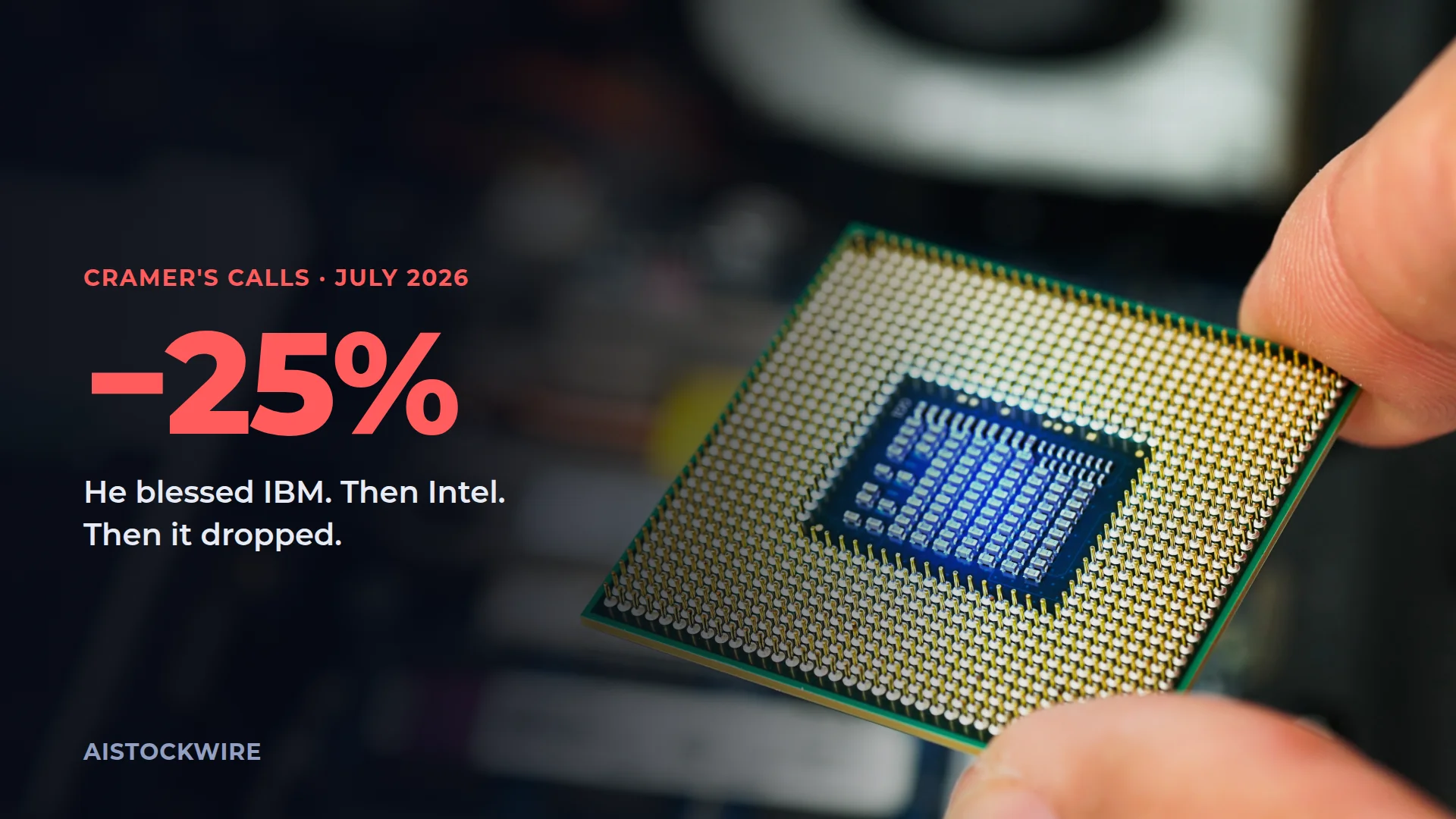
Jim Cramer blessed IBM on Monday. Tuesday was its worst day ever. Wednesday he blessed my Intel. Thursday it dropped.
Jim Cramer told viewers to buy IBM on July 13. It fell 25% the next day, the worst session in the company's history. Then he turned bearish at the bottom and has been right since. On Wednesday he called Intel his favorite stock for the fifth time since June. I own Intel. Thursday it dropped another 3.5%.
ASML raised guidance sharply today. Wall Street barely reacted, and TSMC reports tomorrow.
ASML beat its own Q2 estimate and raised full-year 2026 guidance again, citing surging AI chip demand. The stock barely moved on the news. Since ASML builds the machines TSMC depends on, that muted reaction is worth watching heading into TSMC's own report tomorrow morning.
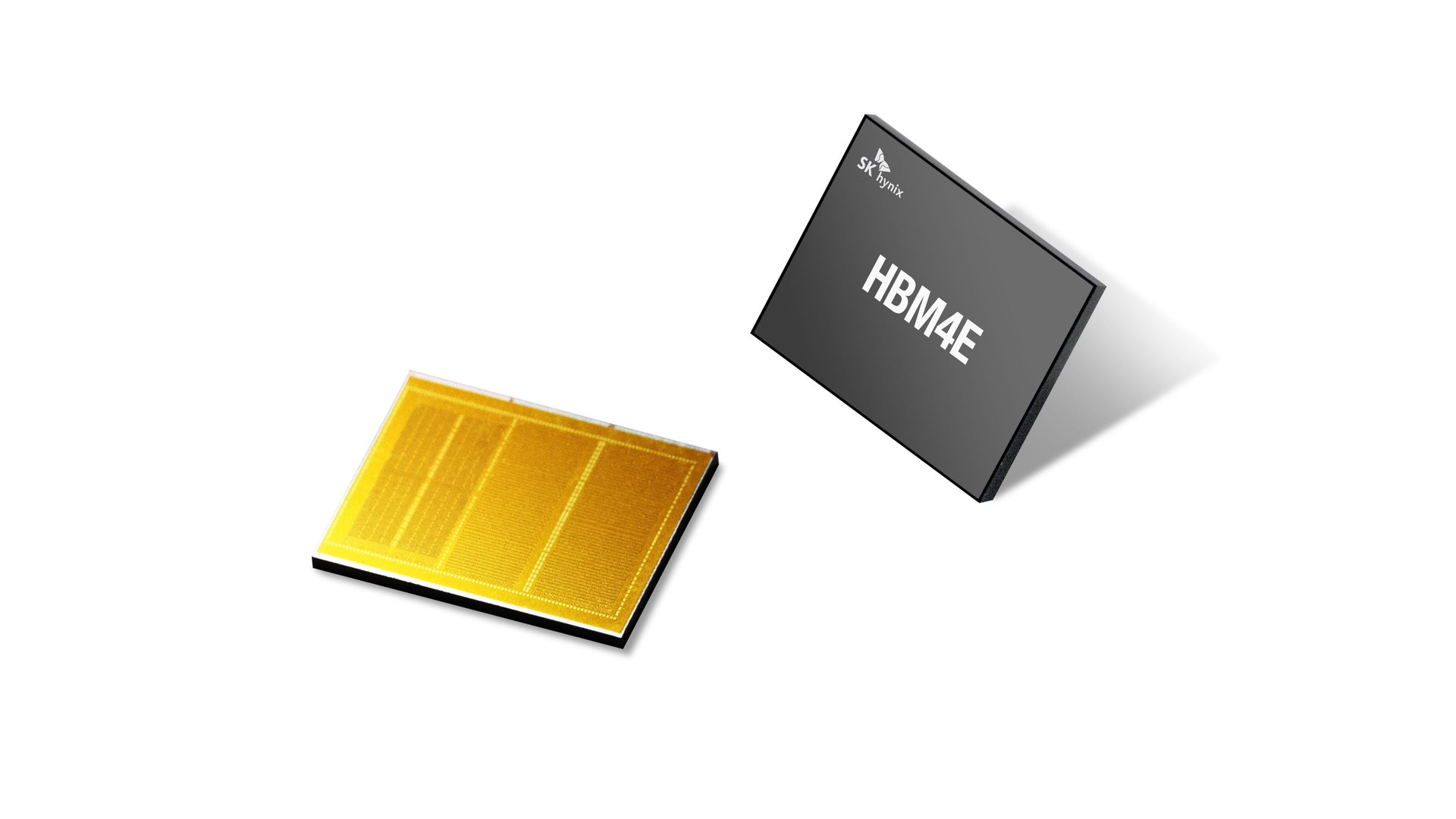
SK Hynix's $28 billion Nasdaq debut names Leopold Aschenbrenner's fund as a cornerstone investor
SK Hynix's record roughly $28 billion Nasdaq listing (SKHY) drew a cornerstone commitment from Leopold Aschenbrenner's Situational Awareness fund. The twist: the fund's single biggest disclosed position is a bet against the chip sector, which makes an anchor check into a memory chipmaker the story worth watching.
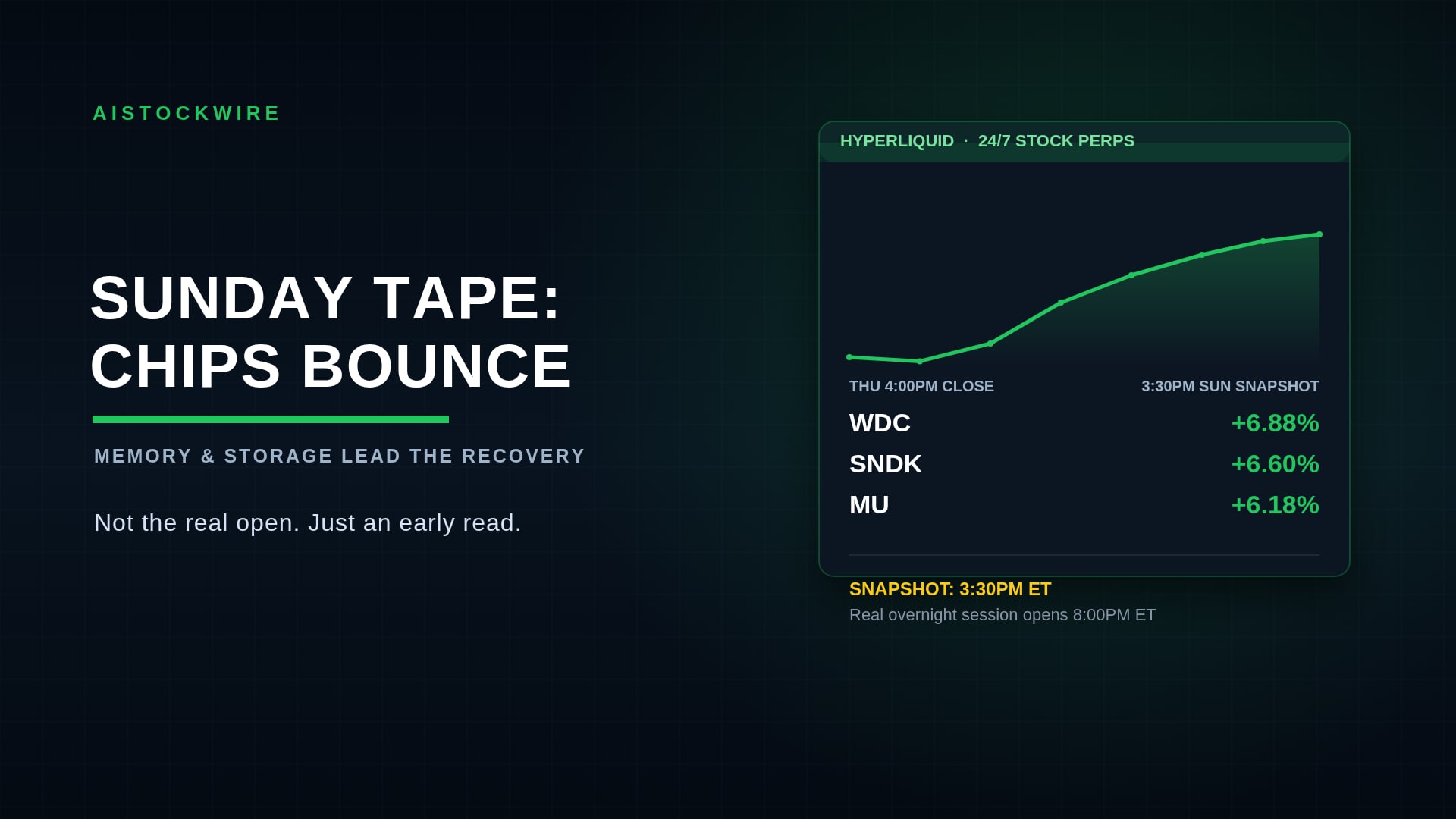
Hyperliquid's Sunday tape shows chip and memory stocks bouncing hard
Western Digital, SanDisk and Micron are all up more than 6% from Thursday's close on Hyperliquid's 24/7 stock perpetuals. Here is the Sunday snapshot, and why it is not the same as Sunday night's real reopen.
Micron (MU), Nebius (NBIS) and chip stocks jump on Hyperliquid's weekend tape
Real markets are closed for July 4th, but tech and chip stocks are trading green right now on Hyperliquid's 24/7 stock perpetuals. Micron, Marvell and Nebius lead the bounce, and the S&P 500 and Nasdaq perpetuals are up too. Here is the full read, and why Monday could look nothing like this.
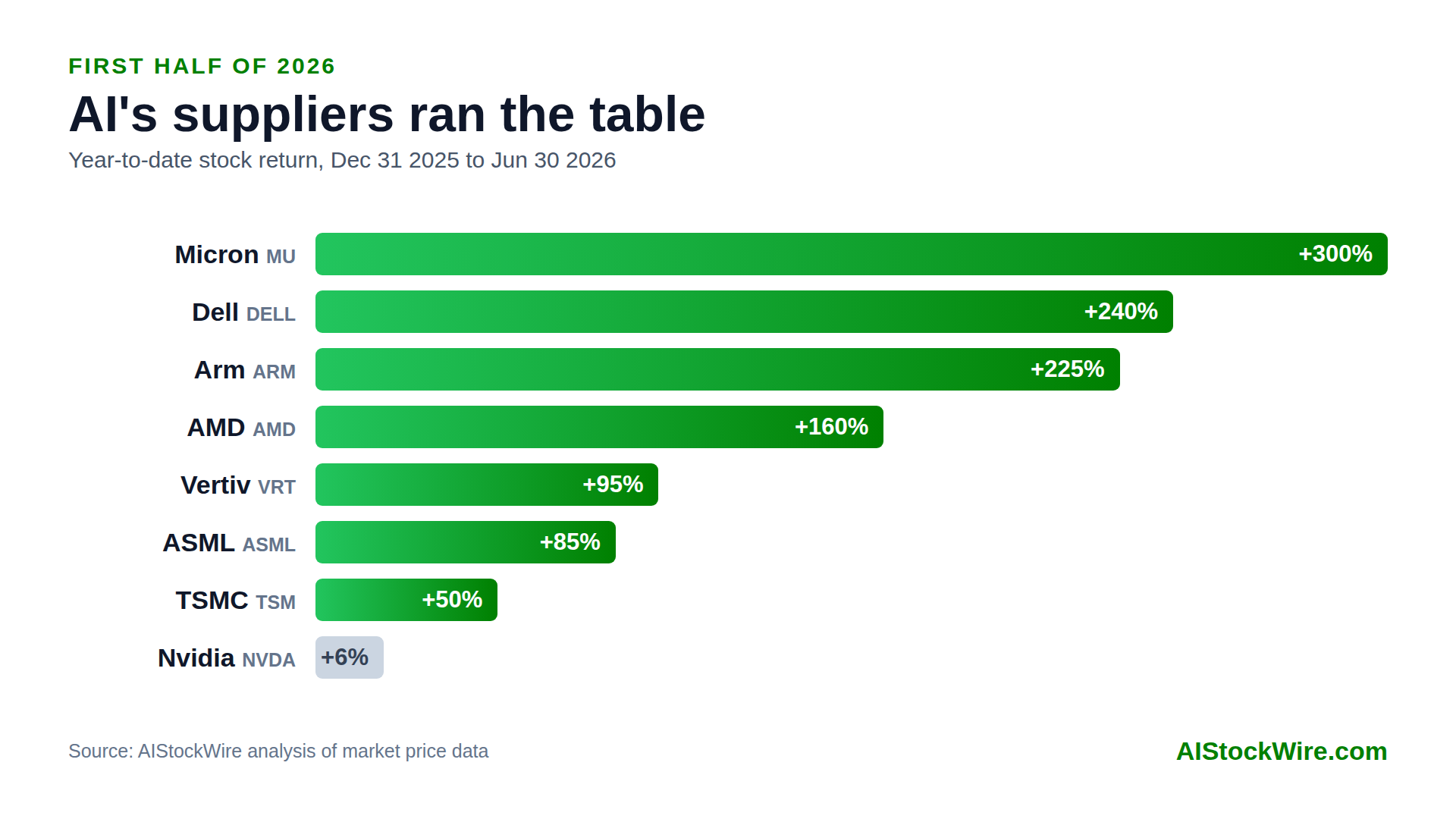
AI's quiet winners: ASML, AMD and Vertiv VRT lead at the June 30, 2026 open
On the last trading day of the first half, the AI suppliers led again. ASML, Arm (ARM) and Vertiv (VRT) each rose about 4%, while Micron (MU) is up roughly 300% in 2026.
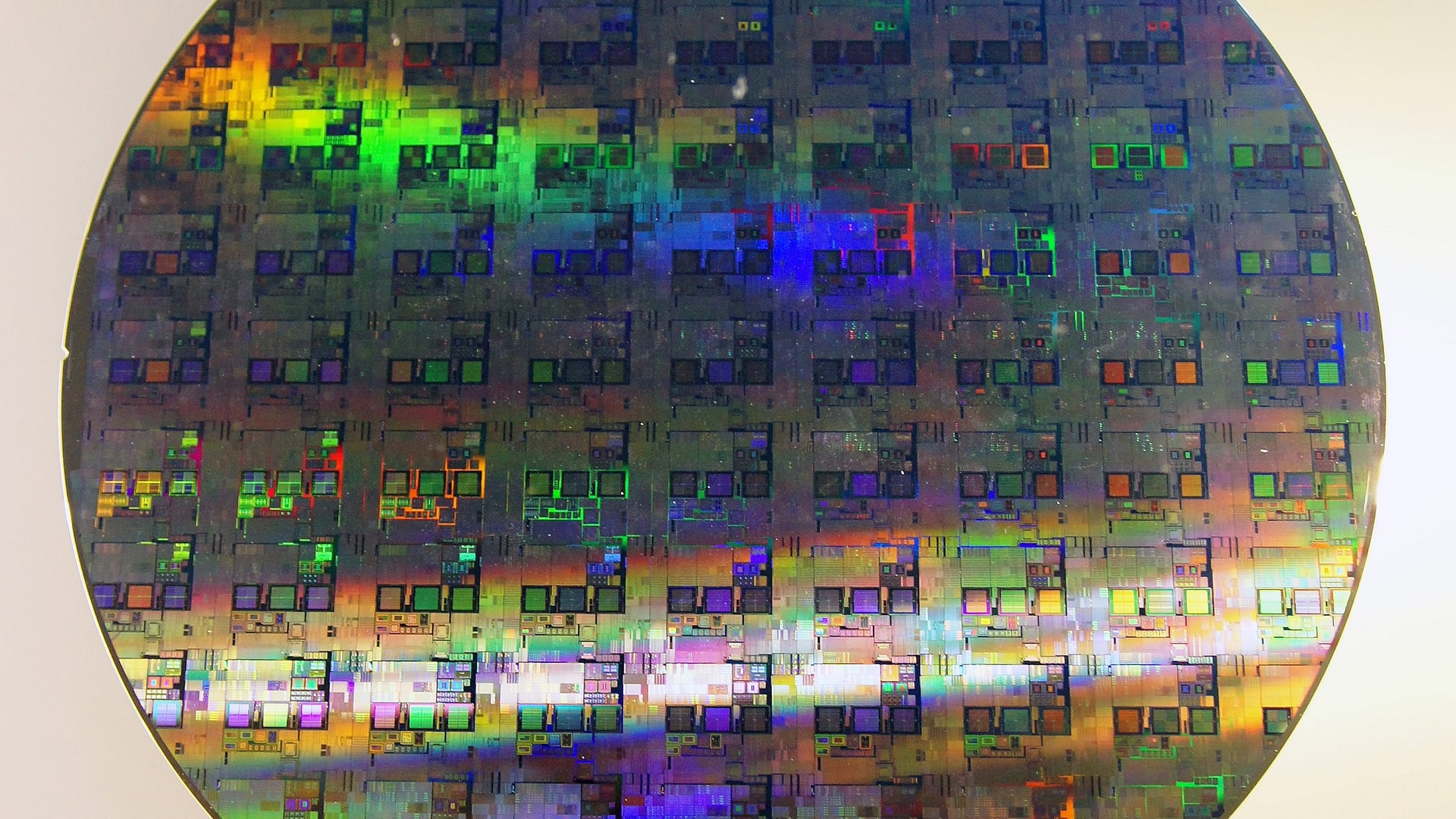
What is a chip foundry? Why almost every AI chip is made by one company, TSMC (TSM)
Nvidia, Apple and AMD design chips but do not make them. A plain-English guide to what a semiconductor foundry is, the fabless model, why TSMC (TSM) makes around 70 percent of the world's chips, and the packaging bottleneck holding back AI.
The AI stock map: every layer of the trade, from sand to software
A top-to-bottom deep dive on the AI supply chain, from the machines that make the chips down to the hyperscalers writing the checks, and how every layer pushes and pulls on the others.