Key points
- Nvidia and SK Hynix signed a multiyear memory partnership on June 8, 2026. Neither company disclosed a dollar figure.
- SK Group has committed 2,100 trillion won ($1.44T USD) to chips and AI data centers, split between SK Hynix and SK Telecom.
- SK Telecom is building its AI cloud on Nvidia's DSX design, the reference architecture for Vera Rubin. The first facility opens in 2027.
- Each Rubin GPU carries 288GB of HBM4. Industry estimates put SK Hynix at 60% to 70% of Nvidia's Rubin allocation, but Counterpoint's second-quarter count had it at 50% of all HBM revenue, down from 64% a year earlier, with Samsung at 33%.
- Nvidia said on July 24, 2026 that it will invest $1 billion in Naver's Korean AI data center.
On June 8, 2026, in Seoul, Nvidia (NVDA) and SK Hynix (SKHY) signed a multiyear technology partnership. Neither company put a dollar figure on it.
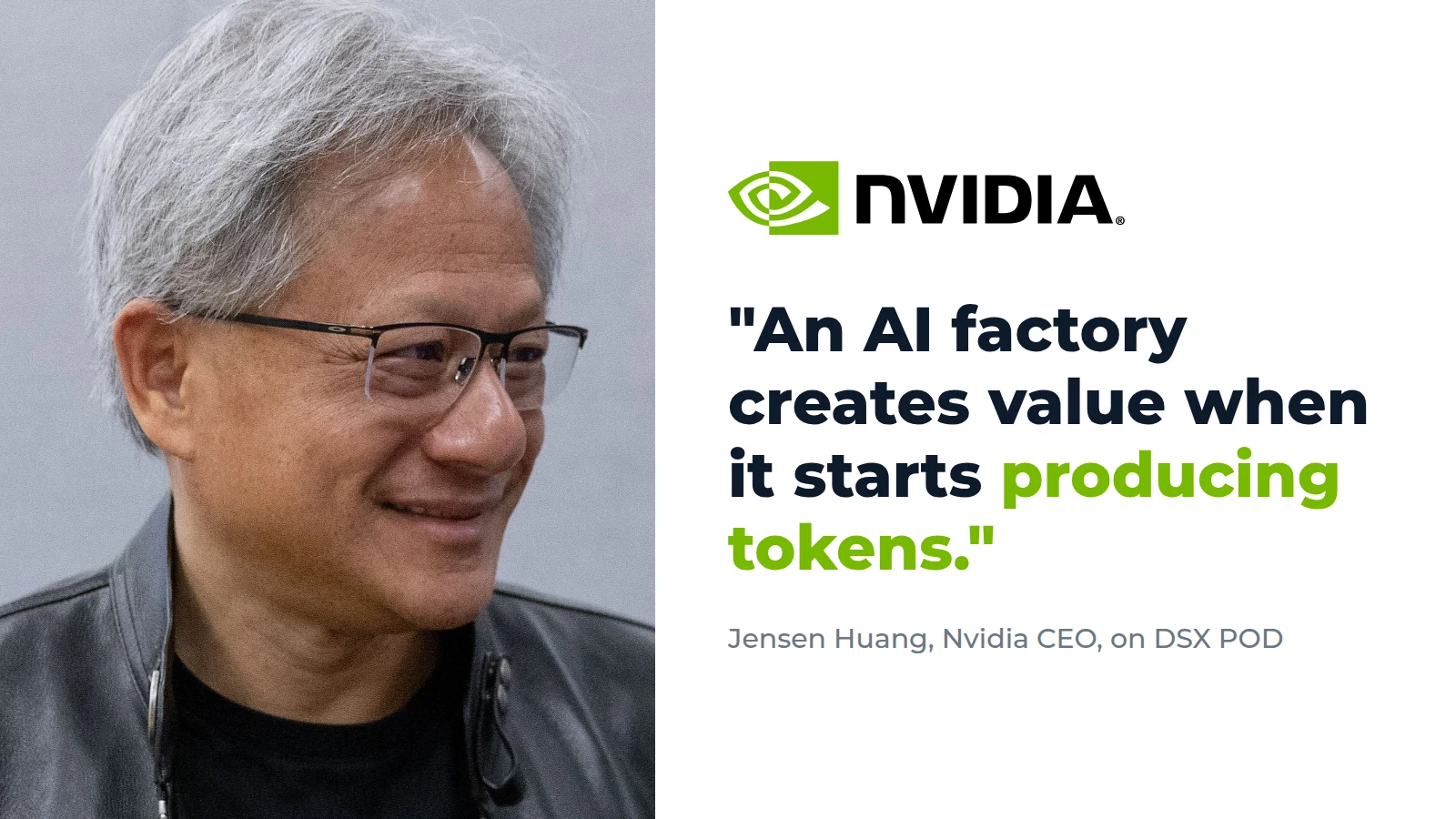
Jensen Huang, Nvidia's founder and CEO, said in the announcement that "AI factories are the engines of the next industrial revolution, and advanced memory is essential to their performance." He told reporters separately that Nvidia already buys "billions and billions of dollars each year" from SK Hynix and that the figure is "going to grow substantially." He also said this: "SK Hynix has been Nvidia's largest memory partner. SK Hynix will continue to be Nvidia's largest memory partner."
The partnership covers Nvidia's Vera Rubin AI supercomputers, its Vera CPUs, its RTX Spark PCs and the Jetson Thor robotics platform. It also covers manufacturing. SK Hynix will use Nvidia's CUDA-X libraries and PhysicsNeMo framework for chip simulation and lithography work, and Nvidia Omniverse to build digital twins of its fabs.
Chey Tae-won, chairman of SK Group, said in the same release that "SK hynix and NVIDIA have been building toward this for years, and this partnership reflects the depth of that collaboration."
SK Telecom is buying the racks that hold the memory
The same day, SK Telecom said it will build a gigawatt-scale AI cloud in Korea on Nvidia's DSX platform. DSX is Nvidia's full-stack reference design for Vera Rubin data centers, released in March 2026. The first facility comes online in 2027.
Huang's comment on that deal: "Telecom networks are becoming national AI infrastructure." He added that "with NVIDIA DSX, SK Telecom can build Korea's AI cloud at scale and bring agents, enterprise and physical AI to the companies and industries that power Korea and the world."
Chey described what the group got out of it. "Through our close partnership with NVIDIA, we have now secured full-stack AI infrastructure capabilities, from chips to data center operations," he said. "We will work with NVIDIA to tackle GPU, memory and energy challenges and become a leading AI factory player shaping Asia's AI ecosystem."
SK Hynix and SK Telecom both sit under SK Inc, the group holding company. Chey chairs it. A Seoul court ordered him to pay 944 billion won ($644M USD) in a property division case on July 24, which moved the SK companies in opposite directions that day.
What SK Group has committed
| Commitment | Won | USD | What it covers |
|---|---|---|---|
| SK Hynix | 1,100 trillion | $754B | Chip capacity, including HBM |
| SK Telecom | 1,000 trillion | $685B | 15GW of AI data centers by 2035 |
| SK Group total | 2,100 trillion | $1.44T | Both programs combined |
Converted at 1,459 won to the dollar. SK Telecom puts the cost of one gigawatt-scale facility at 70 trillion won ($48B USD).
The buildout schedule
| Site or phase | Capacity | Timing |
|---|---|---|
| Ulsan, with Amazon Web Services | 100MW | Second half of 2027 |
| Yeongnam region (Busan, Ulsan, Daegu) | More than 2GW | Not dated |
| Southwestern Korea | 1GW | Not dated |
| First phase total | 5GW | Staged from 2029 |
| Full target | 15GW | 2035 |
SK Telecom CEO Jung Jai-hun said the project "is aimed at preemptively preparing the computing infrastructure that the global AI ecosystem needs." The company called it Korea's third national infrastructure project, after the Gyeongbu Expressway in 1968 and the broadband buildout in 1998.
SK Telecom has said it will fund the work through its own investment, partner capital, customer contracts and project financing. Only the Ulsan site has a construction start and an opening date.
How much of the memory is SK Hynix
Each Rubin GPU carries 288GB of HBM4 at 22 terabytes per second. It's built on a 3-nanometer TSMC process with 336 billion transistors. A single liquid-cooled NVL72 rack holds 72 Rubin GPUs and 36 Vera CPUs, for 20.7 terabytes of HBM4 per cabinet.
The estimates of who supplies that memory don't agree, and they're measuring different things:
- Industry reports put SK Hynix at 60% to 70% of Nvidia's HBM4 allocation for Vera Rubin specifically. A year ago analysts expected a little over 50%.
- Counterpoint Research puts SK Hynix at 54% of the total 2026 HBM4 market, with Samsung Electronics at 28% and Micron (MU) at 18%.
- Counterpoint's actual second-quarter numbers, reported September 3, had SK Hynix at 50% of HBM revenue, down from 58% in the first quarter and 64% a year earlier; Samsung rose to 33% and Micron slipped to 18%. Most of that revenue was still HBM3E.
- Samsung's HBM4 yield reached about 80% in August, level with SK Hynix, and UBS and KB Securities now expect Samsung to ship more HBM than SK Hynix in 2027.
SK Hynix started mass-production shipments of 12-layer HBM4 to Nvidia at the end of June, ahead of a wider ramp in September, according to DigiTimes. It hasn't locked up the whole platform. The company is still reworking the fastest 11.7 Gbps grade of HBM4, and Korean trade outlet Dealsite reports the decision on whether SK Hynix supplies that grade won't come until late in the year. Micron is already in high-volume HBM4 production for Vera Rubin.
Two things changed after this piece first ran. On August 5 The Information reported that Nvidia was testing Rubin Ultra with less memory than announced, and SK Hynix lost about 15% in Seoul over two sessions. SemiAnalysis later put numbers on it: memory had reached 41% of a Rubin Ultra rack's cost after this year's HBM and DRAM price increases, and halving the HBM per GPU, to eight-high HBM4 stacks at 192GB, takes that to 28%. Two research firms estimate SK Hynix's HBM4 costs Nvidia about twice as much per gigabyte as HBM3E, which SK Hynix has not confirmed. And on August 31 Nvidia announced NVHBM, its own custom memory claiming 30% more bandwidth than HBM4E. SK Hynix also broke ground on its $4 billion Indiana HBM packaging plant on August 27, with mass production now targeted for the second half of 2029, a year later than its CHIPS Act award assumed.
Nvidia put $1 billion into Naver
On July 24, 2026, Nvidia said it will invest $1 billion in Naver, the Korean internet and cloud company, to help finance an AI data center already under construction. Bloomberg reported the money lets Naver more than triple the size of the site. Naver is developing it with Brookfield, which manages more than $1 trillion and launched a $100 billion AI infrastructure fund with Nvidia in November 2025. Nvidia said the same day that it's expanding its existing agreements with SK Group. The terms landed three days later: Naver told the Korea Exchange it will sell Nvidia 7,241,564 new shares at 204,500 won, 1.4809 trillion won in all, for about 4.5% of the company, making Nvidia the third-largest holder ahead of founder Lee Hae-jin. Payment is due October 30 and the shares list November 20.
Naver's schedule runs to 55 megawatts in the first half of 2027, 100 megawatts by the end of that year and 200 megawatts in 2028, with a gigawatt network after that. Industry sources told the Korea JoongAng Daily the eventual investment could pass 10 trillion won ($6.9B USD).
We covered the same financing pattern in the United States in our explainer on AI circular deals, where Nvidia sells to, buys from and holds equity in the same companies.
The stocks fell on the day
| Ticker | July 24 close | Change |
|---|---|---|
| SK Hynix ADR (SKHY) | $154.58 | -8.80% |
| Micron (MU) | $920.16 | -7.07% |
| Nvidia (NVDA) | $206.96 | -0.86% |
The table above is the July 24 US session. Seoul's July 24 session had already finished hours earlier, before the New York open, with SK Hynix down 8.34% and the Kospi down 5.72%. Oil above $100 a barrel and rising odds of a Federal Reserve rate increase pressured the whole market. Investors also sold companies with heavy capital spending needs after Alphabet raised its 2026 capital expenditure guidance for the third time this year.
SK Hynix reported second-quarter results on July 29: operating profit of 60.5426 trillion won ($41.6 billion USD), a record and up 557% from a year earlier, but 5.5% below the 64.09 trillion won consensus, because some HBM4 volume meant for the June quarter shipped into the second half. The margin held at 76%. Seoul took the stock down 19.6% intraday and closed it off 9.61%. It has since recovered: SK Hynix closed at 1,857,000 won in Seoul on September 18, and SKHY closed at $187.50 the same day, above where it stood before the July 24 selloff. The 11.7 Gbps HBM4 decision is still open as far as public reporting goes.
Our breakdown of the AI hardware stack covers how GPUs, memory and storage split the cost of a rack. You can run SKHY, NVDA or MU through our stock score tool for profitability, dilution and balance sheet grades.
Sources
- NVIDIA Newsroom, NVIDIA and SK hynix announce multiyear technology partnership to advance memory for AI factories (June 2026)
- NVIDIA Newsroom, SK Telecom and NVIDIA build AI infrastructure to power Korea's AI innovation (June 2026)
- SK Telecom Newsroom, SK Telecom pursues 15GW AI data center buildout (July 2026)
- Bloomberg, Nvidia to invest $1 billion in Naver and expand SK Group accord (July 2026)
- Korea JoongAng Daily, Naver's AI factory with Nvidia needs deep pockets (July 2026)
- NVIDIA Technical Blog, Inside the NVIDIA Vera Rubin platform
- DigiTimes, SK Hynix reportedly starts Nvidia HBM4 shipments ahead of September ramp (July 2026)
This is general market commentary and opinion, not investment advice. Figures reflect public disclosures as of September 20, 2026, when this piece was last updated. Markets can go down as well as up, and you can lose money. Always do your own research and consider speaking with a licensed financial professional before making any investment decision.