
Big tech is about to spend $725 billion on AI data centers. That's not what a bubble looks like.
Microsoft, Amazon, Alphabet and Meta are guiding to roughly $725 billion in combined AI capex for 2026, up 77% from last year. States are moving to regulate the data centers that money builds, but the real risk to watch is that spending now outpaces free cash flow.
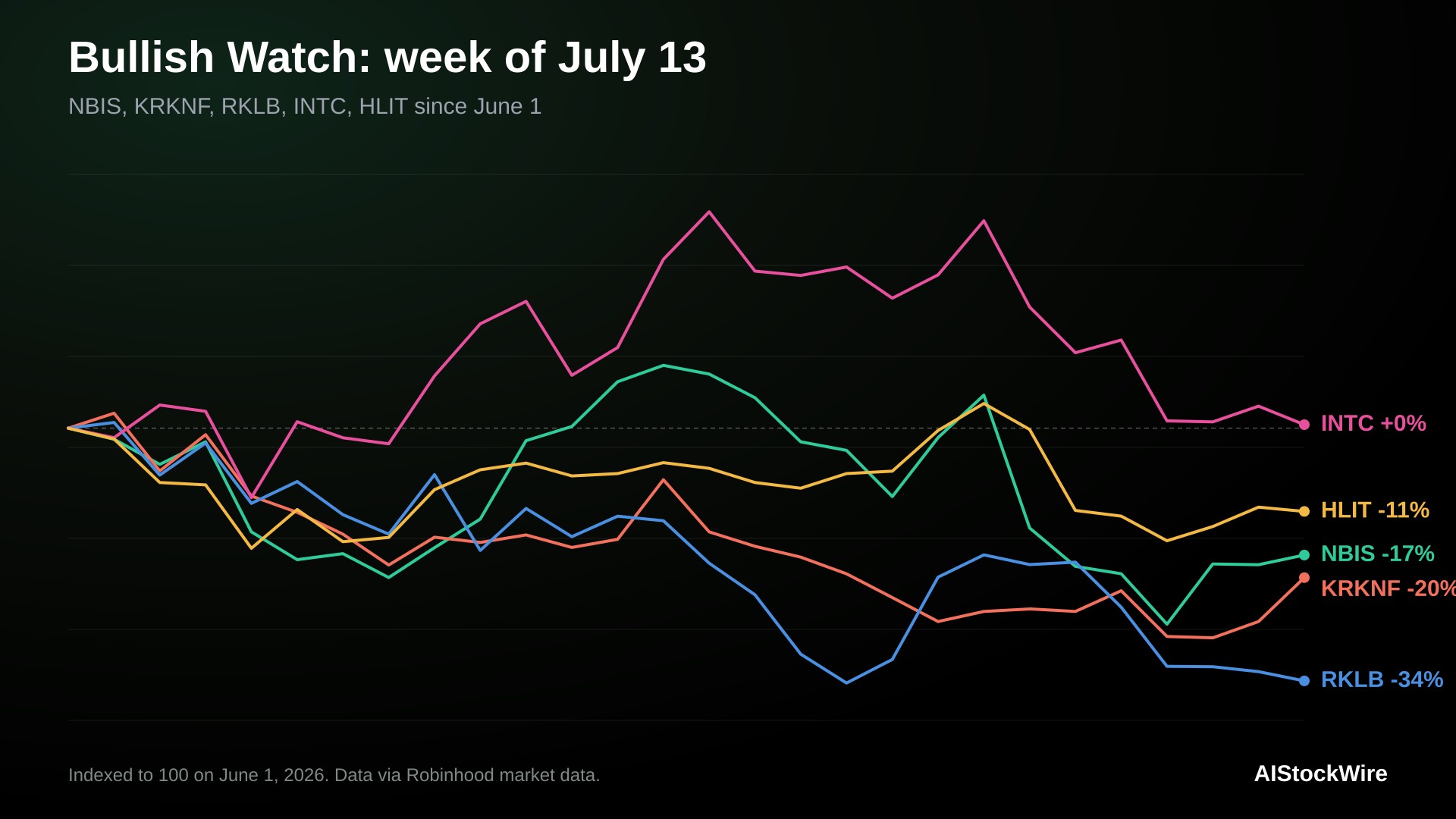
Bullish Watch, week of July 13: the market panicked over a Meta headline, and got it wrong
This week's watchlist, updated through Tuesday: Nebius gave back its early bounce on a data-center headline unrelated to its business, Kraken Robotics is holding up best of the five, Intel swung from a 6% drop to a 4.5% rally in two days, and Rocket Lab and Harmonic are still finding their footing.
Meta (META) jumps 4.7% on Muse Spark 1.1, Zuckerberg's return to X, and the Alberta data center
Meta Platforms (META) closed up about 4.7% on July 9, with the gains accelerating hardest in the final hour of trading. A new coding AI model, Mark Zuckerberg's first X post in three years, and last week's $9 billion Canada data center all fed the same move.
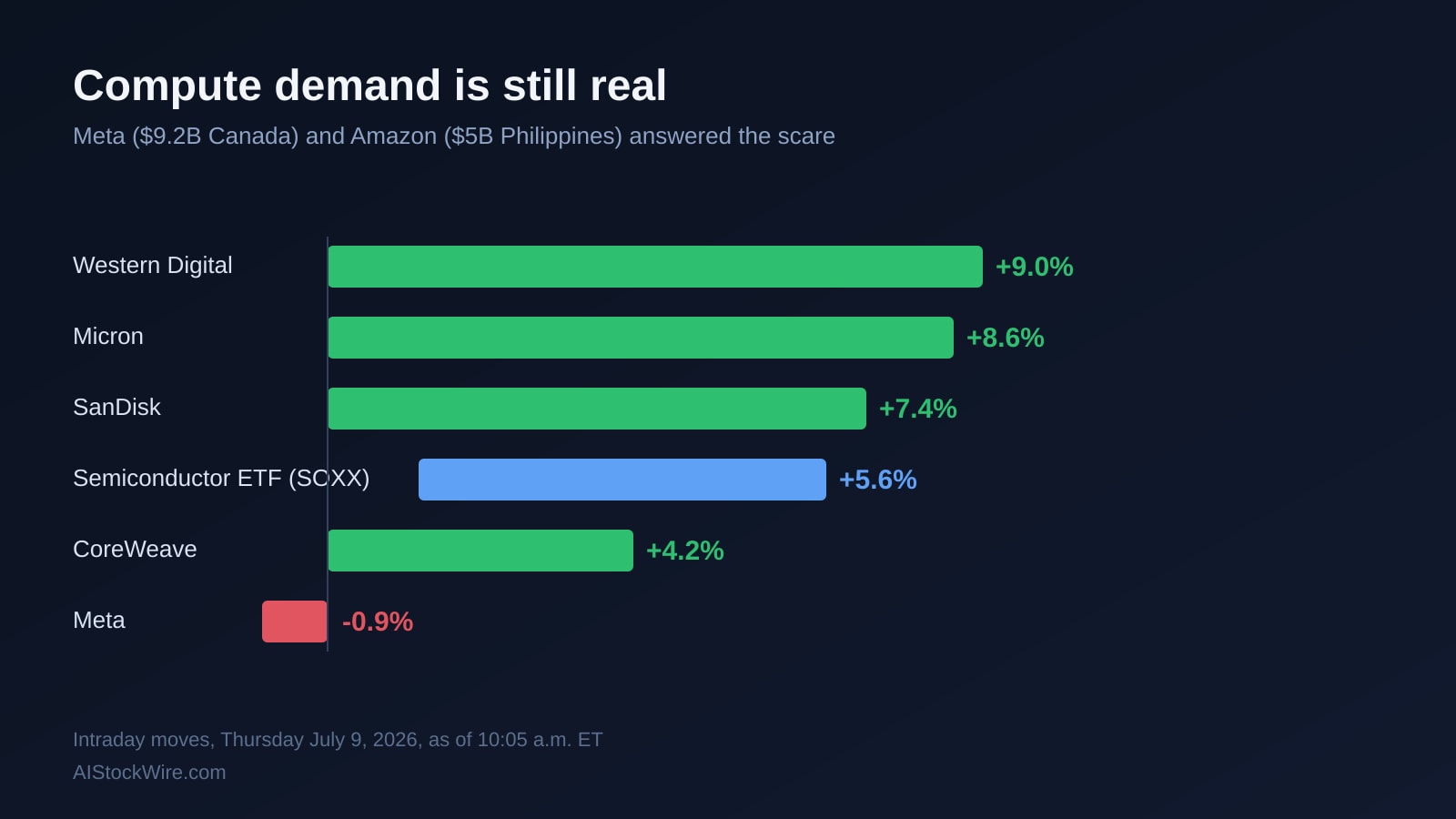
Chip stocks just had their best day in weeks. Meta and Amazon are both betting billions that AI compute demand isn't topping out (MU, WDC, META)
Micron, SanDisk, and Western Digital are having their best day in weeks. A week after a rumor said Meta had too much AI compute, Meta and Amazon both bet billions that demand is still growing, and Samsung's own record quarter couldn't shake investors until this week's data center news did.
Meta said it had spare compute. Then it broke ground on a $9 billion data center in Canada (META, CRWV, NBIS)
A week after Meta's excess-compute cloud plan crushed the neoclouds, it broke ground on a C$13 billion, 1-gigawatt data center in Alberta, Canada. The demand is real.
Meta selling spare compute doesn't mean the AI crunch is over (META, CRWV, NBIS)
Chip stocks sold off on Meta's plan to rent out spare compute. But Meta itself just got rationed by Google and is locked into take-or-pay deals with CoreWeave and Nebius. Why the overcapacity story is shaky, plus what to watch next week.

Micron cracks $1,000 as the chip scare returns from Korea (MU, AVAV)
Stocks opened firm, then chips rolled over after 10 a.m. Micron (MU) cracked $1,000 as the Korea selloff spread. The Dow held, and healthcare and AVAV rallied.
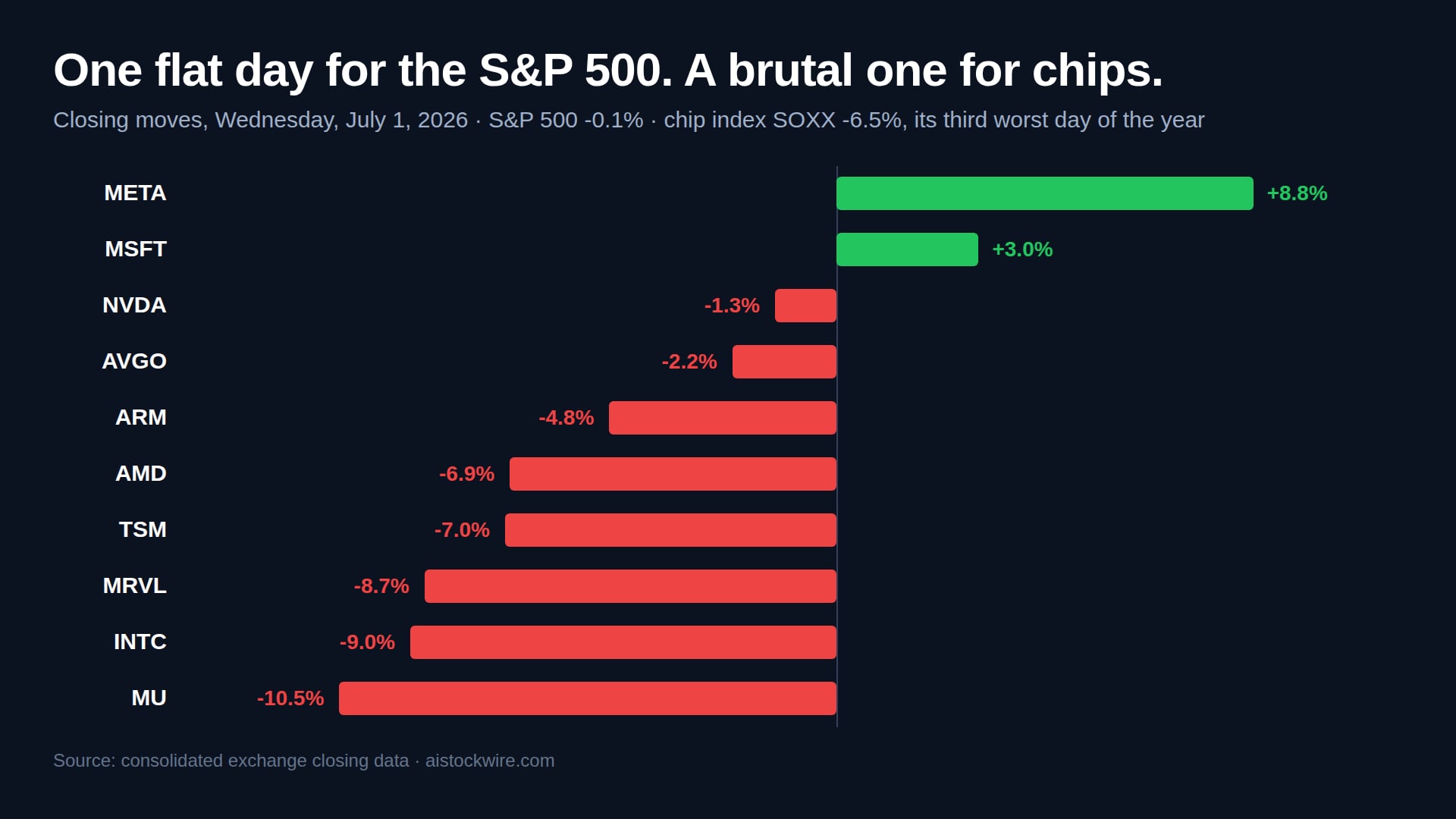
Chips had their third worst day of 2026 and the S&P barely noticed (MU, INTC)
The S&P 500 closed within a whisker of flat on July 1 and the chip trade still had its third worst day of the year. Micron fell 10.5 percent, Intel lost 9 percent, and Meta gained almost 9 percent on the other side. Here is the damage report.
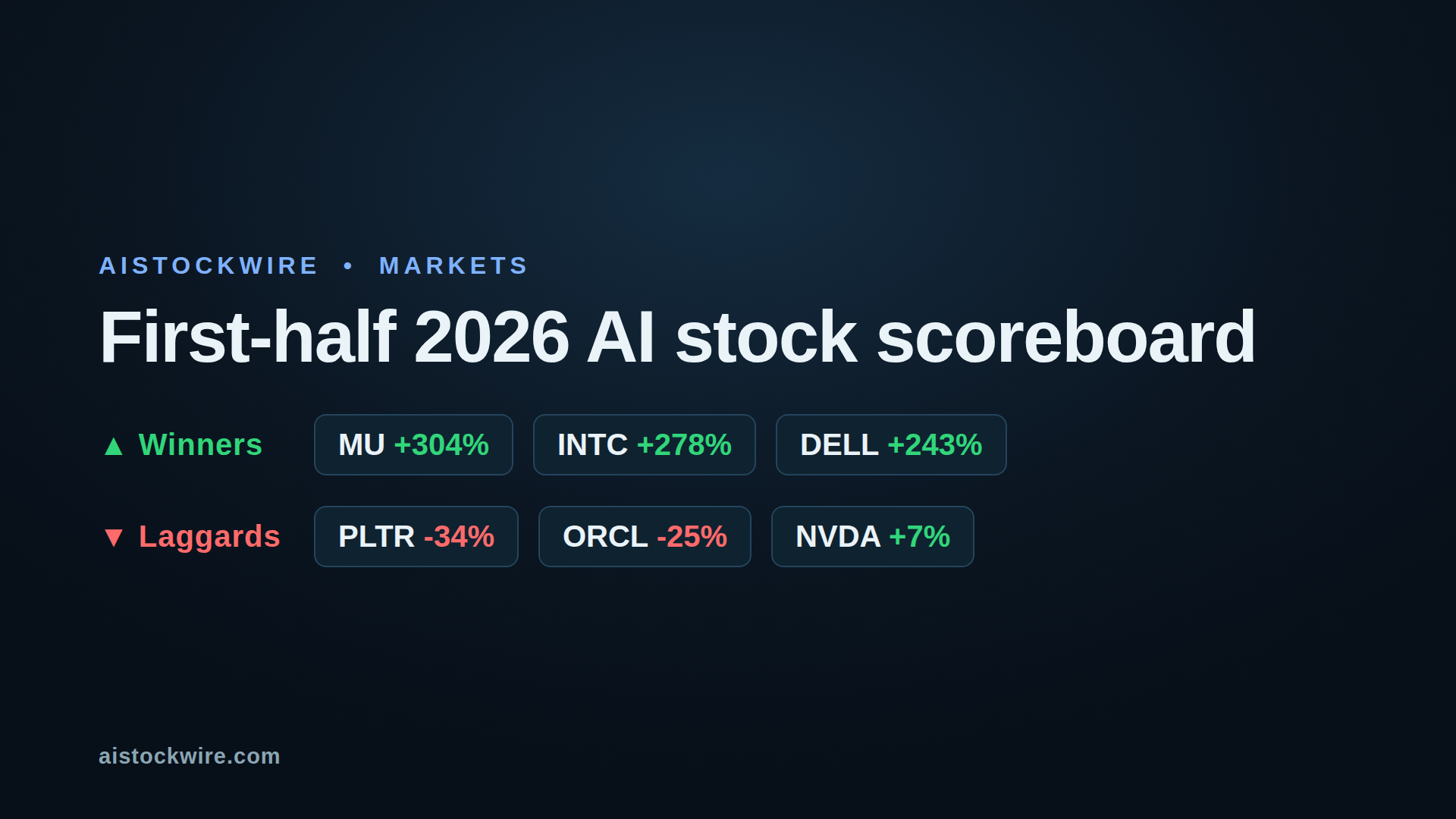
The AI stocks that led and lagged the first half of 2026
The first half of 2026 split the AI trade in two. Memory and chip-supply names like Micron (MU, +304%) and Intel (INTC, +278%) soared, while marquee names lagged and AI software fell, with Palantir (PLTR) down about 34%. Here is the full scoreboard and what it means.
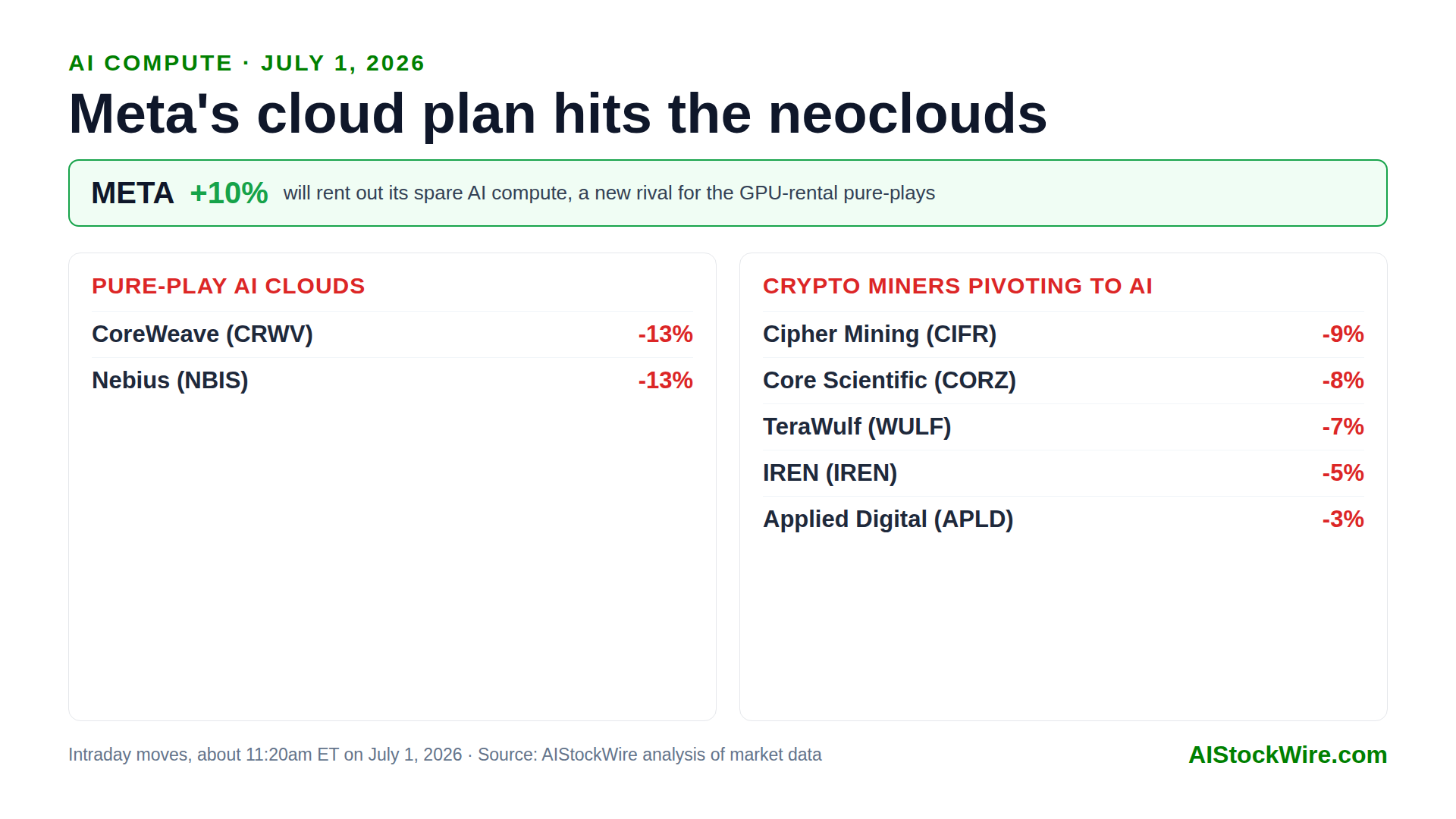
Meta's cloud news is hammering the neoclouds: CoreWeave and Nebius drop about 13% (July 1, 2026)
The same Meta cloud announcement that sent META up about 10% on July 1, 2026 is hammering the neoclouds. CoreWeave (CRWV) and Nebius (NBIS) each fell about 13% as investors saw a giant new rival for renting out AI computing power.
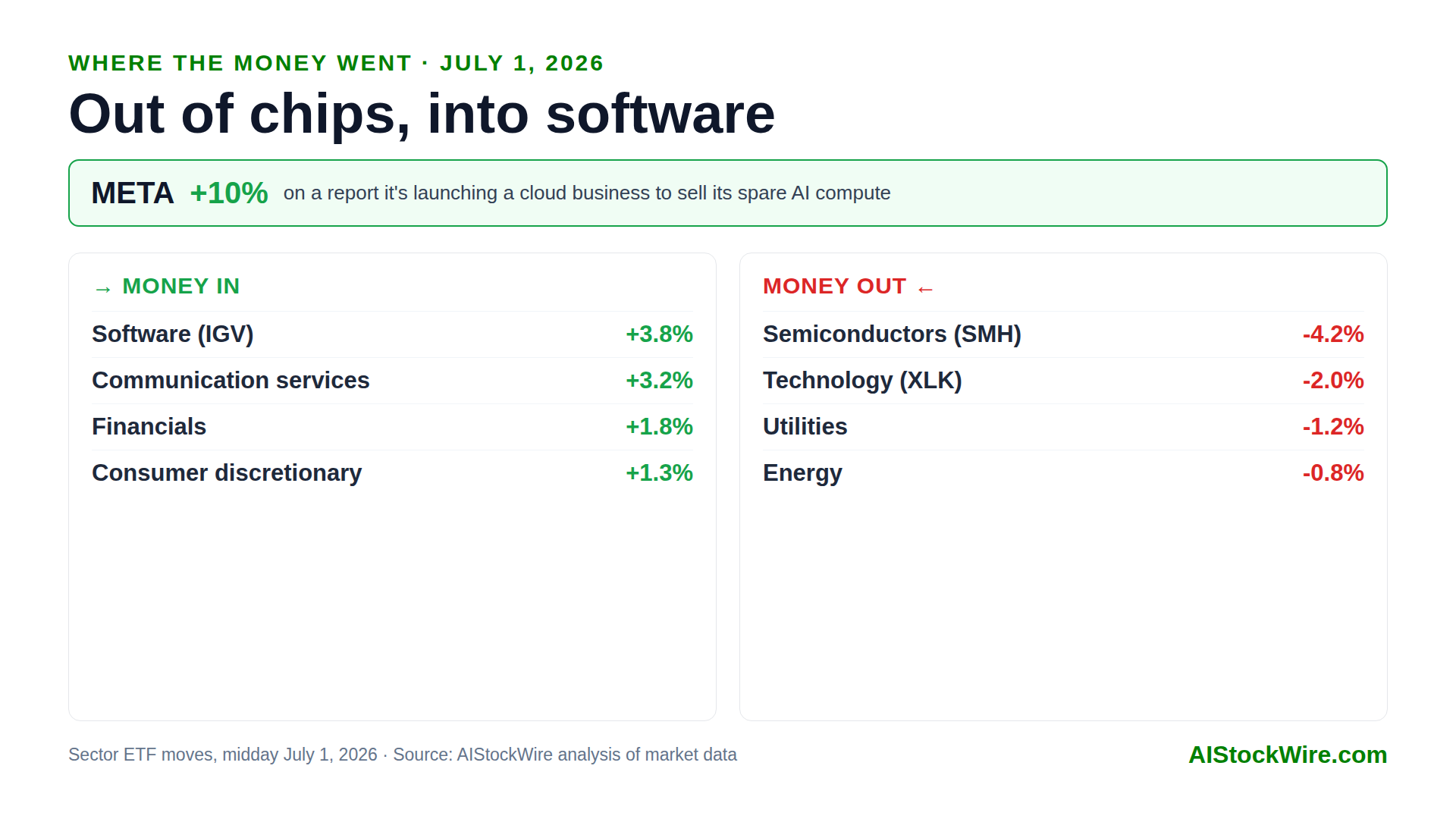
Where the money moved July 1: out of chips, into software, as Meta jumps on cloud news
A flat tape hid a sharp rotation on July 1, 2026: money moved out of semiconductors (SMH -4.2%) and into software (IGV +3.8%), led by Meta's (META) roughly 10% jump on news it will sell its spare AI cloud computing power.
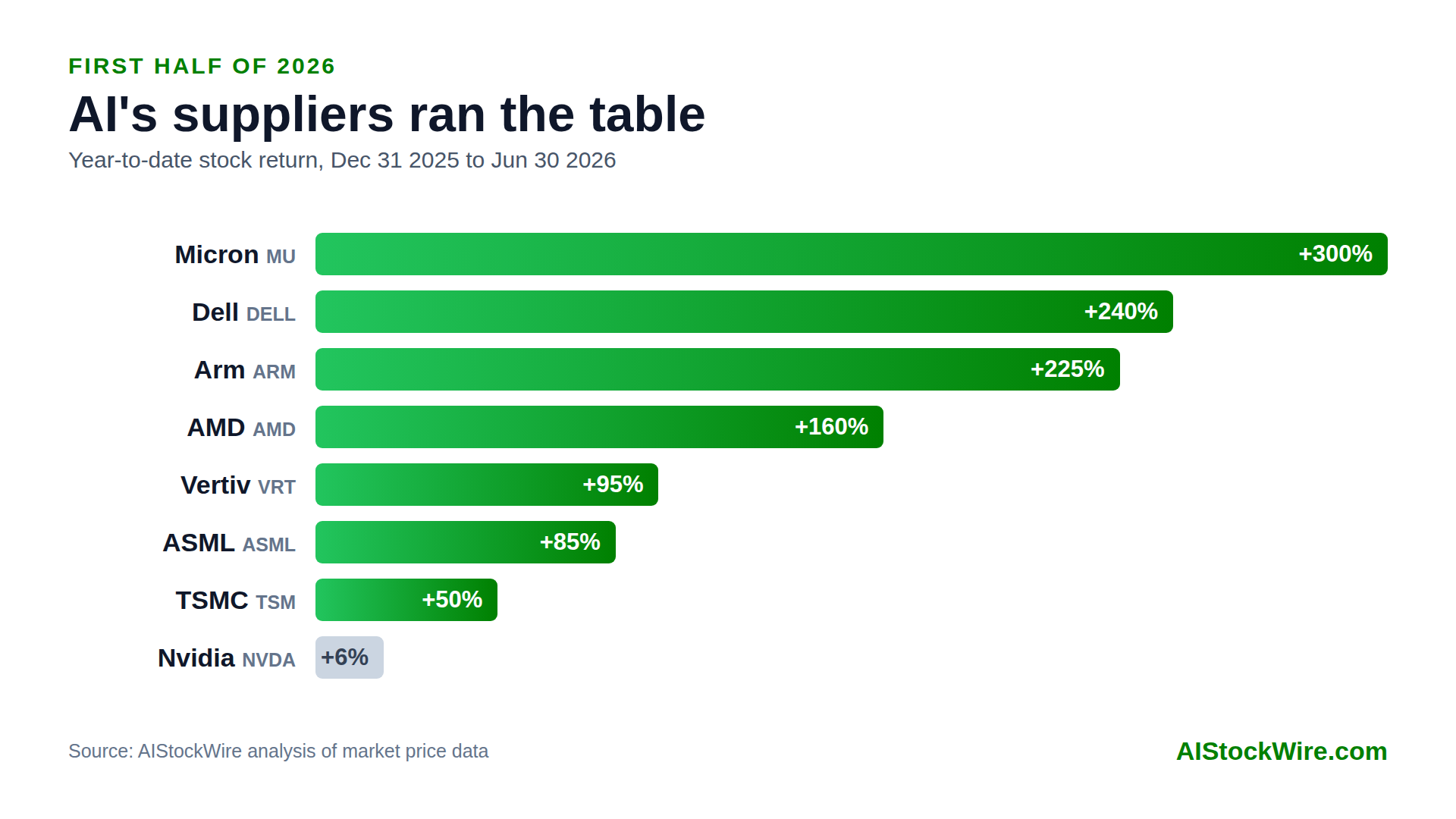
AI's quiet winners: ASML, AMD and Vertiv VRT lead at the June 30, 2026 open
On the last trading day of the first half, the AI suppliers led again. ASML, Arm (ARM) and Vertiv (VRT) each rose about 4%, while Micron (MU) is up roughly 300% in 2026.

The market's closed, but the weekend stock tape is flashing green
The US market is closed, but stocks trade 24/7 on Hyperliquid. As of Sunday night the weekend tape is green, led by the chip names that fell hardest Friday. Our read before Monday's open.

Which robot stocks can you actually buy? Tesla (TSLA) and Nvidia (NVDA) are on the list. Figure, Apptronik and Unitree are not.
Physical AI is the next leg of the AI trade, but the famous humanoid makers are mostly still private. Here is what is actually listed, what each company builds, and where the risk sits, updated with Goldman's revised 2035 forecast and prices as of September 1, 2026.
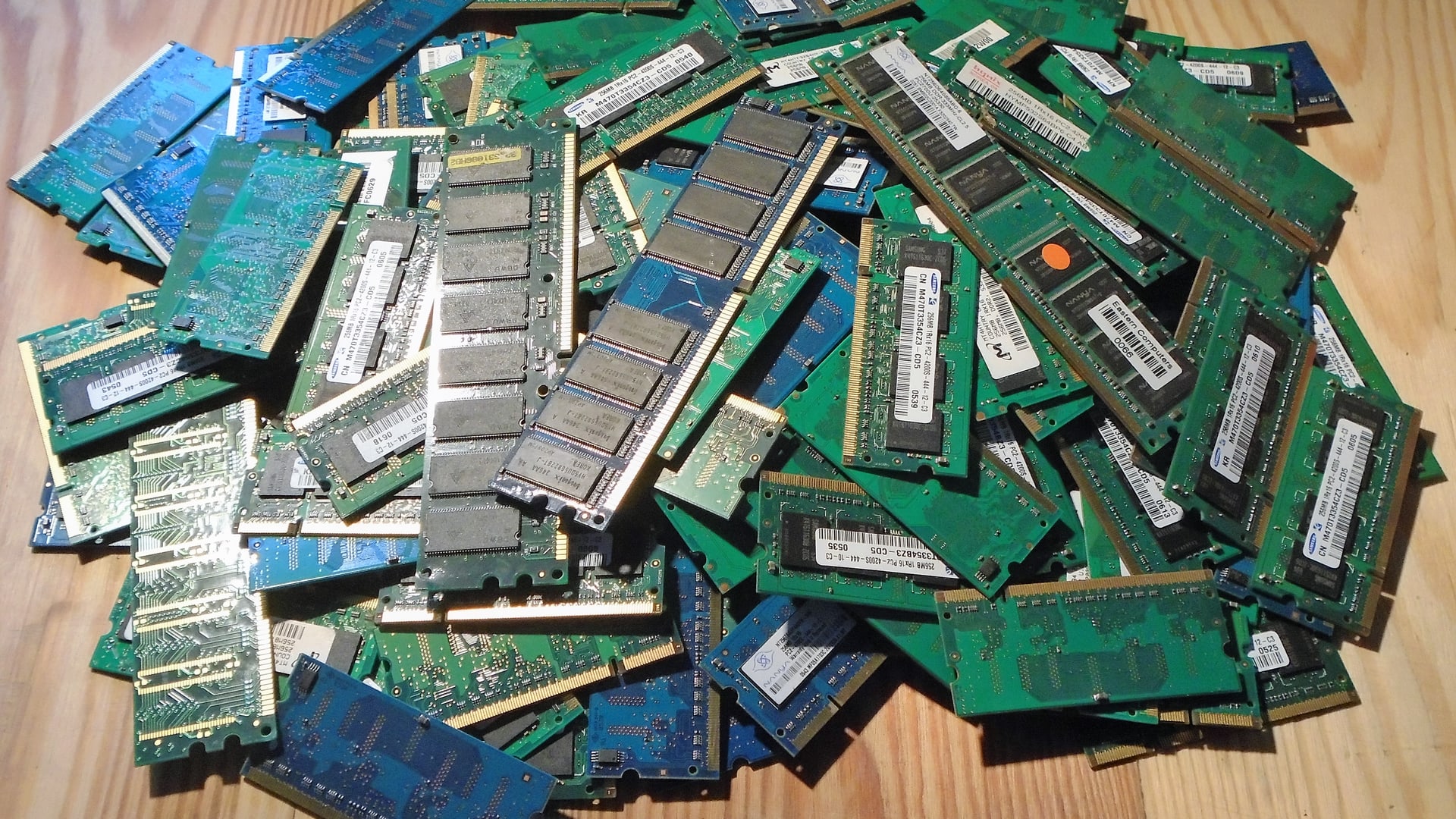
Samsung, SK Hynix and Micron (MU) are all trillion-dollar stocks now. Here is how they stack up against the Mag 7.
The AI memory boom turned Samsung, SK Hynix and Micron (MU) into trillion-dollar companies. Here is how the memory giants stack up against each other and the Mag 7, and the DRAM ETF that packages them in one ticker.

Meta is funding an entire gas plant in Alberta to power its AI. Here's what that means for CEG, VST and OKLO.
AI data centers need enormous, around-the-clock electricity, and the grid wasn't built for it. That's reviving nuclear, pushing Meta to fund an entire new gas plant in Alberta, and pulling solar into the mix too. Here's the demand, the deals, the stocks, and the risks worth respecting.

The AI stock map: every layer of the trade, from sand to software
A top-to-bottom deep dive on the AI supply chain, from the machines that make the chips down to the hyperscalers writing the checks, and how every layer pushes and pulls on the others.